

 English
 中文简体
中文简体

Industry News
Home / News / Industry News / Nickel Alloy Forgings: Grades, Process Control, Applications, and Buying Guide
 Home / News / Industry News / Nickel Alloy Forgings: Grades, Process Control, Applications, and Buying Guide
Industry News
Nickel Alloy Forgings: Grades, Process Control, Applications, and Buying Guide
2026-09-18
A shipyard once replaced two carbon steel propeller shafts in six years because the vessel moored in a chloride-rich harbor the original design never considered. The fix, a nickel alloy forging, has been in service ever since. The lesson applies widely: nickel alloy forgings solve corrosion and high-temperature problems, but only when the grade matches the real service condition and the forging process preserves the alloy's integrity. This article covers the grades, the process limits, and the checks that matter before you order.
Content
- 1 What Makes Nickel Alloy Forgings Different
- 2 Common Nickel Alloy Grades and How to Select Them
- 3 Forging Process Considerations That Decide Quality
- 4 Where Nickel Alloy Forgings Are Used in Heavy Industry
- 5 What to Verify Before Ordering Nickel Alloy Forgings
- 6 Why a Full-Process Forging Supplier Reduces Your Risk
What Makes Nickel Alloy Forgings Different
Nickel alloys contain more than 30 percent nickel in solid solution, which stabilizes the face-centered cubic structure. That structure gives three practical advantages: toughness at cryogenic temperatures, useful strength above 500°C, and tolerance to chlorides, sulfides, and acids that crack ordinary steel. Precipitation-hardened grades like Alloy 718 go further and develop yield strengths above 1000 MPa through an aging treatment.
Forging adds a structural benefit that casting and machining from bar cannot replicate. Hot working breaks down the cast structure, closes internal porosity, and aligns grain flow with the part contour. A forged valve body or turbine shaft therefore shows higher fatigue strength under cyclic pressure and vibration. For critical components, this is the main reason the drawing specifies a forging rather than a cheaper casting.
Common Nickel Alloy Grades and How to Select Them
Six grades cover most industrial forging inquiries. The table below summarizes each grade, its typical nickel content, and the components forgers usually make from it. Confirm property values against the applicable ASTM or ASME specification for the exact heat.
| Grade | Typical Ni content | Defining characteristic | Common forged parts |
|---|---|---|---|
| Alloy 400 | 63-70% | Seawater resistance and subzero toughness | Marine shafts, rudder stocks, pump shafts |
| Alloy 600 | 72% min | High-temperature oxidation resistance | Furnace rolls, heat exchanger headers |
| Alloy 625 | 58% min | Pitting and crevice corrosion resistance | Valve bodies, blowout preventer parts, turbine blades |
| Alloy 718 | 50-55% | Precipitation hardening, yield above 1000 MPa | Turbine disks, gear shafts, high-strength rings |
| Alloy 825 | 38-46% | Acid resistance, especially sulfuric and phosphoric | Chemical pump parts, oilfield components |
| Alloy C-276 | 57% min | Resistance to oxidizing and reducing acids | Reactor internals, scrubber parts, high-alloy valves |
Select by service environment, not by nickel percentage. Alloy 718 suits rotating parts and fasteners because of its aging response. Alloy 625 covers most pressure-boundary parts in sour oil and gas. Alloy 825 is usually enough for acid service, and Alloy 400 is the economical seawater option. Upgrading to C-276 when the design only needs 625 more than doubles the raw material bill without adding useful life.
Relative Material Cost of Nickel Alloy Forgings (Carbon Steel = 1.0)
Material cost is the first number a buyer sees, but it is not the whole picture. The chart shows the approximate raw-material cost multiplier relative to carbon steel for the most common nickel alloy forgings. Alloy 400 is the least expensive nickel option and still costs more than three times carbon steel. Alloy 625 and C-276 sit at seven to nine times the carbon steel baseline before any forging work begins. This gap explains why upgrading from Alloy 825 to C-276 just to be safe can more than double the material bill. The extra cost is justified when it prevents an unscheduled shutdown in a single sour well, but it must be earned by the service environment.
Forging Process Considerations That Decide Quality
Nickel alloys do not forge like carbon steel. They keep high strength at forging temperature, conduct heat slowly, and require a narrower working range. Three process factors decide whether the forging delivers the expected properties:
- Heating control. Most nickel alloys forge between 900°C and 1200°C. Above that range, grain growth and incipient melting appear; below it, work hardening and surface cracking occur. The furnace must have calibrated thermocouples and a recorded soak curve.
- Reduction and grain size. Each forging pass needs enough deformation to break the cast structure and trigger recrystallization. Low reduction leaves a mixed grain structure that lowers fatigue strength. Rotating parts often specify a final grain size of ASTM 4 to 7.
- Heat treatment. Solid-solution grades require a controlled cooldown after finish forging. Precipitation-hardened grades like Alloy 718 need a two-step aging treatment near 720°C. The furnace record is the only proof the schedule was followed.
- Tool contact. Nickel alloys lose surface heat quickly, so dies must be preheated and contact time minimized. Hammer energy and press speed matter as much as the alloy chemistry.
These factors are not theoretical. A flange finish-forged too cold can develop tears, and the same flange over-aged in the furnace can lose 15 percent of its specified yield strength while still looking flawless. The same temperature discipline applies to high-alloy steels and nickel alloys; our guide to forging stainless steel forgings explains the common pitfalls in more detail.
Yield Strength at Elevated Temperature for Forged Materials
This chart compares typical minimum yield strength at elevated temperature for three forged materials. Alloy 718 stays above 800 MPa even at 600°C, which is why it is the standard for high-load rotating parts. Alloy 625 loses strength gradually yet still exceeds 400 MPa at 700°C, making it a strong candidate for valve bodies and pressure housings. Stainless 316 starts at a respectable 290 MPa and then declines quickly above 300°C. A design engineer who specifies a stainless flange for a 500°C line must live with a very low allowable stress; a nickel alloy forging changes that assumption. The chart also shows why room-temperature data alone can badly mislead a material selection.
Where Nickel Alloy Forgings Are Used in Heavy Industry
Nickel alloy forgings are specified where failure is expensive. In oil and gas, forged Alloy 625 and 825 valve bodies, blowout preventers, and fracturing heads hold pressure in sour wells from arctic temperatures to above 200°C. The forging route removes the porosity risk that makes castings difficult to accept for this duty.
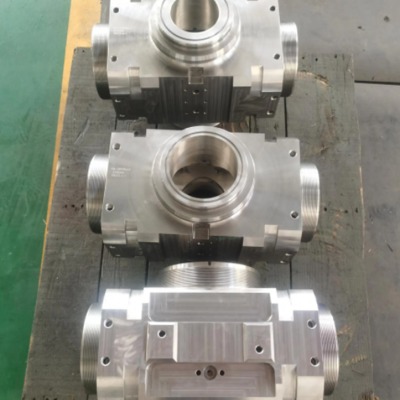 Nickel Alloy Blowout Preventer Forgings for Sour Well ServiceThis forged BOP component suits high-pressure oil and gas wells, where Alloy 625 cladding and phosphate finish provide corrosion resistance and reliable wellhead shutoff under extreme downhole conditions.View Product →
Power generation uses nickel alloy forgings where temperature or corrosion exceeds stainless limits. Nuclear piping nozzles, tube sheets, and hydro turbine shafts are typical examples. These parts operate under high bending stress, and inspection access is limited after assembly.
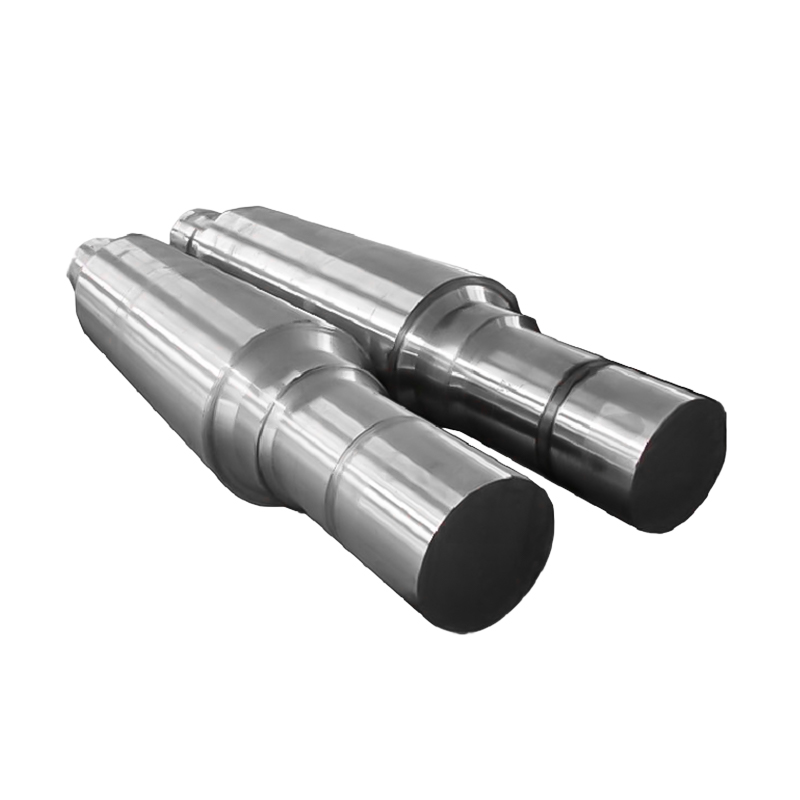 Hydroelectric Generator Shaft Forgings for High-Torque ServiceA core transmission component for turbine sets, this forged shaft endures high torque, fatigue, and humid conditions. Its listed sizes and materials support reliable long-term power generation.View Product →
In marine service, Alloy 400 propeller shafts and rudder stocks resist pitting in polluted harbors where carbon steel fails quickly. Chemical plants, meanwhile, choose Alloy 825 or C-276 for valve covers, pump bodies, and reactor components in acid service; ultrasonic testing of these forgings is standard because field weld repair is difficult.
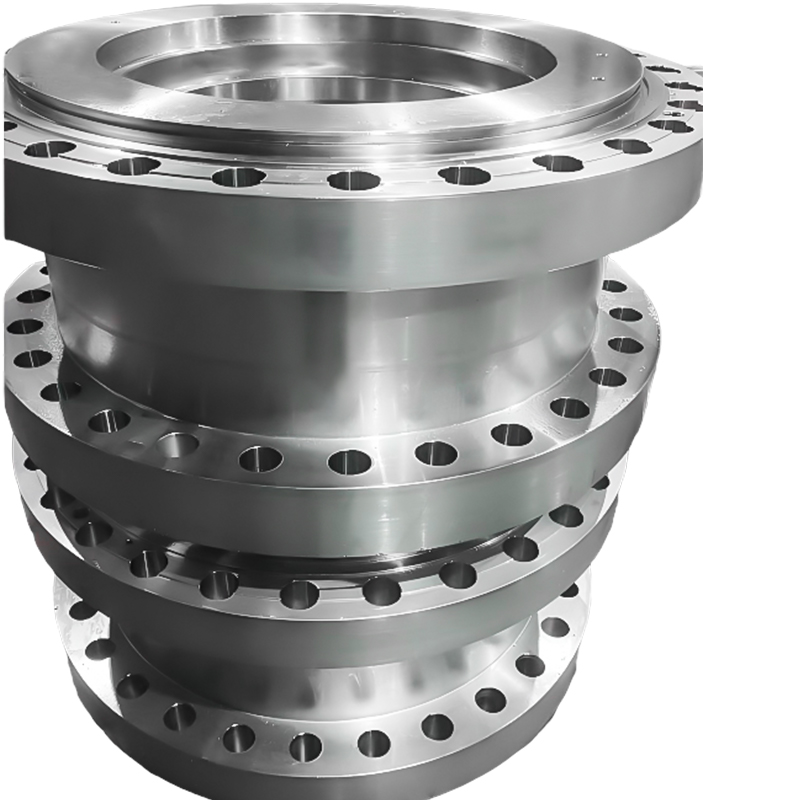 Alloy 625 Overlay Valve Cover Forgings for Severe DutyDesigned for three-piece ball valves, this forged valve cover with Alloy 625 overlay balances corrosion resistance and cost-effectiveness, making it suitable for high-temperature, high-pressure chemical and oilfield applications.View Product →
Room-Temperature Yield Strength of Forged Grades (MPa)
The column chart compares typical room-temperature yield strength for six forged grades. Alloy 718 reaches about 1035 MPa because its aging treatment produces a fine dispersion of strengthening phases. Alloy 625 provides roughly 490 MPa and is the practical choice for many pressure parts because it balances moderate strength with excellent corrosion resistance. The lower grades are not failures; they simply suit designs with low stress and tight budgets. A common mistake is to equate higher yield strength with better forging quality. In reality, higher strength often brings lower ductility and more demanding welding procedures, so the grade must fit the design code and fabrication plan.
What to Verify Before Ordering Nickel Alloy Forgings
Buying a nickel alloy forging requires more verification than ordering a standard carbon steel flange. The material certificate alone does not prove the part has the required properties. A complete purchase specification should cover:
- Material traceability. The EN 10204 3.1 certificate must list heat number, composition, and mechanical test results from the same heat and heat-treatment batch as the delivered part.
- Non-destructive examination. Specify the ultrasonic method and acceptance level. A 1.2 mm flat-bottom hole reference is common for pressure parts; write it into the purchase order.
- Dimensional verification. Agree on bore concentricity, flange face flatness, and machining allowance so inspection after machining does not become a dispute.
- Heat-treatment records. For aged grades, request the actual time-temperature chart, not a statement saying aging was performed.
- Grain size, when the design requires it. Highly stressed rings and rotating components typically specify ASTM 4 to 7.
Document these requirements before the order is placed, and do not release the forging until the paperwork is complete. A quick property comparison keeps the selection criteria visible when the commercial team negotiates with the forger; the chart below scores the three most commonly debated material families.
Service Property Comparison of Forged Materials (Score 1-10)
The radar chart compares Alloy 625, stainless 316, and carbon steel across five service criteria on a scale of one to ten. Alloy 625 dominates corrosion resistance and high-temperature strength, which is why it appears so often in valve bodies and wellhead forgings. Stainless 316 balances moderate corrosion resistance with good weldability but gives up strength quickly at temperature. Carbon steel remains the cheapest and most weldable choice when the service environment is mild and the design stress is low. The chart also shows the trade-off clearly: performance and cost efficiency move in opposite directions. Using this kind of comparison during design review helps the buyer, the engineer, and the forger agree on the same selection criteria.
Why a Full-Process Forging Supplier Reduces Your Risk
A dedicated forge shop can make a good blank, but a full-process supplier removes most interface risk. When one company controls heating, forging, ring rolling, heat treatment, machining, and final inspection, the material certificate stays with the physical part from billet to dispatch.
That integrated structure shortens lead time for non-standard components. The forger can adjust the reduction ratio, change the aging schedule, and re-machine test coupons in one loop instead of coordinating several vendors. Ask which processes are in-house; the answer usually reveals where quality problems hide.
ACE Machinery's workshop in Yancheng operates 3-ton, 5-ton, and 15-ton electro-hydraulic hammers, 1-meter and 1.5-meter vertical ring rolling mills, heat treatment furnaces with full records, and CNC machining centers. That equipment range determines the maximum section size and ring dimensions available from one source. Combined with in-house welding and surface treatment, the same facility can deliver a finished component rather than a series of hand-offs. For drawings that do not match standard catalog items, the non-standard custom forging service covers the gap between a standard blank and a fully machined part.
Message Us Right Now!
-
Mobile Terminal
-
Quick Links
Products About Us Equipment & Capacity Quality News Contact Us -
Product Category
Power‑Generation Forgings Ship and Port Machinery Forgings Mining and Metallurgy Forgings Food and Feed Machinery Forgings Welding Fabrication Petrochemical Industry Forgings CUSTOMIZED MADE FORGING PARTS -
Contact Us
Mob.: +86-173 7218 0878 Tel.: +86-515-8389 0396 E-mail: ivy.zhai@aceprocess.cn Add.: No.21 Jinfeng Road, Economic Development Park, Dafeng District, Yancheng City, Jiangsu, China
Copyright © 2025 Yancheng ACE Machinery Co., Ltd. All Rights Reserved.
China open die forgings manufacturer
custom precision forgings supplier
