

 English
 中文简体
中文简体

Industry News
Home / News / Industry News / ABS Certified Forgings: What Shipyards Need Before Ordering Marine Parts
 Home / News / Industry News / ABS Certified Forgings: What Shipyards Need Before Ordering Marine Parts
Industry News
ABS Certified Forgings: What Shipyards Need Before Ordering Marine Parts
2026-10-16
A shipyard rejects a forged propeller shaft during incoming inspection. The chemistry is correct, the tensile results pass, and the mill certificate looks complete. What is missing is an ABS surveyor signature on the test record, so the shaft cannot enter a classed vessel without a concession or a repeat test. That one gap can add three to five weeks to a newbuild schedule, and the forging itself is perfectly sound.
ABS certified forgings are not simply forgings with a test report attached. They are components made under a survey arrangement with the American Bureau of Shipping, where the material grade, the steel heat, the forging route, the test coupon, the heat treatment records and the finished dimensions are verified against ABS Rules for Materials and Welding. The certificate is the final step in that chain, not the whole of it.
This guide covers what the certificate confirms, which forged parts normally need it, how the survey steps fit a normal production route, and the failure points that cause the most rework.
Content
- 1 What an ABS Certificate on a Forging Actually Confirms
- 2 Which Forged Parts Normally Need ABS Certification
- 3 The Survey Route from Purchase Order to Delivery
- 4 Inspection Points Buyers Should Lock Down Before Release
- 5 Why ABS Certified Forgings Get Rejected or Delayed
- 6 Lead Time, Cost and the Value of an Approved Works
What an ABS Certificate on a Forging Actually Confirms
ABS works on two levels, and confusing them causes most delays. The first is approval of the manufacturer, through a works approval or manufacturing assessment confirming that the plant, process control and testing facilities suit the scope being supplied. The second is certification of the individual product, where a surveyor verifies that a specific item or batch was made to an accepted grade, tested as required and traceable to its steel heat.
For shafting, ABS recognises forging grades from Grade 2 to Grade 5, with rising yield strength and tighter control of chemistry and heat treatment as the grade increases. Structural and pressure retaining parts follow separate rule chapters. A higher grade is not automatically better: a Grade 5 shaft demands closer furnace control, and any deviation in the heat treatment record becomes a direct certification risk.
| Document | Issued by | What it confirms | Common gap |
|---|---|---|---|
| Mill test certificate | Steel mill or forger | Chemistry and mechanical results from the steel heat | Does not by itself satisfy an ABS survey requirement |
| Certificate of Compliance | ABS | The material or product type meets rule requirements | Does not prove the item in your yard was made under survey |
| Unit or test certificate | ABS surveyor | A specific item or batch, witnessed testing, heat number traceability | Valid only if the surveyor actually witnessed the tests |
| Non destructive examination report | Examination subcontractor | Ultrasonic or magnetic particle results | Procedure must be class accepted and personnel certified |
Which Forged Parts Normally Need ABS Certification
On a classed vessel, the requirement follows function. Components whose failure would cost propulsion, steering or a pressure boundary are the ones ABS expects to see under survey.
- Propeller shafts, intermediate shafts, stern tube shafts and thrust shafts
- Rudder stocks, rudder pintles and rudder carrier components
- Coupling and flange forgings that form part of the shaft line
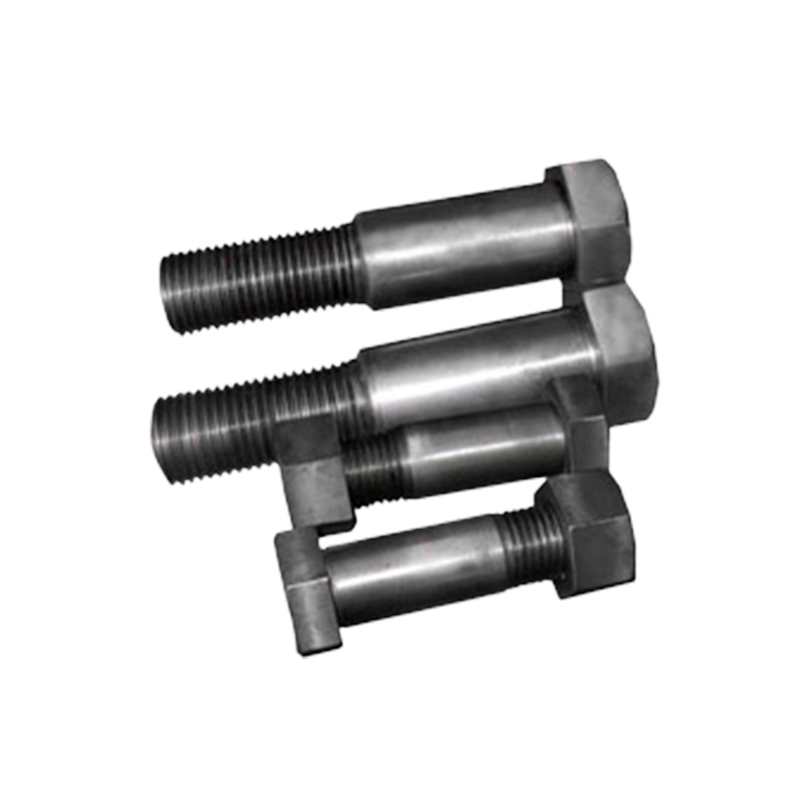
- Marine bolts, studs and hydraulic nuts for couplings and rudder assemblies
- Gears, pinions and shafts for main propulsion gearboxes
- Deck machinery and mooring components where the notation requires it
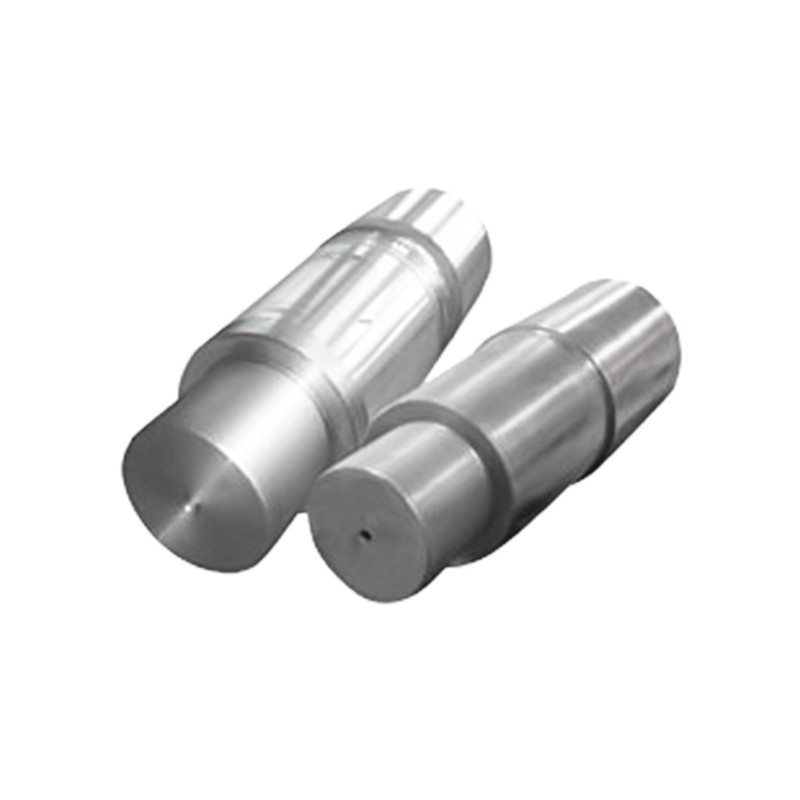
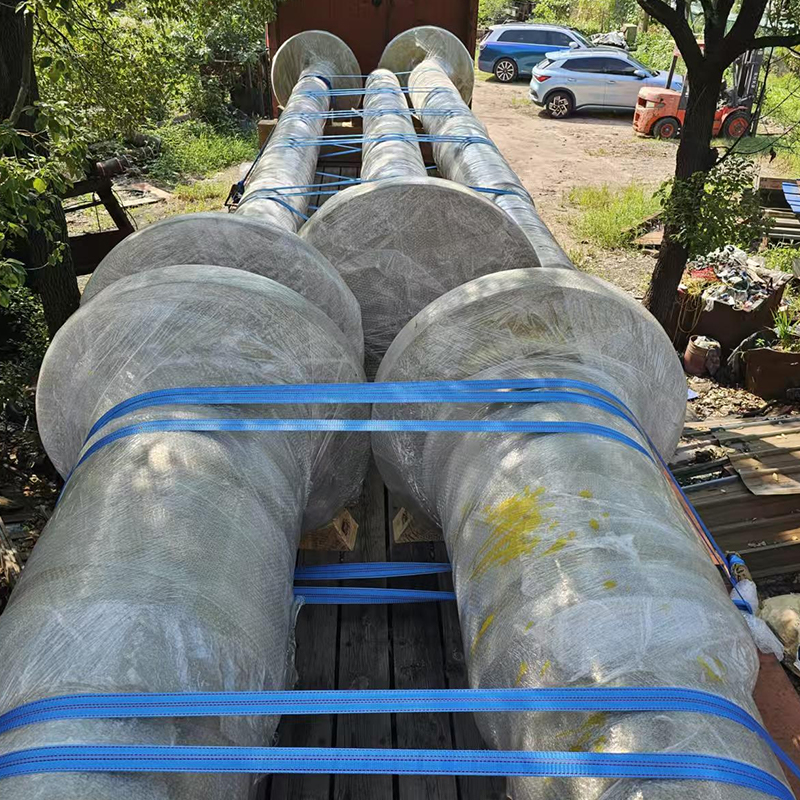 Propeller Shaft Forgings for Classed Marine VesselsC45E propeller shaft forging for critical marine drivetrains, with 10,500 kg weight and large dimensions; check survey needs before ordering.View Product →
Parts outside the propulsion and steering chain are treated differently. A pump shaft or a bracket forging may need no unit certification at all, or only a material certificate, depending on the class notation and flag state. Settle that question before the purchase order is placed, not after the forging is finished. A wider view of the same family sits in our ship and port machinery forgings range.
The Survey Route from Purchase Order to Delivery
Certification is a sequence, and each step locks in the next. Skipping ahead rarely saves time.
- Rule check and drawing review: confirm the class notation, the required grade, the test schedule and any impact testing temperature before the drawing is released.
- Steel selection: each heat must be traceable and, where required, produced by an approved works. A similar grade from an unapproved source cannot be fixed by testing alone.
- Forging: reduction ratio, forging temperature range and the number of reheats are recorded. Repair welding is not a workshop decision; it needs prior approval and usually a repeat heat treatment.
- Heat treatment: normalising or quenching and tempering to the grade, with furnace charts, charge position and thermocouple records kept for the certification package.
- Test coupon: taken from a prolongation on the forging, or from a separately forged test piece given the same reduction ratio and heat treatment as the part it represents.
- Witnessed testing: tensile, impact and hardness tests run with the surveyor present, or under an agreed surveillance arrangement for approved works.
- Examination and dimensional check: ultrasonic examination to the required acceptance level, magnetic particle inspection on finished surfaces where specified, and a dimensional report against the approved drawing.
- Marking and certificate issue: heat number, grade, part identity and surveyor stamp applied so traceability survives machining and painting.
Inspection Points Buyers Should Lock Down Before Release
Most disputes over ABS certified forgings trace back to details agreed too late. These items are worth writing into the purchase order.
- Grade match: the grade on the drawing must match a grade accepted for that application. Moving up a grade changes impact requirements and furnace control.
- Test coupon position: coupons normally come from a prolongation in the direction of the principal working stress, not from the body of the part.
- Test scope: tensile testing per heat, impact testing at the design temperature, and a hardness survey across the section where the rule requires it.
- Examination level and coverage: agree the scanning plan, reference standard and reporting format in advance, or the part may need a second examination after rough machining.
- Repair policy: no weld repair without approval, and no blending of surface indications without a documented procedure.
- Machining allowance: as forged and finished tolerances are different things. Leave enough stock for examination and final machining without cutting below the specified section.
- Documentation set: certificate, furnace charts, test reports, examination reports and dimensional report, all cross referenced to the drawing revision.
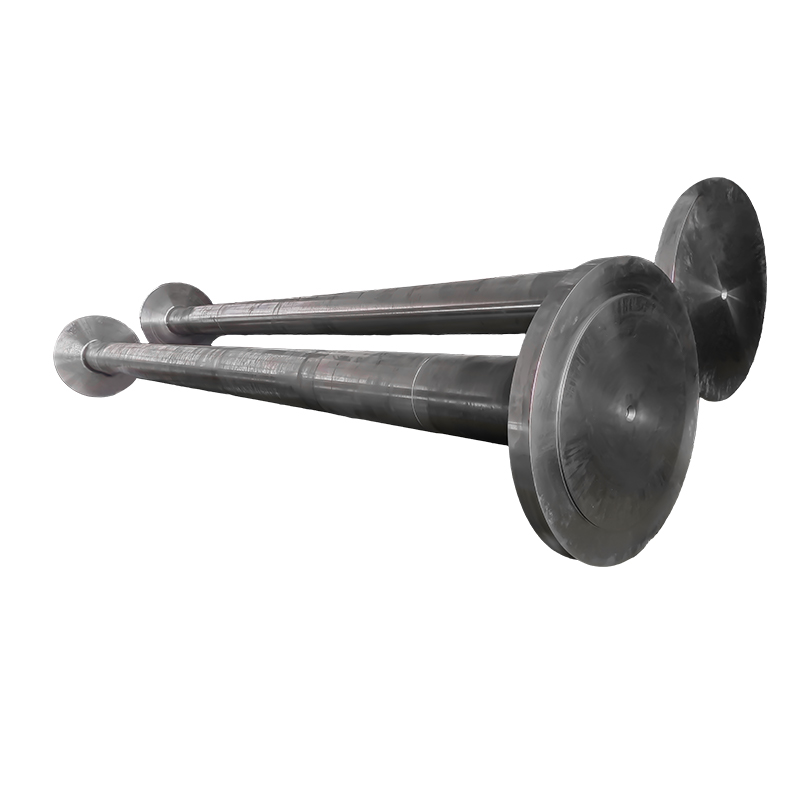
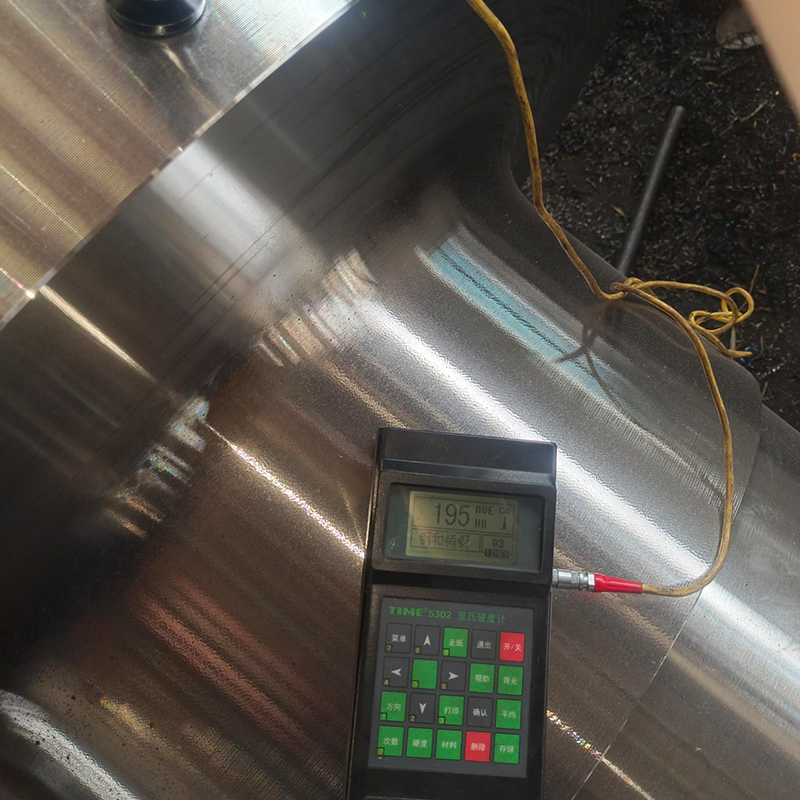 Marine Intermediate Shaft Forgings in C45E SteelC45E intermediate shaft forging, 12,100 kg, with heat treatment and precision machining; agree testing and treatment records early in the purchase order.View Product →
Heat treatment records are often the weakest part of a supplier file. Our summary of metal heat treatment basics explains which parameters a surveyor will want to see.
Why ABS Certified Forgings Get Rejected or Delayed
In practice, rejections rarely come from a failed tensile test. They come from gaps in evidence.
- A certificate covering the steel heat but not the individual item, which breaks unit traceability.
- A test coupon forged from a different heat or given different heat treatment from the finished part.
- Hardness scatter beyond the rule limit, pointing to incomplete transformation during quenching.
- Impact testing at the wrong temperature or with the wrong specimen orientation.
- Ultrasonic examination performed before final heat treatment, so results no longer represent the delivered condition.
- Missing furnace charts or a charge record that cannot link the part to a specific cycle.
- Unauthorised weld repair discovered at the final survey.
- Marking lost during machining, leaving no way to connect the finished part to its certificate.
Each of these is cheap to prevent and expensive to correct. Once a shaft is finish machined, a re-test usually means scrapping material or negotiating a concession.
Lead Time, Cost and the Value of an Approved Works
Certification carries real cost: extra coupon material, surveyor attendance, additional examination and a documentation workload running in parallel with production. For a first article, expect one to three weeks of extra lead time. On repeat orders produced under an approved works arrangement, that can shrink to a few days because inspection moves to a surveillance basis rather than attendance at every test.
The better lever is choosing a forger that controls the whole chain in house. Every subcontracted process is another traceability handover and another chance for records to arrive incomplete.
ACE Group manufactures forged components at a 55 acre site in Jiangsu with more than 50,018 square metres of covered production space, commissioned in November 2025. The shop runs 3 tonne, 5 tonne and 15 tonne electro hydraulic hammers and 1 metre and 1.5 metre vertical ring rolling machines, supported by gas fired heating furnaces, heat treatment resistance furnaces, quench tanks, induction hardening equipment and machining centres. Forging, heat treatment, machining, welding fabrication and surface coating sit under one quality system, which keeps heat number traceability intact from steel intake to dispatch.
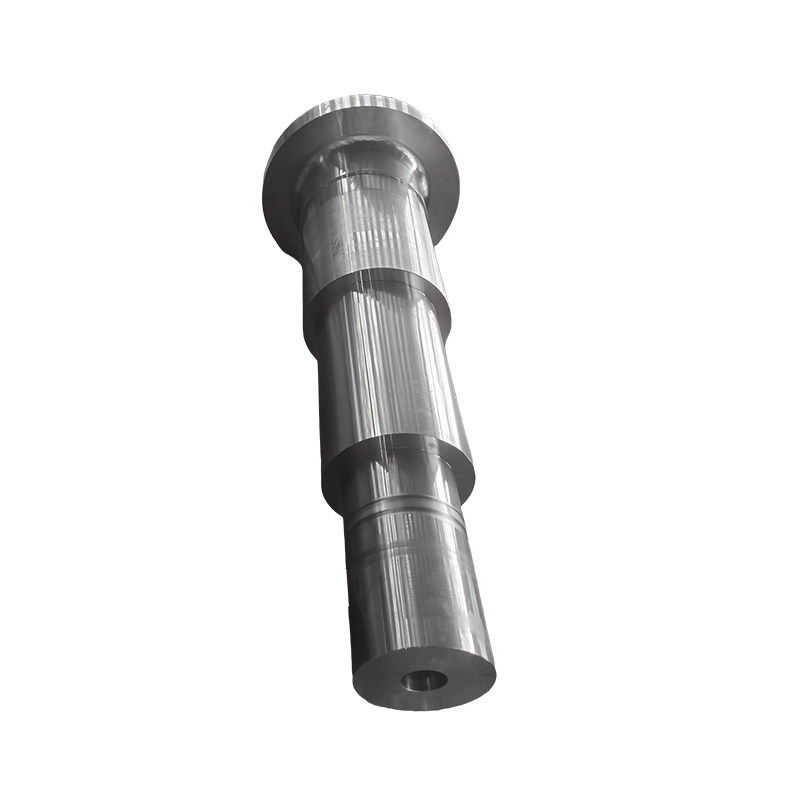
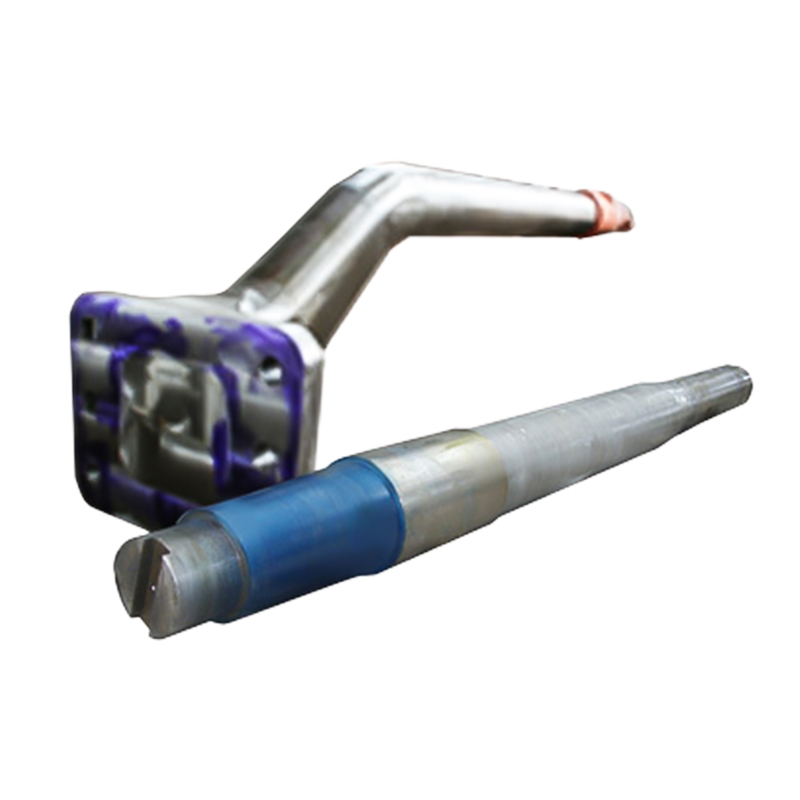 Rudder Stock Forgings for Marine Steering SystemsHeavy rudder stock forgings in 316L, 45E and 40Cr, example 8,700 kg and D522 × 6002 mm, supplied to drawing for class review.View Product →
Shafting, rudder components, flange and bolt forgings, gear blanks and nonstandard customised parts are supplied to drawing, with test and treatment records prepared for class review. When the notation, the grade and the test schedule are confirmed at quotation stage, the certification path becomes predictable.
ABS certified forgings succeed or fail on preparation rather than on steel quality. Settle the grade, the test coupon, the examination level and the documentation set before the first heat is poured, and the surveyor becomes a checkpoint on a planned route instead of an obstacle at the end of it.
Message Us Right Now!
-
Mobile Terminal
-
Quick Links
Products About Us Equipment & Capacity Quality News Contact Us -
Product Category
Power‑Generation Forgings OEM Machined Forgings CUSTOMIZED MADE FORGING PARTS Ship and Port Machinery Forgings Mining and Metallurgy Forgings Food and Feed Machinery Forgings Welding Fabrication Petrochemical Industry Forgings -
Contact Us
Mob.: +86-173 7218 0878 Tel.: +86-515-8389 0396 E-mail: ivy.zhai@aceprocess.cn Add.: No.21 Jinfeng Road, Economic Development Park, Dafeng District, Yancheng City, Jiangsu, China
Copyright © 2025 Yancheng ACE Machinery Co., Ltd. All Rights Reserved.
China open die forgings manufacturer
custom precision forgings supplier
