

 English
 中文简体
中文简体

Industry News
Home / News / Industry News / Rolled Ring Forging: Seamless Ring Process, Tolerances and Supplier Checks
 Home / News / Industry News / Rolled Ring Forging: Seamless Ring Process, Tolerances and Supplier Checks
Industry News
Rolled Ring Forging: Seamless Ring Process, Tolerances and Supplier Checks
2026-10-01
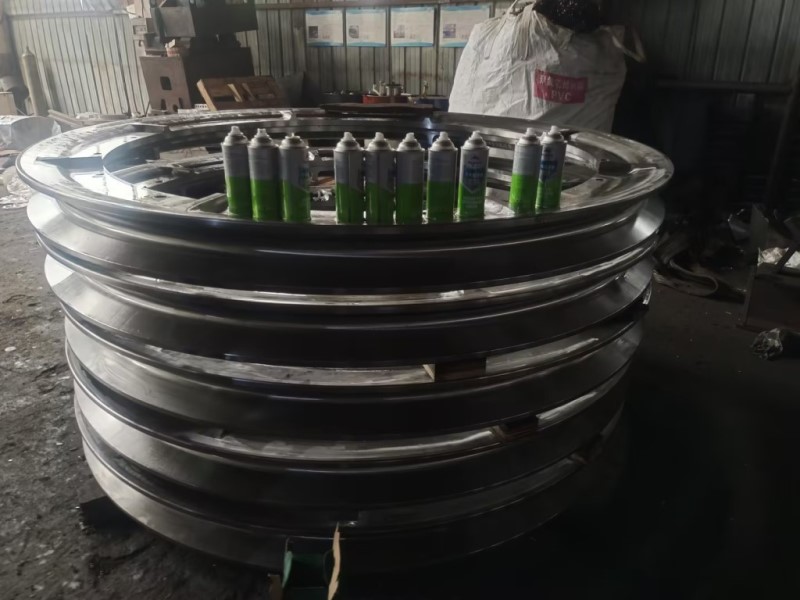
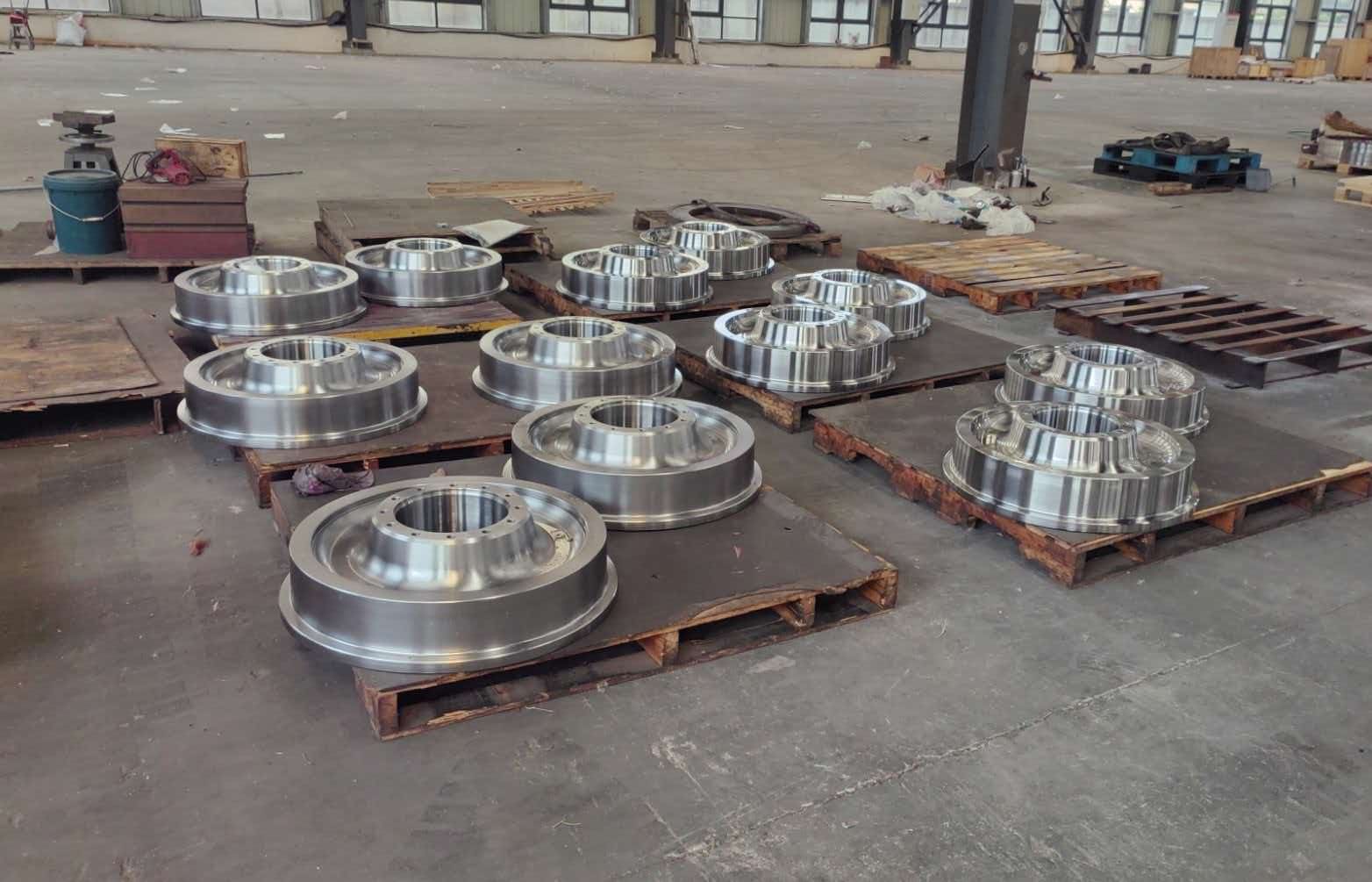
A ring usually fails where the metal meets itself. That could be a weld seam, or a cut edge that stops the grain flow in its tracks. Rolled ring forging exists to remove that weak point. Instead of cutting a ring from plate or welding one up from bar stock, the process starts with a pierced doughnut shaped preform and rolls it until the material has been squeezed into a continuous circumferential grain flow around the full 360 degrees.
The conclusion first, because it saves rework later. If a ring carries torque, internal pressure, reversing load or a fatigue duty cycle, a seamless rolled ring is normally the correct route, even though it costs more than a plasma cut plate ring. If the part is a low stress spacer or a flat cover, rolling is rarely worth the extra step. The rest of this page explains how the process runs, what tolerances to expect as forged, and what to verify before releasing a purchase order.
Content
- 1 Why a Seamless Rolled Ring Beats a Cut or Welded One
- 2 The Rolled Ring Forging Sequence, Step by Step
- 3 Comparing Ring Production Routes
- 4 Tolerances and As Forged Conditions to Plan Around
- 5 Material and Heat Treatment Choices for Ring Forgings
- 6 Where Rolled Rings Are Used in Heavy Equipment
- 7 What to Verify in a Ring Forging Supplier
- 8 Key Takeaways
Why a Seamless Rolled Ring Beats a Cut or Welded One
Metal has a direction once it has been worked. Forging aligns inclusions and grain boundaries with the direction of material flow, and ring rolling aligns them around the circumference, which is exactly the direction in which a rotating ring carries its hoop stress. Three consequences matter in service.
- No weld seam means no heat affected zone and no weld inspection requirement in the most highly stressed section of the part.
- Continuous hoop grain flow gives better fatigue resistance and better crack arrest behaviour than a ring cut from plate, where the flow runs in a straight line and simply stops at the cut edge.
- Through thickness deformation during rolling closes internal porosity left from the original ingot or bloom, which is why rolled rings are preferred for pressure retaining and highly loaded components.
A cut ring is not automatically a bad part. For a non structural spacer, a guard ring or a one off repair piece, cutting from plate is fast and inexpensive. The costly mistake is specifying a cut ring for a duty that needs forged flow properties, then discovering the difference through a field failure or an unexpected rejection at ultrasonic inspection.
The Rolled Ring Forging Sequence, Step by Step
Ring rolling is the second half of a longer forging sequence, and the first half decides how good the second half can be. A typical route runs as follows.
- Cut the billet to a calculated weight and heat it to forging temperature in a controlled furnace.
- Upset the billet to increase the cross section and consolidate the cast structure.
- Pierce the upset blank with a punch to create a hollow preform, often described as a doughnut.
- Place the preform between the main roll and the mandrel. The main roll drives, the mandrel presses inward, and the wall thins as the diameter grows.
- Bring in axial or conical rolls to control the height and square the faces while the ring expands.
- Roll to final size, then control cool, heat treat, machine and inspect.
The critical variable is the reduction ratio, meaning how much the wall thickness is reduced during rolling relative to the preform wall. A preform that is pierced too thin, or rolled with too little reduction, may end up with insufficient deformation in the bore and a less uniform structure. A preform that is too heavy wastes material and rolling time. This is why ring rolling is planned backwards from the finished part, not forwards from whatever billet happens to be on the rack.
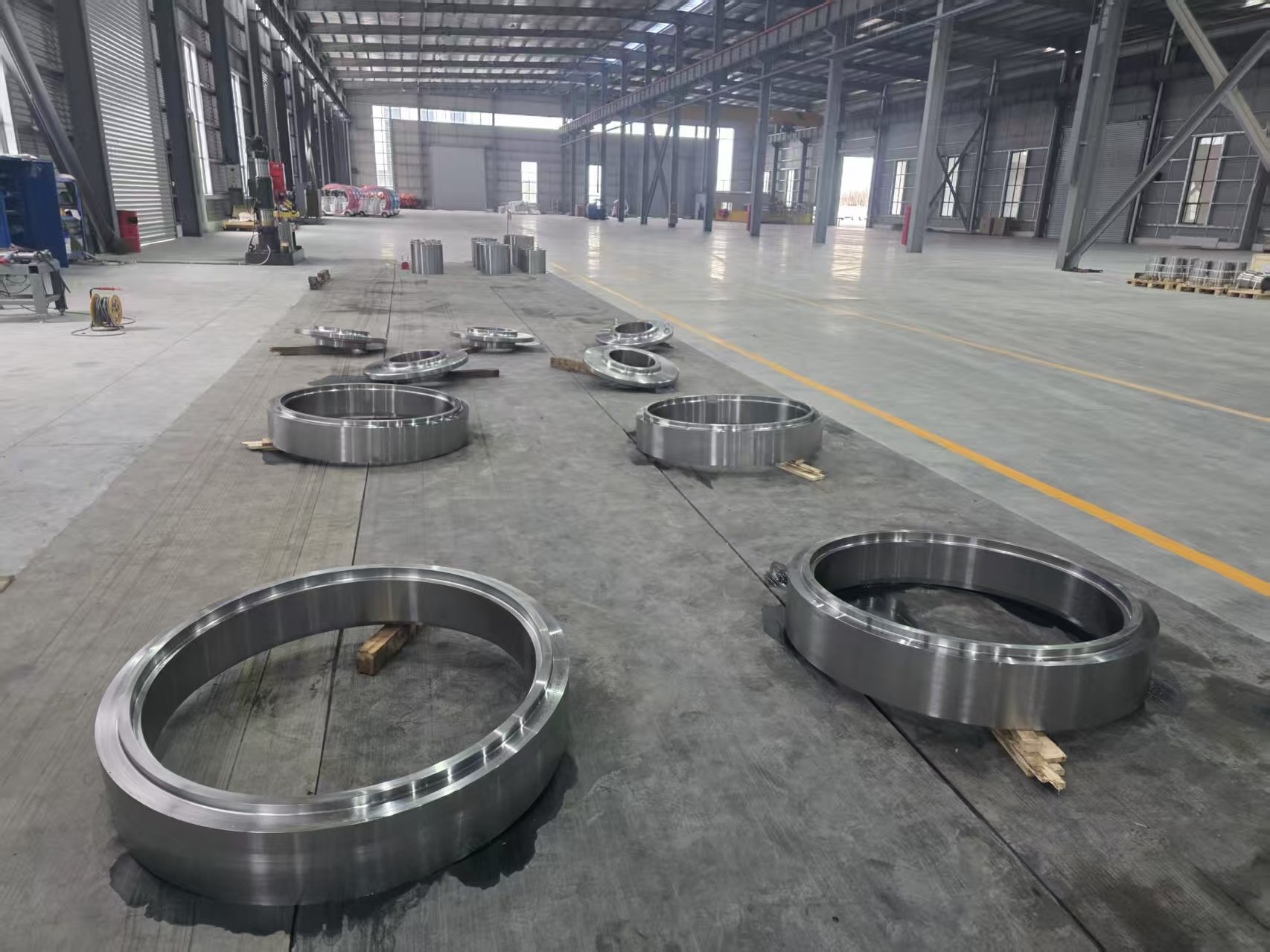
Radial axial mills handle the majority of industrial work, and vertical ring rolling mills are common for larger diameters where the ring needs support while it grows. The size range is wide. Rings from roughly 200 mm up to several metres outside diameter are made on the same principle, with wall thickness, height and machine capacity deciding which route fits the job.
Comparing Ring Production Routes
Before choosing a process, it helps to see where each route actually wins. The comparison below uses grain flow, seam condition and material use as the deciding criteria.
| Route | Grain flow | Seam condition | Material use | Where it fits |
|---|---|---|---|---|
| Rolled ring forging | Continuous and circumferential, aligned with hoop stress | None | Moderate, the pierced centre can often be reused | Gear rings, bearing races, flanges, pressure retaining rings |
| Ring cut from plate | Follows the plate rolling direction and stops at the cut edge | None in the ring, but properties are directional | High, the centre disc is often scrap | Non structural spacers, covers, one off parts |
| Welded fabrication | Interrupted at the weld and in the heat affected zone | One or more longitudinal welds | Low for very large diameters | Ducting, guards, low stress supports |
| Seamless tube cut to length | Axial, along the tube axis rather than around it | None | Good, but limited to standard tube sizes | Thin wall bushings and sleeves |
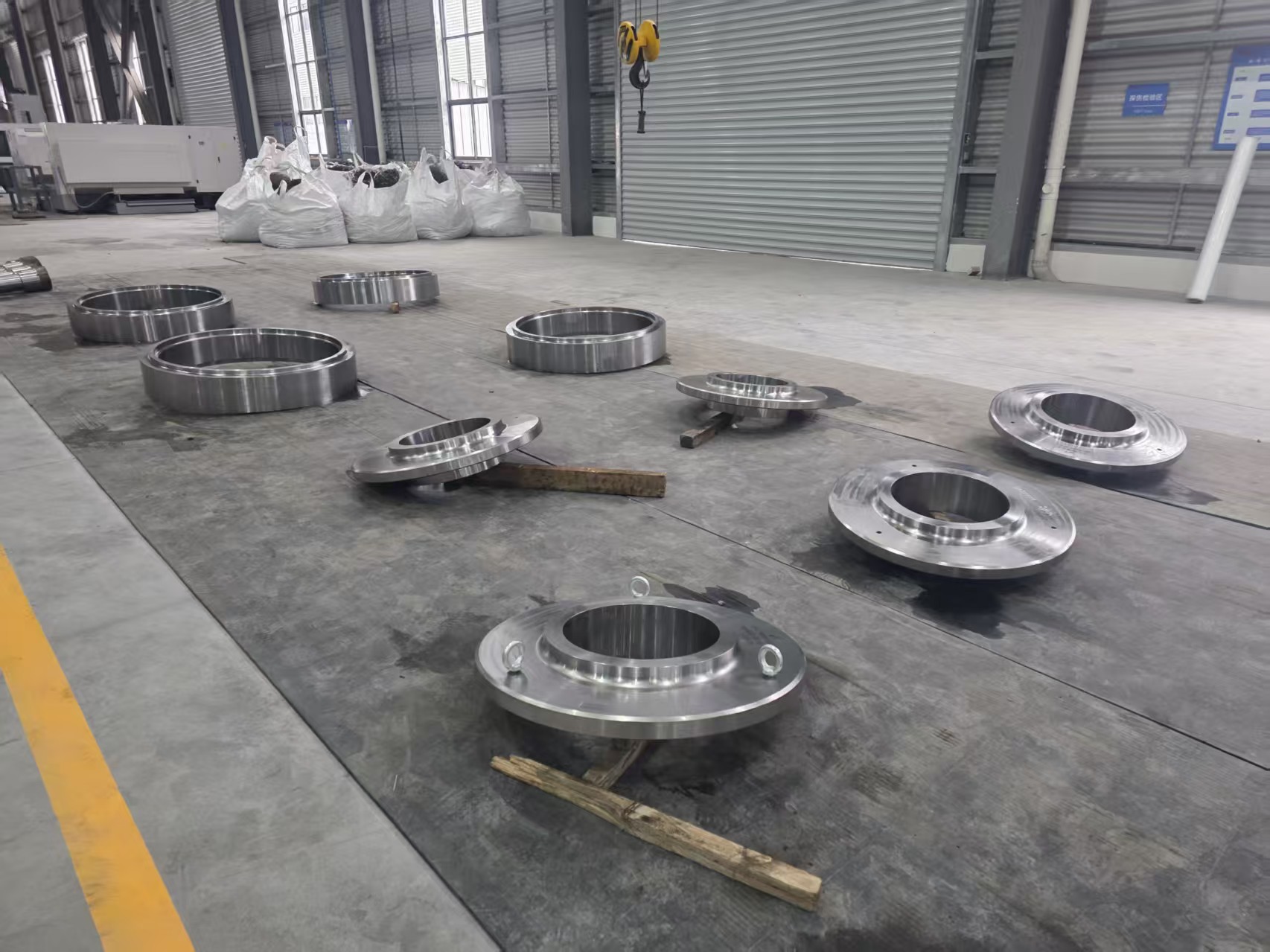
When the part is a flange blank, a gear ring, a bearing race or a wind turbine gearbox ring, rolling is generally the better route because the service loads act in the hoop direction and the flow lines end up where the stress does.
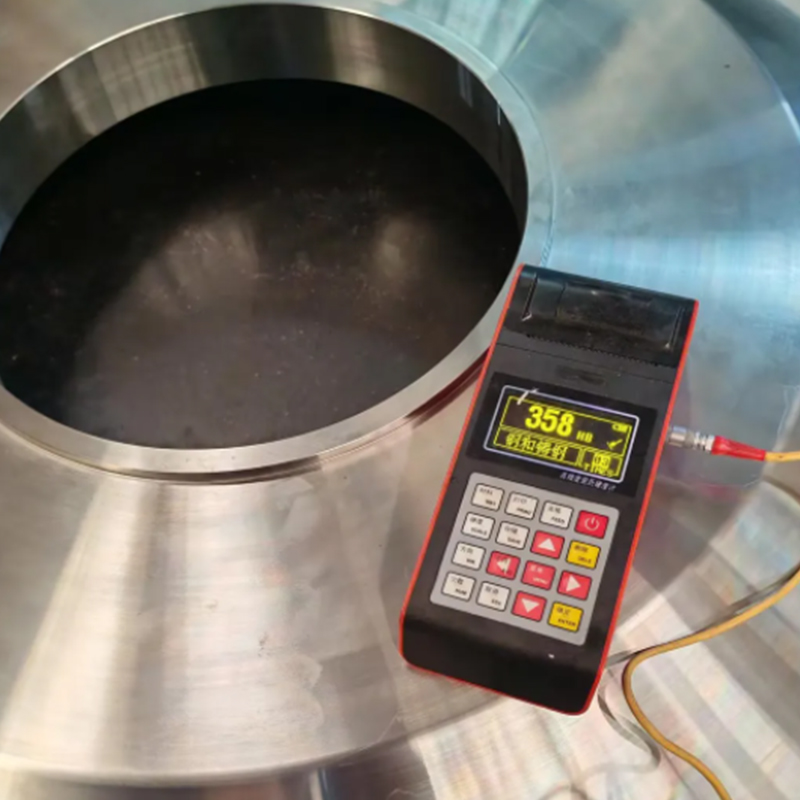 Flange ForgingsAvailable in a variety of materials, they are easy to install and maintain, enabling rapid construction of various pipeline systems. Boasting outstanding sealing perfo...View Product →
Tolerances and As Forged Conditions to Plan Around
Rolled rings are supplied either as rolled with a machining allowance, or as rough machined and proof machined rings. As forged dimensions are a starting point, not a finished tolerance, and the figures vary with diameter, wall thickness, material and the number of rolling passes. The table below shows the general range to expect and confirm on the drawing.
| Feature | General as forged condition | What to confirm with the supplier |
|---|---|---|
| Outside diameter | About plus or minus 1 percent of nominal, or 3 mm, whichever is greater | Whether the drawing permits an as forged outside surface |
| Bore diameter | About 3 mm oversize on medium rings, more on heavy walls | Minimum bore machining allowance, since this usually decides acceptance |
| Wall thickness | Nominal plus 3 mm to minus 1 mm on typical rings | Whether eccentricity is already included in the wall allowance |
| Height or axial length | About plus or minus 2 mm | Whether profiled axial rolls are used to square the faces |
| Ovality | About 0.5 percent of diameter as a working guide | Whether a sizing pass or stress relief is included in the price |
Two practical points follow. Always specify the minimum machining allowance on the bore rather than the outside diameter, because bore cleanup is normally what decides whether a ring is salvageable. And expect thin wall, large diameter rings to be the hardest to keep round. Ovality is where most disagreements between buyer and supplier begin.
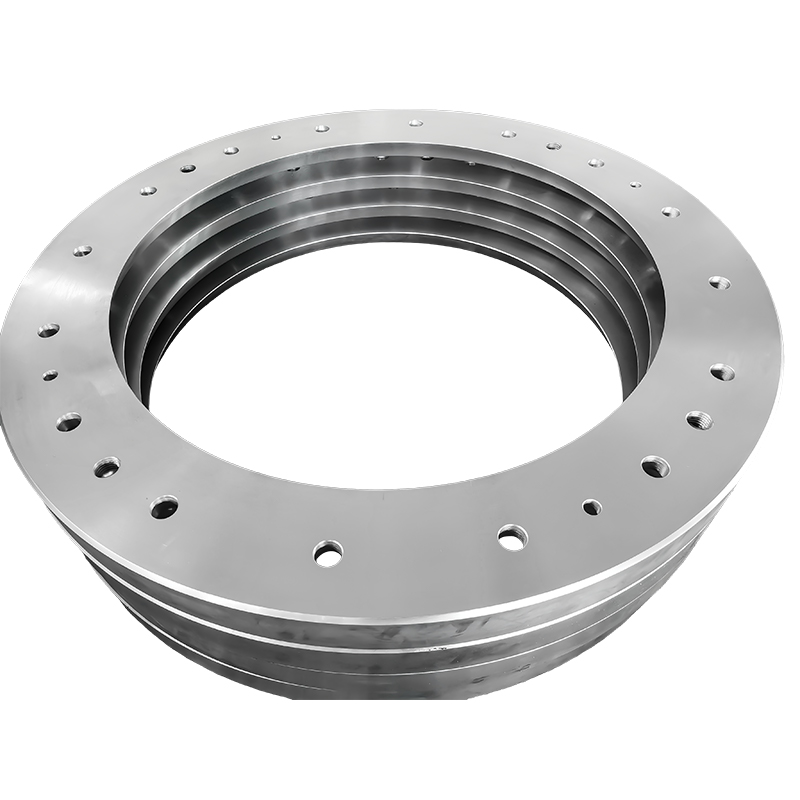 Stiffening Ring ForgingsIn feed machinery—specifically for key parts such as the cylinder shells, rotor shafts, and conveying pipes of pellet mills, mixers, and crushers—stiffening rings are ...View Product →
Material and Heat Treatment Choices for Ring Forgings
Ring rolling works on carbon steels, alloy steels, stainless steels, nickel alloys and copper alloys, provided the material can be pierced and rolled inside its forging temperature window. Typical selections include:
- Carbon and micro alloyed steels for general structural rings and spacers.
- Quenched and tempered alloy steels such as 4140 type grades for gear rings, heavy flanges and high load hubs.
- Case hardening grades for gear rings that will be carburized after forging.
- Austenitic stainless steels such as 316L for corrosion and hygienic duties, and martensitic grades such as 420 for wear rings.
Heat treatment should be driven by the final property requirement, not by habit. Normalizing refines the structure before machining, quench and temper reaches a specified strength and toughness combination, and solution annealing is used for austenitic grades. On stainless rings the forging temperature range and the cooling path both matter, because the wrong combination can leave sensitization or a coarse structure that no amount of subsequent machining will correct. More background is covered in this article on how to forge stainless steel forgings.
Where Rolled Rings Are Used in Heavy Equipment
Wind turbine gearboxes are the clearest example of rolled rings doing serious work. Ring gears, sun gears and planet carriers in the 3 MW to 10 MW class are sized in the metre range, run under reversing torque and are expected to survive two decades of service, so the ring gear is almost always a seamless rolled ring in a case hardening or quenched and tempered alloy steel.
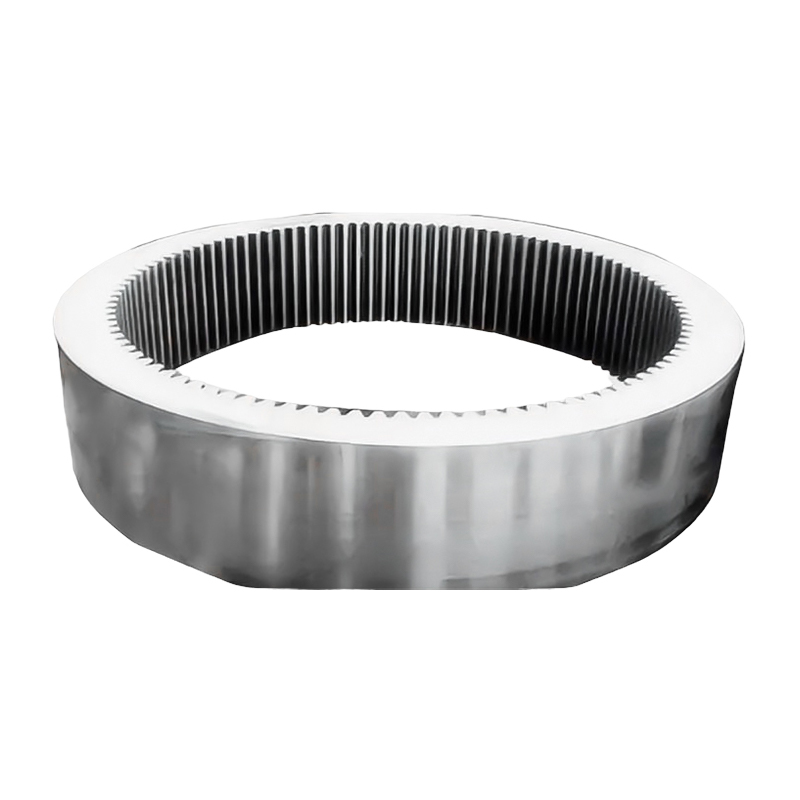 Wind Turbine 5MW-10MW 1st/2nd Stage Ring Gear ForgingsMade of high-purity alloy steel such as 18CrNiMo7-6, they undergo ring rolling forming and carburizing-quenching processes. With surface hardness reaching 58-62HRC and...View Product →
Other duties follow the same logic, which is why the ring shape keeps appearing across heavy industry:
- Bearing races and slewing bearing rings for cranes, excavators and port handling equipment.
- Marine shaft and rudder components, where forged flow and ultrasonic cleanliness are specified before anything else.
- Pressure vessel and drilling equipment rings such as casing heads, mandrel hangers and valve bodies.
- Rolling mill bearing housings and straightening rolls, where the ring must resist load and wear at the same time.
Flange rings deserve a separate mention because they are so common. A rolled flange blank keeps its hoop grain flow, which matters on flanges exposed to cyclic pressure or thermal movement, and it avoids the directional weakness that shows up in a flange cut from plate.
What to Verify in a Ring Forging Supplier
Start with the equipment list. A supplier that rolls rings in house should be able to state the size and capacity of its mills and its hammers or presses, because those numbers define the diameter and weight range that can be produced as one piece. A shop running vertical ring rolling mills in the 1 m to 1.5 m class alongside 3 tonne, 5 tonne and 15 tonne forging hammers, for example, can cover both medium rings and heavier open die work without farming any step out.
Inspection capability comes next. Ask about ultrasonic testing, magnetic particle or dye penetrant testing, hardness and mechanical testing to a recognised standard, plus dimensional reporting. Then ask what documentation travels with the part, normally a 3.1 type inspection certificate with heat number traceability that links the finished ring back to the steel it came from.
Finally, ask about the non standard side of the business, because most ring projects stop being standard the moment a bore step, a keyway, a flange or a set of bolt holes appears on the drawing. A supplier that already handles nonstandard customized forging and finish machining under one roof removes a whole chain of transport and re inspection steps from the schedule.
Key Takeaways
- Rolled ring forging produces a seamless ring with continuous circumferential grain flow, which is the correct choice for rings under torque, pressure or fatigue loading.
- The preform design and reduction ratio decide internal quality, so rolling must be planned backwards from the finished part.
- As forged dimensions are a starting point. Agree the minimum bore allowance and the acceptable ovality in writing before the first heat.
- Material and heat treatment should be specified from the service requirement, not copied from an old drawing.
- Verify mill capacity, inspection scope and certification traceability before placing a purchase order.

Message Us Right Now!
-
Mobile Terminal
-
Quick Links
Products About Us Equipment & Capacity Quality News Contact Us -
Product Category
Power‑Generation Forgings OEM Machined Forgings CUSTOMIZED MADE FORGING PARTS Ship and Port Machinery Forgings Mining and Metallurgy Forgings Food and Feed Machinery Forgings Welding Fabrication Petrochemical Industry Forgings -
Contact Us
Mob.: +86-173 7218 0878 Tel.: +86-515-8389 0396 E-mail: ivy.zhai@aceprocess.cn Add.: No.21 Jinfeng Road, Economic Development Park, Dafeng District, Yancheng City, Jiangsu, China
Copyright © 2025 Yancheng ACE Machinery Co., Ltd. All Rights Reserved.
China open die forgings manufacturer
custom precision forgings supplier
