

 English
 中文简体
中文简体

Industry News
Home / News / Industry News / Rolled Rings: Seamless Ring Forging Process, Materials and Sourcing Guide
 Home / News / Industry News / Rolled Rings: Seamless Ring Forging Process, Materials and Sourcing Guide
Industry News
Rolled Rings: Seamless Ring Forging Process, Materials and Sourcing Guide
2026-10-02
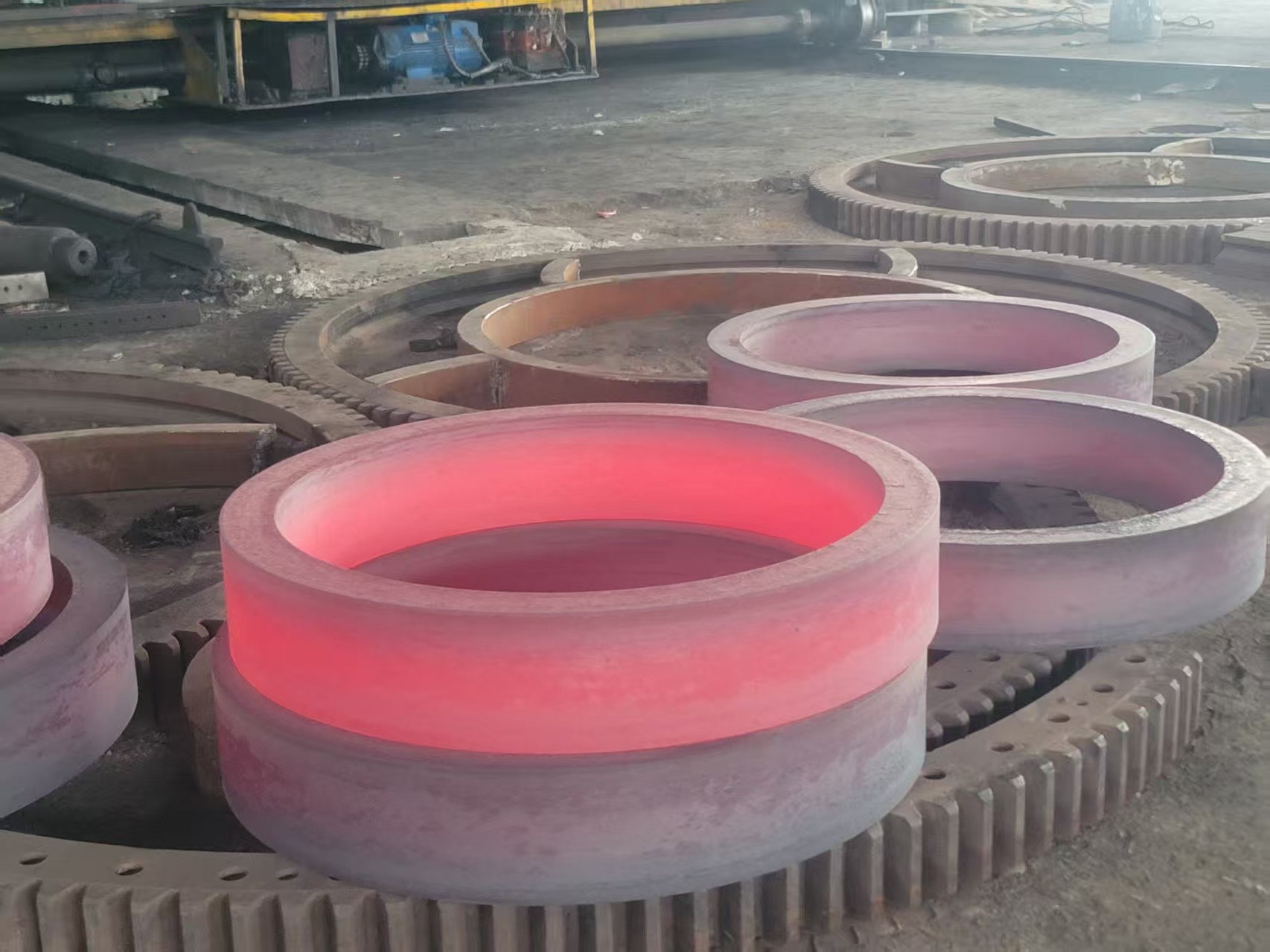
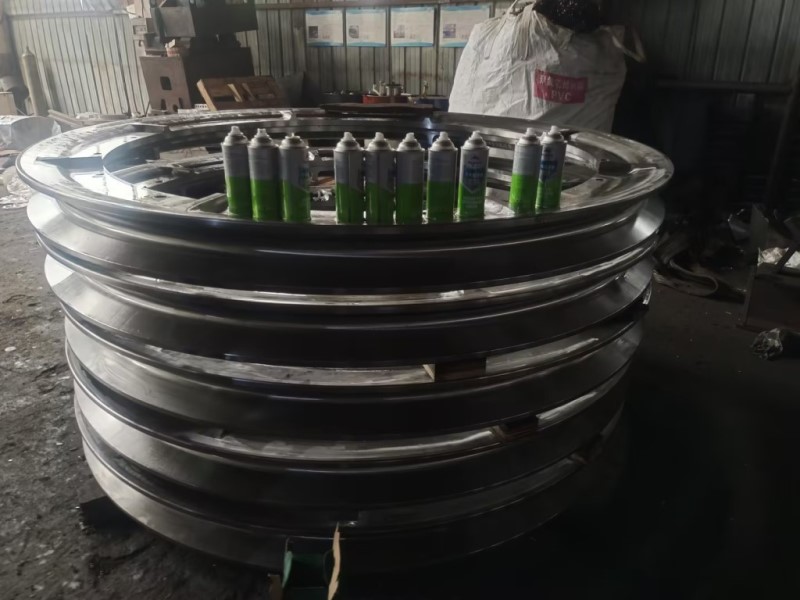
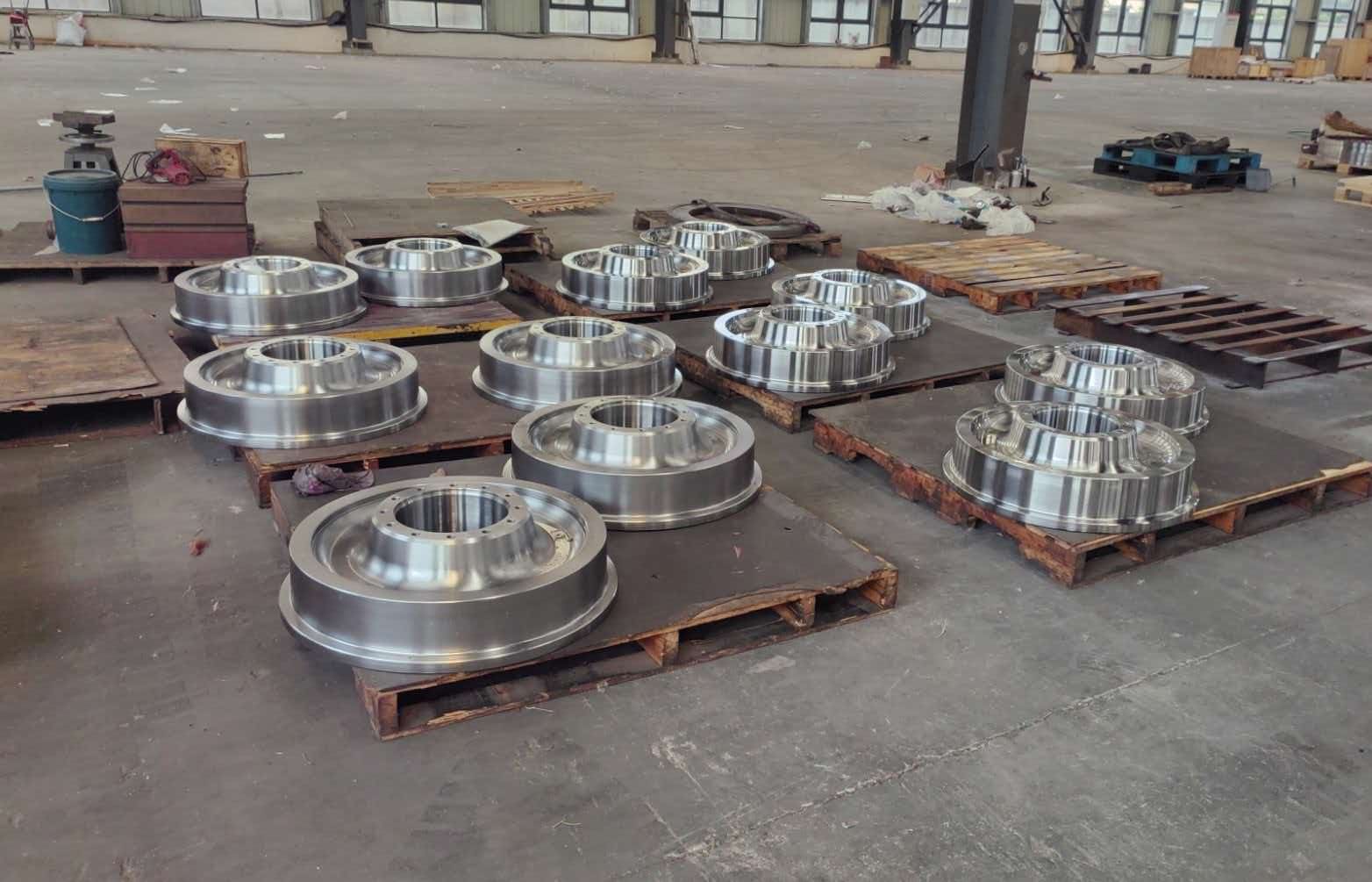
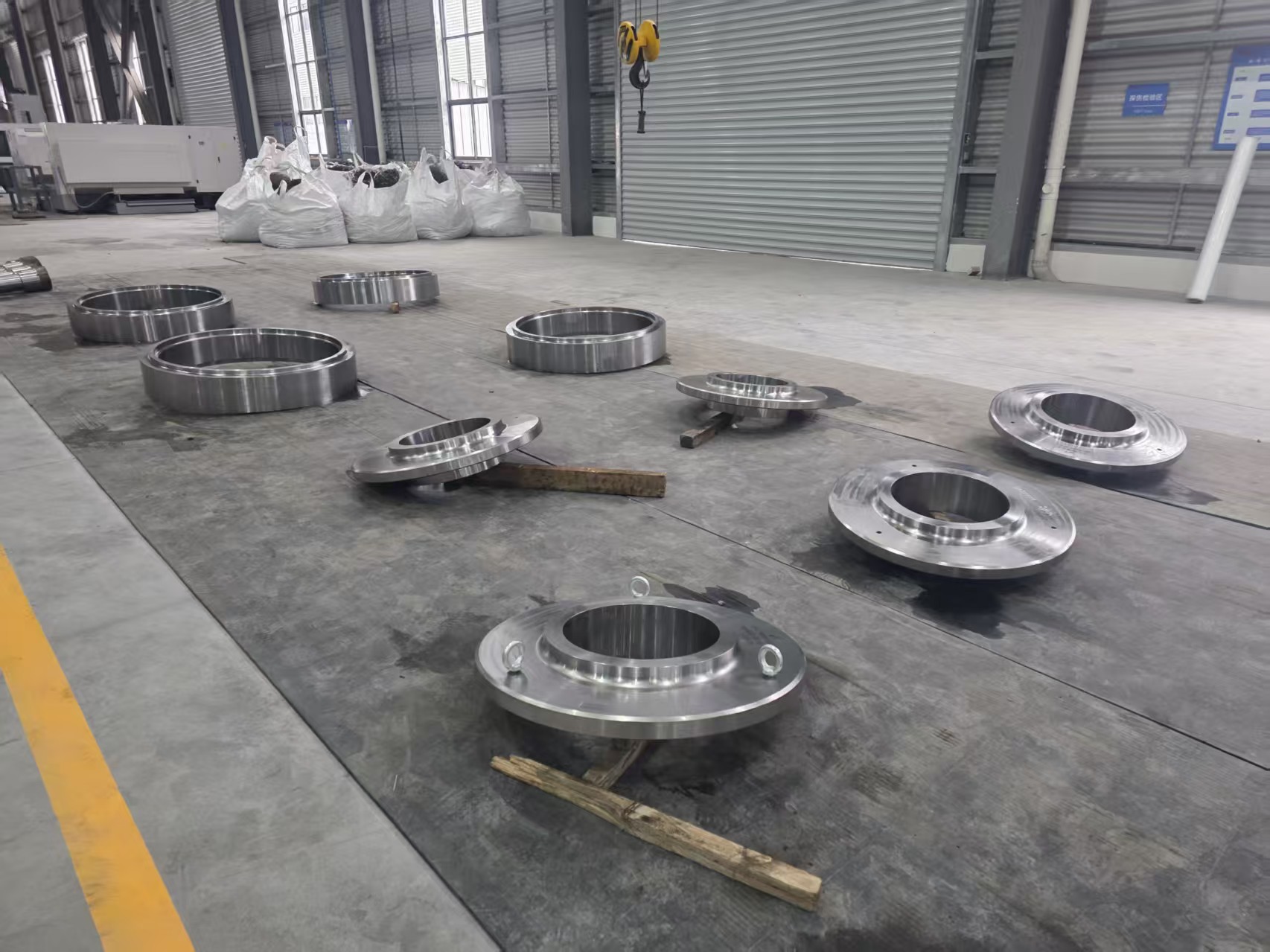
A wind turbine gearbox ring gear that measures roughly 1.5 m across does not start as a casting or as a circle cut from a plate. It starts as a cut billet that is heated, upset, pierced and then squeezed between a main roll and a mandrel until the wall thins and the diameter grows to target size. What leaves the mill is a seamless rolled ring with grain flow that runs continuously around the circumference, which is exactly what a rotating, load bearing or pressure retaining part needs.
The short answer for buyers: when a circular part carries load in more than one direction, a rolled ring is usually the safer route than a welded ring or a ring machined from plate. The rest of this article covers the process sequence, the material choices, the tolerances worth arguing about, and the inspection steps that decide whether a shipment is accepted or rejected at goods in.
Content
- 1 What Makes Rolled Rings Different
- 2 The Ring Rolling Sequence, Step by Step
- 3 Comparing the Main Ring Making Routes
- 4 Material Choices That Match the Duty
- 5 What to Put on the Drawing Before Requesting a Quote
- 6 Where Rolled Rings Do the Heavy Lifting
- 7 Inspection and Heat Treatment Decide the Outcome
- 8 Choosing a Ring Rolling Supplier
What Makes Rolled Rings Different
Ring rolling is a hot forming process, not a cutting process. Metal is deformed while it is plastic, so the grain structure follows the circumference instead of being sliced through. That single characteristic drives most of the benefits buyers care about.
- No weld seam, so there is no heat affected zone to inspect, qualify or explain to an end customer.
- Mechanical properties stay consistent around the ring, which matters for parts that rotate or seal.
- Wall thickness can be formed close to net shape, so machining allowance and chip volume drop.
- Profiled rings with grooves, steps or flanges can often be rolled near net, removing a separate machining operation.
The trade offs are real too. Rolling needs tooling, a suitable machine envelope and enough quantity to justify setup. The equipment on the floor sets the working window for diameter and weight, so a shop running 1 m and 1.5 m vertical ring rolling machines covers a defined band of sizes, and parts far outside that band belong on a different route.
The Ring Rolling Sequence, Step by Step
Knowing the sequence makes it easier to see where defects and delays come from.
- Billet selection and cutting. Grade, heat number and weight are recorded, sized for the finished ring plus scale loss and machining allowance.
- Heating. The billet is brought to forging temperature in a controlled furnace. Too cold risks cracking, too hot risks coarse grain that cannot be recovered later.
- Upsetting and preforming. The billet is upset to break up the cast structure and shaped into a thick doughnut preform.
- Piercing. A hole is punched through the preform to create the starting bore.
- Initial rolling. The preform sits between the main roll and the mandrel. Wall thickness falls as diameter grows.
- Rolling to size. Axial rolls control height and guide rolls keep the ring round and centred while the operator tracks diameter and temperature to the final size.
- Post forge operations. Heat treatment, straightening where needed, machining, non destructive testing, marking and certification.
Steps five and six are where most dimensional problems are born. If the ring is rolled out of round or the height drifts, no amount of machining will fix it economically, because correction has to be taken out of the allowance on every surface.
Comparing the Main Ring Making Routes
Four routes cover most circular parts, and they behave very differently in service and in the machine shop.
| Route | Grain flow | Weld seam | Material yield | Typical fit |
|---|---|---|---|---|
| Seamless rolled ring | Continuous around the circumference | None | High, wall thickness close to net shape | Rotating, pressure retaining and impact loaded rings |
| Welded ring from plate or bar | Interrupted at the weld | One or more | Moderate | Large diameter, low stress rings in short runs |
| Ring cut from plate | Cut across the flow direction | None | Low, most of the plate becomes chips | Prototypes and very small quantities |
| Cast ring | Random, with possible porosity | None | High, complex shapes possible | Complex profiles under light load |
Material Choices That Match the Duty
Carbon and alloy steels
Medium carbon steels cover general structural rings where strength matters more than corrosion resistance. Alloy grades such as chromium molybdenum types are the workhorse for quenched and tempered rings that must hold high yield strength and good impact toughness at the same time. Hardness range and impact requirements should be written together, because one drives the other.
Stainless and wear resistant grades
Corrosion resistance changes the whole conversation. Austenitic grades such as SS316L are picked for wet, acidic or hygienic service, including impeller and agitator components in food and feed machinery. Martensitic grades such as SS420 are picked for wear resistance, for example wear rings that run against a mating surface and must survive abrasion without deforming. Stainless heats are less forgiving about temperature control, which is why the forging practice for stainless steel deserves scrutiny when you qualify a supplier.
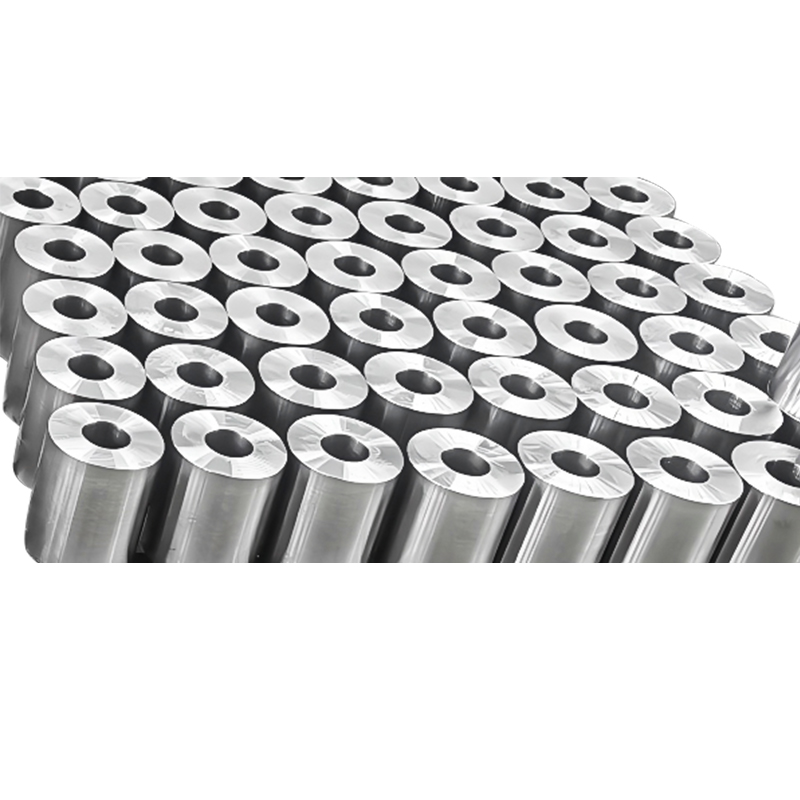
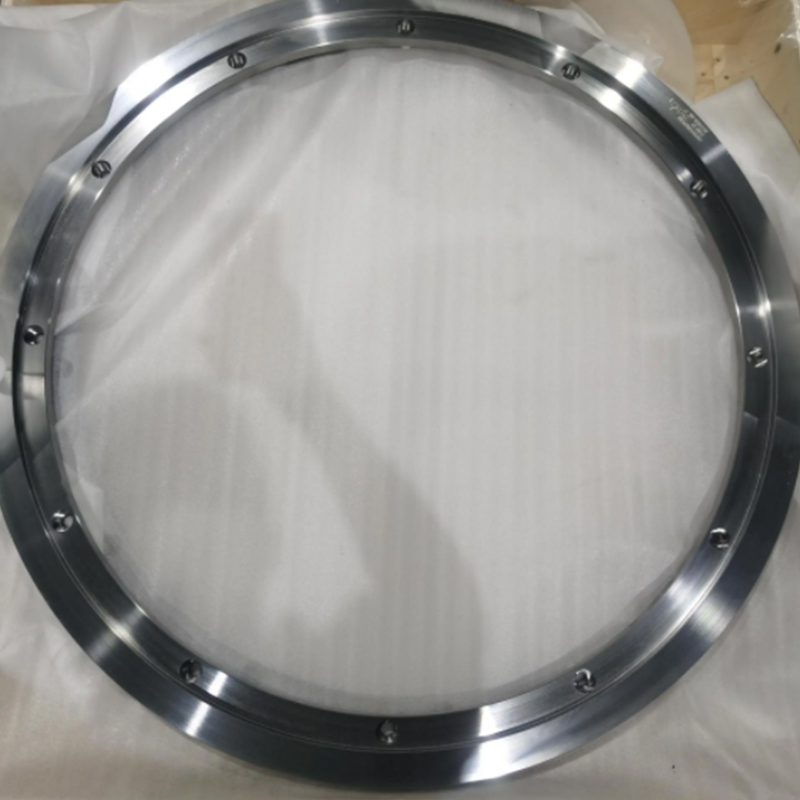 SS420 Wear Ring/Forged Ring Resistant Parts ForgingsIn feed machinery, raw materials may contain a certain amount of moisture, salt, and other substances, which exhibit a certain degree of corrosiveness. SS420 stainless...View Product →
What to Put on the Drawing Before Requesting a Quote
A complete drawing prevents the most expensive misunderstandings in ring procurement. At minimum, cover the following.
- Outside diameter, inside diameter, radial wall thickness and axial height, with critical dimensions marked.
- Tolerances for concentricity, flatness, parallelism and roundness, specified after heat treatment rather than before.
- Machining allowance stated as a minimum per surface and agreed with the finishing route.
- Heat treatment condition with a hardness range, not a single hardness value.
- Testing scope: ultrasonic testing on the blank, magnetic particle or dye penetrant on machined surfaces, and the sampling frequency for tensile and impact tests.
- Material certificate level, for example EN 10204 3.1, plus any third party witness requirement.
- Marking, traceability and packaging, especially for rings that will be stacked or shipped by sea.
Thin wall rings deserve extra attention. A light stiffening ring with a large diameter and a narrow wall distorts easily during quenching, and the distortion is not always visible until final machining. In that case the practical answer is a generous allowance, a planned straightening step, or a different heat treatment sequence agreed before the first cut is made.
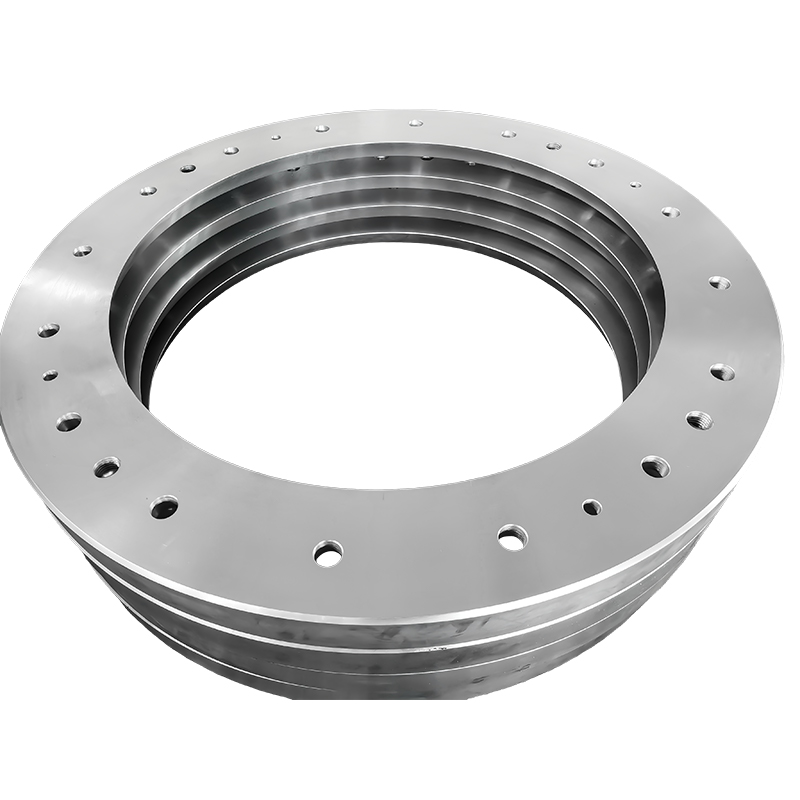 Stiffening Ring ForgingsIn feed machinery—specifically for key parts such as the cylinder shells, rotor shafts, and conveying pipes of pellet mills, mixers, and crushers—stiffening rings are ...View Product →
Where Rolled Rings Do the Heavy Lifting
Power generation
Wind gearbox ring gears, planet carriers and bearing rings see reversing loads for decades, so seamless construction and consistent hardness are non negotiable. Ring gears for 5 MW to 10 MW class gearboxes are a typical example of a rolled ring that must hold tight concentricity after heat treatment.
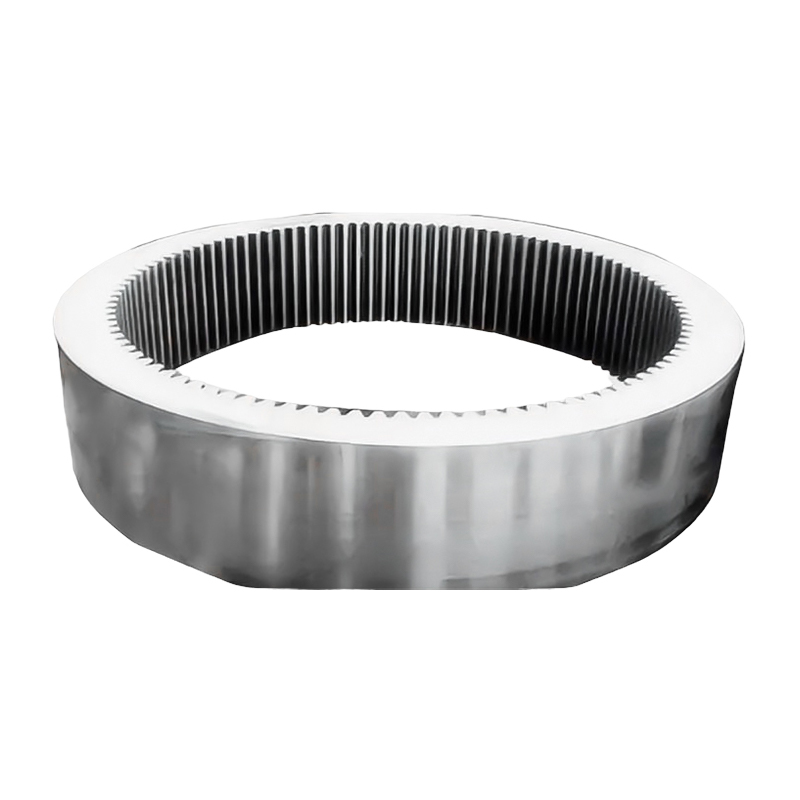 Wind Turbine 5MW-10MW 1st/2nd Stage Ring Gear ForgingsMade of high-purity alloy steel such as 18CrNiMo7-6, they undergo ring rolling forming and carburizing-quenching processes. With surface hardness reaching 58-62HRC and...View Product →
Hydro and nuclear work follows the same logic. Guide vane components, generator shafts, conventional island parts and piping nozzle forgings all rely on directional grain flow rather than a weld repair.
Marine, port and offshore equipment
Slewing bearing rings, forged flanges and connecting parts, rudder system components and marine bolts sit in salt laden air and constant vibration, so a weld seam in a bearing race is simply not an option.
Mining, metallurgy and oil and gas
Rolling mill bearing housings, straightening rolls, crusher components, casing heads, mandrel hangers, fracturing heads and valve parts are all produced as rings or ring like forgings where impact toughness and pressure containment drive the material specification.
Food, feed and general machinery
Gear rings, wear rings, flanges and connector rings for mixers and conveyors are frequently stainless or surface hardened. Volume here is often lower, so the willingness of a supplier to handle smaller batches without compromising process control becomes a deciding factor.
Inspection and Heat Treatment Decide the Outcome
Most ring failures traced back to a supplier are not dramatic. They are laps, seams or a hardness band that drifted at the low end. Ultrasonic testing on the forged blank catches internal discontinuities before machining adds cost to a part that will be scrapped anyway. Hardness mapping on a sample ring shows whether the quench tank is actually doing what the furnace promises.
Heat treatment for rings is also where distortion and residual stress are either controlled or baked in. Normalising, quenching and tempering parameters, cooling uniformity and the placement of rings in the furnace all influence final roundness. A supplier who treats heat treatment as a black box will pass the problem to your machining line, and the fundamentals of metal heat treatment are worth reviewing when you audit the process.
Choosing a Ring Rolling Supplier
Look at the equipment list first, because it defines what the shop can genuinely control in house. A supplier with forging hammers in the 3 t to 15 t range, vertical ring rolling machines at 1 m and 1.5 m, gas fired heating furnaces, heat treatment resistance furnaces, quench tanks, induction hardening equipment and machining centres can take a ring from billet to finished bore without handing the part to a third party.
Scale helps as well. A production base of about 55 acres with more than 50,018 square metres of building area, brought into operation in November 2025, supports multi stage flow from heating through rolling, heat treatment and finishing. That kind of layout reduces the queue time between steps, which protects temperature and cleanliness between operations.
Then ask the questions that separate a rolling shop from a trading office.
- Is the ring rolled in house or bought as a blank and resold?
- Which ultrasonic and surface inspection methods are applied, and by whom?
- What hardness range is achievable on the grade specified, and how is it verified?
- Who owns the tooling, and how are first article rings approved?
For sizes and profiles outside standard catalogues, nonstandard and custom forged rings made to drawing are usually the fastest route, provided the drawing carries the tolerances, test scope and certification level described earlier.
Rolled rings reward decisions made early. Fix the material, the heat treatment condition and the inspection scope before the first billet is cut, choose a supplier whose rolling and heat treatment stay under one roof, and the part will arrive round, sound and ready for the next operation. Leave those details open, and the cost shows up later as extra machining, rejected heats or a ring that never quite meets the drawing.
Message Us Right Now!
-
Mobile Terminal
-
Quick Links
Products About Us Equipment & Capacity Quality News Contact Us -
Product Category
Power‑Generation Forgings OEM Machined Forgings CUSTOMIZED MADE FORGING PARTS Ship and Port Machinery Forgings Mining and Metallurgy Forgings Food and Feed Machinery Forgings Welding Fabrication Petrochemical Industry Forgings -
Contact Us
Mob.: +86-173 7218 0878 Tel.: +86-515-8389 0396 E-mail: ivy.zhai@aceprocess.cn Add.: No.21 Jinfeng Road, Economic Development Park, Dafeng District, Yancheng City, Jiangsu, China
Copyright © 2025 Yancheng ACE Machinery Co., Ltd. All Rights Reserved.
China open die forgings manufacturer
custom precision forgings supplier
