

 English
 中文简体
中文简体

Industry News
Home / News / Industry News / Rolled Steel Rings: Ring Rolling Process, Grades and Sourcing Guide for Gear Blanks
 Home / News / Industry News / Rolled Steel Rings: Ring Rolling Process, Grades and Sourcing Guide for Gear Blanks
Industry News
Rolled Steel Rings: Ring Rolling Process, Grades and Sourcing Guide for Gear Blanks
2026-10-08
Your RFQ lists a ring gear blank: 1,050 mm outside diameter, 120 mm wall, 42CrMo4, quenched and tempered to 280 to 320 HB. You can cut that ring out of a steel plate, cut it from seamless tube, or have it rolled. For a part that carries torque and turns for twenty years, rolling is normally the right call, and making that decision early is what keeps the machining budget under control.
Short version first. Rolled steel rings are seamless, their grain flow runs around the circumference in the direction the part is loaded, and they consume far less material than a ring cut from plate. The trade-off is that ring rolling has its own rules about wall thickness, diameter and forming. A supplier who ignores them will deliver an oval ring that no lathe can rescue.
Content
- 1 What a Rolled Steel Ring Actually Is
- 2 What Rolling Gives You That Cutting Does Not
- 3 Rolled, Plate-Cut or Tube-Cut: A Practical Comparison
- 4 Tolerances, Allowances and the Details Buyers Forget
- 5 Steel Grades and Heat Treatment
- 6 Where Rolled Steel Rings Are Used
- 7 When Ring Rolling Is the Wrong Choice
- 8 What to Send With Your RFQ
What a Rolled Steel Ring Actually Is
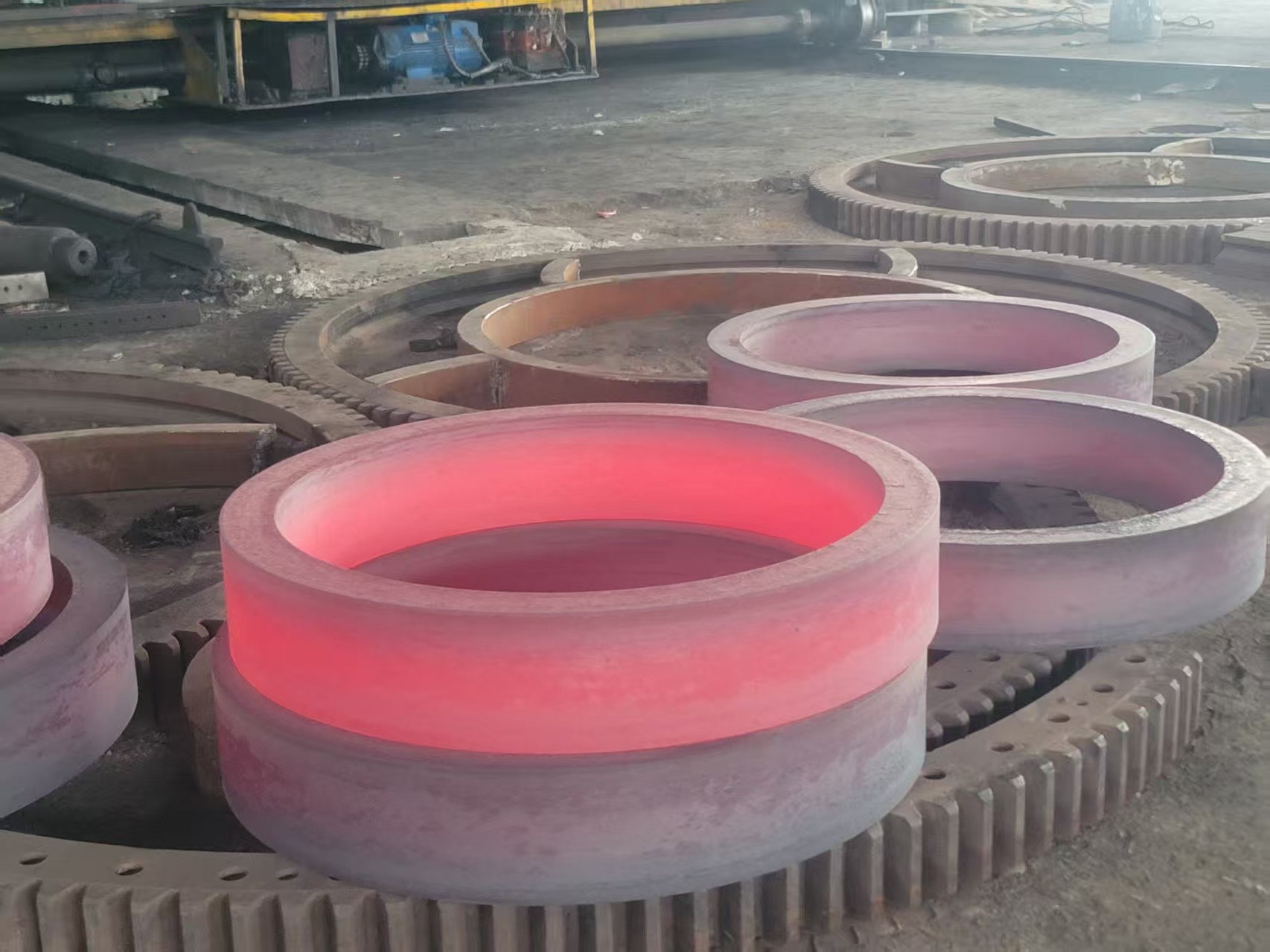
A rolled steel ring, often called a seamless rolled ring, begins as a cut billet rather than a plate. The billet is heated, upset to consolidate the centre, and pierced to open a hole. It then goes to a ring rolling mill, where a driven main roll works the outside of the ring while a mandrel works the inside, and axial rolls hold the height. The diameter grows, the wall thins, and the grain is bent into one continuous flow around the ring.
That last point is the reason the process exists at all. Nothing is welded, so there is no seam to fail, and the grain follows the hoop direction, which is exactly how a gear rim, a bearing race or a flange carries load.
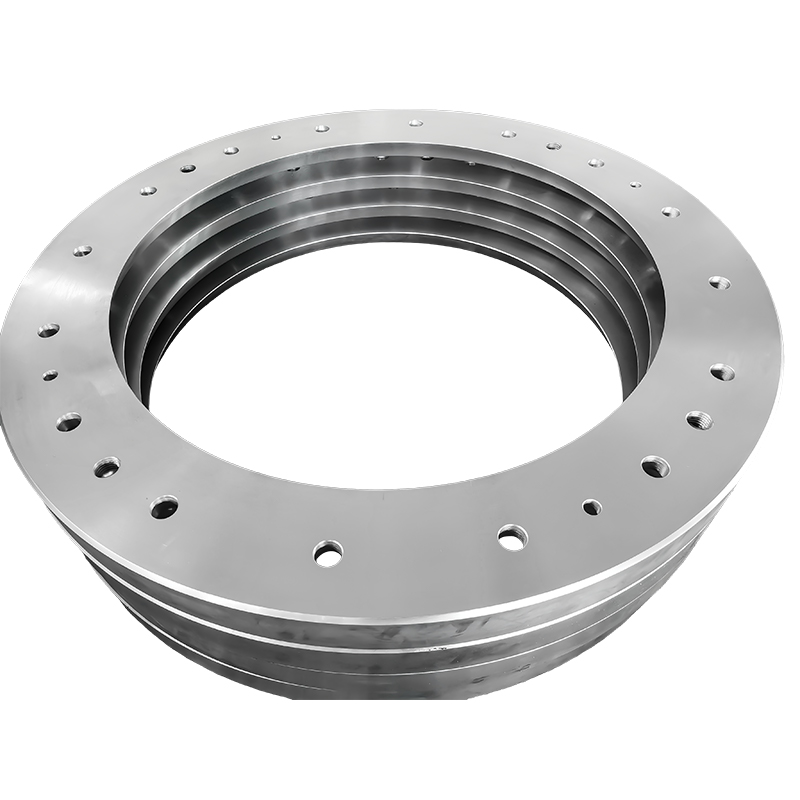 Forged Stiffening Rings for Feed Machinery EquipmentSeamless rolled rings in S355J2G3 for feed machinery cylinder shells, rotor shafts and conveying pipes, sized Ø700–2000mm and 200–3000kg.View Product →
Tooling is simple enough that one mill covers a wide size range, so the same setup that rolls a gear ring can roll a stiffening ring or a bearing housing blank with a mandrel change.
What Rolling Gives You That Cutting Does Not
Three advantages show up on the shop floor again and again.
- Circumferential grain flow. A ring cut from plate has grain running straight through the section, so the bore and the outside diameter end up with exposed grain ends. Under repeated load, that is where cracks begin.
- Material yield. Cutting a 1,000 mm ring from plate scraps the entire centre. A rolled ring starts from a pierced blank, uses less steel for the same finished part, and needs less turning to reach final size.
- Uniform properties. Rolling refines the structure and closes porosity, so hardness and toughness stay more consistent around the ring than in a plate cut or a casting.
Cost follows from those three points. For large rings, ring rolling often lands cheaper per finished part even though the forming step costs more than a plate cut, because you buy less steel and spend fewer hours on the machine.
Rolled, Plate-Cut or Tube-Cut: A Practical Comparison
When a buyer asks whether rolling is worth it, the answer depends on size, load and quantity. The table below sets out the trade-offs in the terms that matter at quoting stage.
| Method | Grain flow | Material yield | Best suited to | Watch out for |
|---|---|---|---|---|
| Seamless rolled ring | Continuous around the circumference | High for large rings, since only the pierced centre is lost | Torque and fatigue loaded rings: gear blanks, bearing races, flanges, wear rings | Mill limits on wall thickness and height; setup cost on small batches |
| Cut from plate | Straight through the section, exposing grain ends at bore and rim | Low, the centre disc becomes scrap unless it makes a smaller part | Low stress spacers, one-off repair rings, simple covers | Weaker fatigue performance; material cost per part climbs with diameter |
| Cut from seamless tube | Longitudinal, parallel to the axis | Medium, limited by standard tube sizes | Thin rings in standard diameters and moderate quantities | Few size options; heavy wall tube carries a high price per kilogram |
If the ring is small, lightly loaded and needed in a hurry, a plate cut is fine and nobody should talk you out of it. The moment the ring sits in a drivetrain, a bearing or a pressure boundary, the balance tips towards rolling.
Tolerances, Allowances and the Details Buyers Forget
Specification arguments usually start and end at material and hardness, but the dimensions on the drawing decide whether the part can be made at all.
As-rolled, rough machined or finished
Rolled rings are quoted in three conditions. As-rolled rings carry the full rolling tolerance plus a machining allowance. Rough machined rings have scale removed and faces squared, which improves concentricity and saves setup time in your own shop. Finished rings arrive at drawing size with bores, keyways or teeth already cut, which suits buyers who would rather not invest in heavy turning capacity.
Tolerances and allowance
- Diameter and height: as-rolled rings typically hold a tolerance based on a percentage of the diameter, so a 1,200 mm ring will not be as tight as a 300 mm one.
- Machining allowance: 3 to 6 mm per surface is normal, more if the ring is quenched and tempered after rolling and distortion has to be absorbed.
- Concentricity and flatness: agree these early, because they drive fixture design and can add a second operation.
Geometry worth discussing before you order
Ring rolling likes walls thick enough to stay stable and heights the axial rolls can control. Very thin walls, very short rings and stepped outside shapes need either a different process or an extra machining step. Send the drawing and ask, rather than assume.
Steel Grades and Heat Treatment
Rolled rings are produced in carbon, alloy and stainless steels, plus nickel alloys where service temperature demands it. Common choices include 1045 and 4140 for general machine parts, 42CrMo4 and 18CrNiMo7-6 for gear blanks, and stainless grades such as SS316L and SS420 where corrosion or wear resistance matters. Every grade has its own forging window, and stainless steel is less forgiving about temperature range and cooling rate than carbon steel.
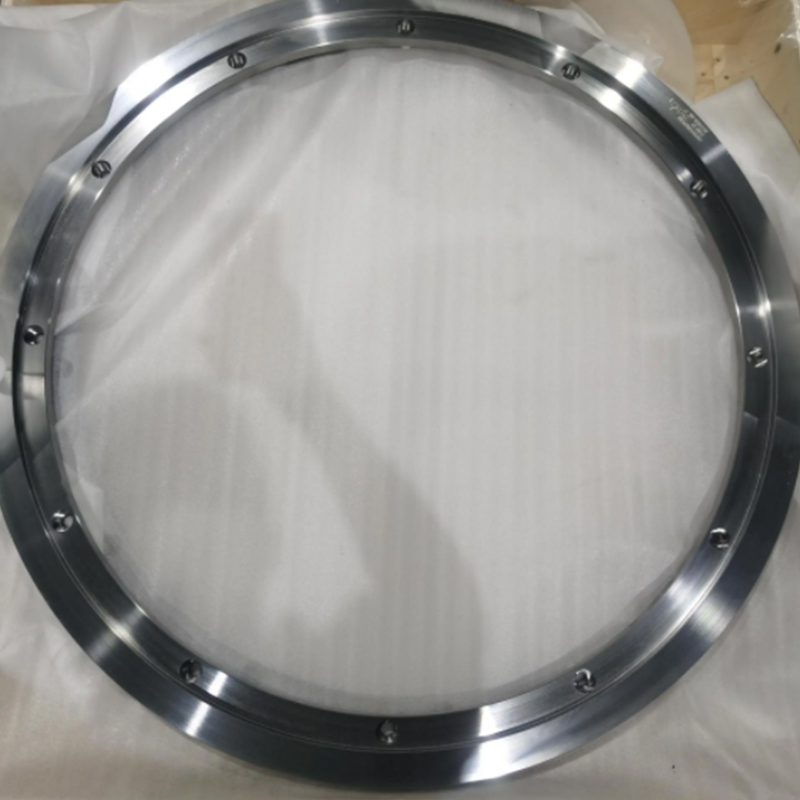 SS420 Forged Wear Rings for Feed MachineryCorrosion- and wear-resistant X46Cr13 rings, Ø500–1200 mm and 30–200 kg, suited to feed processing equipment exposed to moisture and salt.View Product →
Heat treatment after rolling decides the final properties. Normalising, quench and temper, case carburising, induction hardening and stress relief each solve a different problem, and the order of operations matters as much as the furnace setting, so it pays to understand the basics of metal heat treatment before you fix a hardness range on a drawing.
Where Rolled Steel Rings Are Used
Wind and power generation. Gearbox ring gears and planet carriers for turbines in the 3 MW to 10 MW class are rolled, because a forged ring handles torque reversal better than a plate-cut blank and far better than a casting. Hydro turbine guide vanes, generator shafts and nuclear conventional island parts follow the same logic.
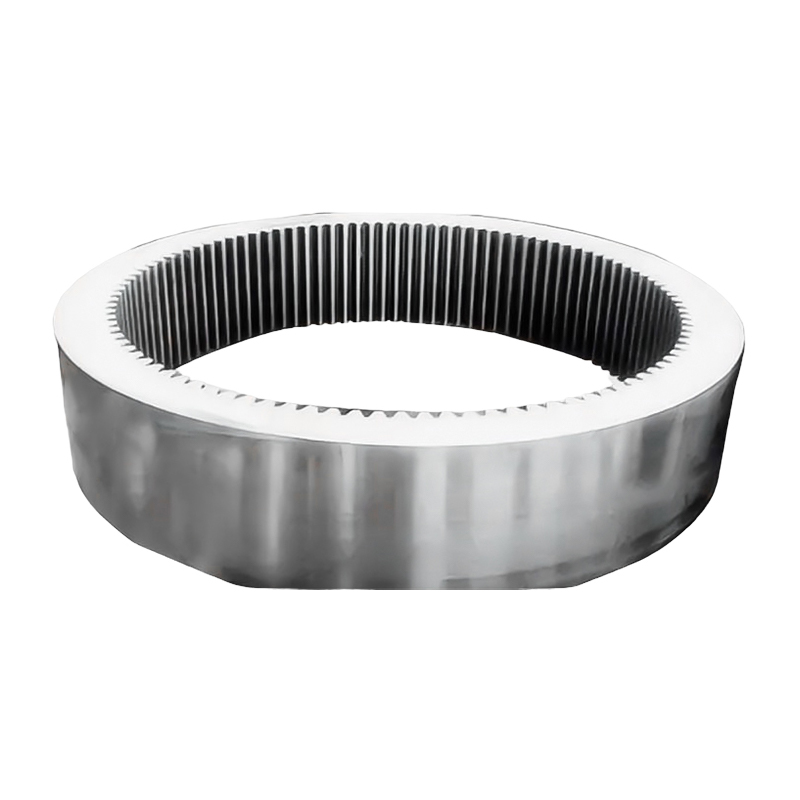 Wind Turbine Gearbox Ring Gear Forgings for 5MW–10MW TurbinesCarburized, precision-ground 18CrNiMo7-6 ring gears for 5MW–10MW planetary main gearboxes, with modular tooth blocks and Ø1300–3000 mm, 1400–7000 kg.View Product →
Marine and port machinery. Propeller shafts, intermediate shafts, rudder stocks and pintles, slewing bearing races, forged flanges and marine bolts all rely on a seamless ring or a forged bar that started the same way.
Mining, metallurgy, oil and gas. Crusher main shafts, excavator track links, rolling mill bearing housings, roller shafts, valve covers and casing heads are ring or open-die forgings, formed to shape and then machined to drawing.
When Ring Rolling Is the Wrong Choice
Rolling is not a universal answer, and a supplier who pushes it for every part is telling you something. Skip it when the ring is small and lightly loaded, when annual quantity is one or two pieces and tooling cannot be amortised, when the shape is genuinely non-axisymmetric, or when a standard tube size already matches the drawing. A plate cut, a tube cut or a welded and machined assembly will be cheaper and just as fit for purpose.
Mixed requirements are common. A project may need rolled rings for the load path and custom forged and machined components for brackets, guards and housings. A supplier that covers both, from forging and heat treatment through welding to final machining, takes a lot of coordination work off your desk.
What to Send With Your RFQ
A complete enquiry gets a usable quote in one round instead of three. Include the following:
- A drawing with final dimensions, plus a note on which surfaces are functional.
- Steel grade, heat treatment condition and hardness range.
- Quantity per year and per release, with any forecast beyond the first order.
- Required testing: ultrasonic inspection, magnetic particle inspection, mechanical properties, hardness survey.
- Documentation level, for example a 3.1 inspection certificate.
- Delivery condition: as-rolled, rough machined or finished.
- Destination and required date, so freight and lead time are quoted together.
A rolled steel ring is a simple product with a short list of things that can go wrong: the wrong process, a wall too thin to roll, a machining allowance that disappears in heat treatment. Settle those at quoting stage and the rest of the project runs quietly. Get them wrong and you will pay for a second heat, a second set of tooling and a difficult conversation with your customer.

Message Us Right Now!
-
Mobile Terminal
-
Quick Links
Products About Us Equipment & Capacity Quality News Contact Us -
Product Category
Power‑Generation Forgings OEM Machined Forgings CUSTOMIZED MADE FORGING PARTS Ship and Port Machinery Forgings Mining and Metallurgy Forgings Food and Feed Machinery Forgings Welding Fabrication Petrochemical Industry Forgings -
Contact Us
Mob.: +86-173 7218 0878 Tel.: +86-515-8389 0396 E-mail: ivy.zhai@aceprocess.cn Add.: No.21 Jinfeng Road, Economic Development Park, Dafeng District, Yancheng City, Jiangsu, China
Copyright © 2025 Yancheng ACE Machinery Co., Ltd. All Rights Reserved.
China open die forgings manufacturer
custom precision forgings supplier
