

 English
 中文简体
中文简体

Industry News
Home / News / Industry News / Ultimate Guide to Materials, Applications, and Advantages Over Castings in Shipbuilding
 Home / News / Industry News / Ultimate Guide to Materials, Applications, and Advantages Over Castings in Shipbuilding
Industry News
Ultimate Guide to Materials, Applications, and Advantages Over Castings in Shipbuilding
2026-02-11
Content
- 1 1. What Are Marine Forgings and Why They Are Irreplaceable in Shipping
- 2 2. Core Structural Characteristics of Marine Forgings
- 3 3. Full Manufacturing Process of High‑Quality Marine Forgings
- 4 4. Materials Used in Marine Forgings and Their Applications
- 5 5. Key Applications of Marine Forgings in Ships and Port Machinery
- 6 6. Marine Forgings vs. Castings: Full Performance Comparison
- 7 7. One‑Stop Forging Solutions for Marine Applications
- 8 8. Quality Control and International Certification Standards
- 9 9. Future Development Trends of Marine Forgings
- 10 10. Frequently Asked Questions About Marine Forgings
- 10.1 Q1: What exactly are marine forgings?
- 10.2 Q2: Why are marine forgings better than castings?
- 10.3 Q3: What materials are used in marine forgings?
- 10.4 Q4: Do marine forgings require official certification?
- 10.5 Q5: What are the most common applications?
- 10.6 Q6: Can you produce non‑standard customized marine forgings?
- 10.7 Q7: How long do marine forgings last?
- 10.8 Q8: Is welding fabrication available for marine forgings?
1. What Are Marine Forgings and Why They Are Irreplaceable in Shipping
Marine forgings represent a category of high‑performance metal components manufactured exclusively through the forging process, designed to withstand the extreme, unforgiving, and highly corrosive conditions of marine and offshore environments. From large container vessels, bulk carriers, and oil tankers to port cranes, shipyard machinery, offshore platforms, and naval vessels, marine forgings serve as the critical structural and mechanical backbone that ensures operational safety, long‑term reliability, and extended service life in saltwater, high humidity, heavy vibration, dynamic impact, and continuous heavy‑load scenarios. Unlike simple cast or machined parts, marine forgings are not produced by melting metal into a mold or cutting from solid bar stock; they are formed under extreme compressive force that refines the internal grain structure, eliminates porosity, and aligns molecular flow to create components with unmatched mechanical properties.
In the global maritime industry, component failure is not merely an operational inconvenience—it can lead to vessel sinking, oil spills, cargo loss, equipment collapse, injury, or even loss of life. For this reason, marine forgings are subject to the strictest international standards and must be certified by leading classification societies, including Lloyd’s Register (LR), DNV, American Bureau of Shipping (ABS), Bureau Veritas (BV), China Classification Society (CCS), and Nippon Kaiji Kyokai (NK). Cast parts simply cannot meet these rigorous certification requirements for load‑bearing, safety‑critical, or long‑service applications. This reality alone establishes marine forgings as the only technically acceptable solution for core ship and port machinery components.
The global demand for marine forgings continues to expand alongside growth in international trade, offshore energy development, port automation, and green shipping initiatives. According to industry reports, the global marine forging market is projected to maintain steady growth through the next decade, driven by large‑scale shipbuilding projects, retrofitting of aging fleets, replacement of cast components with higher‑performance forgings, and the rise of non‑standard customized forgings for special‑purpose vessels. Manufacturers specializing in forging, forgings, one‑stop forging services, electric power energy forgings, ship and port machinery forgings, mining and metallurgy forgings, food and feed machinery forgings, petrochemical industry forgings, welding fabrication, and non‑standard customized forgings are continuously upgrading material technology, processing precision, quality control systems, and service capabilities to meet the evolving demands of the marine sector.
Marine forgings cover an extremely broad product portfolio, ranging from small fasteners and connectors to giant shafts, rudder parts, crane hooks, flanges, hull components, and propulsion system parts. Every category serves a non‑substitutable function in maintaining vessel stability, maneuverability, power transmission, and structural integrity. This article provides a comprehensive, industry‑focused, and technically detailed analysis of marine forgings, covering their definition, structural characteristics, manufacturing processes, material selection, performance advantages over castings, major applications, quality control, certification standards, one‑stop service solutions, non‑standard customization, welding fabrication, and future development trends. The content is designed to support engineers, procurement managers, shipyard technicians, port equipment operators, and industry professionals in making fully informed technical and commercial decisions.
2. Core Structural Characteristics of Marine Forgings
The superior performance of marine forgings originates directly from their unique internal structure, which is fundamentally different from castings or other metal components. Understanding these structural characteristics is essential for grasping why forgings dominate critical marine applications.
2.1 Continuous Directional Grain Flow
During the forging process, compressive force reshapes heated metal billets under high pressure, causing the internal grain structure to deform and flow continuously along the geometry of the component. This directional alignment follows contours, curves, and stress paths, creating a natural reinforcement system. In contrast, castings have random, discontinuous grain structures with no directional benefit, making them far more vulnerable to cracking under tension, torsion, bending, or impact.
For marine components such as propeller shafts, crankshafts, rudder shafts, and connecting rods, this grain alignment directly translates to 20–30% higher tensile strength, significantly improved fatigue resistance, and exceptional toughness under cyclic loading. Ships operating in rough oceans experience constant wave impact and vibration; only forgings can withstand these conditions over decades of service.
2.2 Zero Porosity and Ultra‑High Density
Casting inherently produces internal voids, gas pores, shrinkage cavities, and inclusions as molten metal cools and solidifies. These defects act as crack initiation points and accelerate corrosion, especially in saltwater environments. Marine forgings, however, are compacted under extreme pressure during manufacturing, eliminating nearly all internal defects. The resulting fully dense structure prevents moisture penetration, inhibits corrosion propagation, and maintains mechanical stability throughout the component’s service life.
Testing data from multiple industrial laboratories confirms that marine forgings exhibit less than 0.01% internal porosity, while typical cast marine parts may contain porosity levels exceeding 5%. This difference is the primary reason cast components fail prematurely in high‑stress or corrosive marine environments.
2.3 Exceptional Mechanical Consistency
Marine classification societies impose strict limits on variation in tensile strength, yield strength, hardness, and impact toughness. Forgings are produced under tightly controlled temperature, pressure, and heat treatment conditions, ensuring consistent performance across every unit. Castings, by contrast, display significant property variation due to uneven cooling rates, section thickness differences, and liquid‑to‑solid transformation instability.
For shipyards and equipment manufacturers, this consistency reduces assembly risks, simplifies quality inspection, and guarantees predictable performance in real‑world operation. Whether producing a single customized part or thousands of serial components, professional forging manufacturers maintain tight control over mechanical properties to meet marine industry specifications.
2.4 Improved Resistance to Fatigue and Corrosion
Marine machinery operates under continuous cyclic loading: engine rotation, wave impact, crane lifting, propeller torsion, and hull stress all create repeated dynamic forces. Fatigue failure is the leading cause of metal component breakdown at sea. The refined grain structure and defect‑free interior of marine forgings provide exceptional resistance to crack initiation and propagation, drastically extending fatigue life.
Additionally, the dense, non‑porous structure of forgings prevents saltwater, chloride ions, and moisture from penetrating the material interior. This effectively slows down corrosion rates and protects structural integrity. Castings, with their internal voids, trap corrosive substances and experience accelerated degradation, often requiring replacement within just a few years.
3. Full Manufacturing Process of High‑Quality Marine Forgings
Producing certified marine forgings requires a highly standardized, tightly controlled, and fully traceable manufacturing process. Reputable one‑stop forging suppliers implement end‑to‑end quality management from raw material input to final delivery. Below is the complete industrial production flow.
3.1 Raw Material Selection and Inspection
The foundation of reliable marine forgings is premium, certified raw material. Only steel from qualified, audited mills is accepted, with complete material certificates ensuring traceability. Common materials include carbon steel, alloy steel, stainless steel, duplex stainless steel, copper alloy, and high‑strength low‑alloy steel. Each batch undergoes chemical composition analysis, ultrasonic testing, and mechanical property verification before entering production.
Impurities, inclusions, or structural defects in raw material will permanently compromise performance. For this reason, professional forging factories reject approximately 5–8% of incoming material based on strict inspection protocols—a standard rarely followed in low‑cost casting production.
3.2 Precision Heating and Temperature Control
Billets are cut to size and heated in automatic, temperature‑controlled industrial furnaces. Heating temperatures typically range from 800°C to 1250°C, depending on material type. Uniform heating ensures optimal plasticity without causing grain growth, decarburization, or material burning.
Modern forging facilities use real‑time temperature monitoring and recording systems to maintain consistency. Improper heating leads to cracking, dimensional instability, and poor grain structure—defects that will be detected during mandatory marine certification testing.
3.3 High‑Pressure Forging Forming
Heated billets are transferred to forging presses or hammers, where extreme compressive force shapes them into pre‑designed geometries. The process may include upsetting, drawing out, bending, punching, and die forging. Large marine components, such as heavy‑duty shafts and rudder parts, require presses with capacities of several thousand tons.
This step is critical: pressure eliminates internal voids, refines grains, and creates directional flow. Every movement and force parameter is recorded for traceability, supporting classification society audit requirements.
3.4 Professional Heat Treatment
After forming, marine forgings undergo precise heat treatment, including normalizing, annealing, quenching, and tempering. Heat treatment adjusts hardness, strength, toughness, and dimensional stability. Properly executed heat treatment can increase fatigue life by more than 50% compared to untreated forgings.
Each material grade has a unique heat treatment curve. Deviations result in brittle or soft parts that fail classification society testing. Heat treatment records become part of the official quality dossier for each marine forging.
3.5 Precision CNC Machining
Marine forgings require tight dimensional tolerances for assembly. CNC turning, milling, drilling, grinding, and threading ensure accurate fit. One‑stop forging facilities integrate full machining capabilities to reduce lead times and improve consistency.
Surface finishing, including shot blasting, polishing, passivation, and anti‑corrosion coating, further enhances performance in marine environments. Welding fabrication is often included for complex assembled components used in ship and port machinery.
3.6 Non‑Destructive Testing and Certification
Every marine forging undergoes mandatory non‑destructive testing (NDT), including ultrasonic testing (UT), magnetic particle inspection (MPI), liquid penetrant testing (LPT), hardness testing, and dimensional verification. Any defect results in immediate rejection.
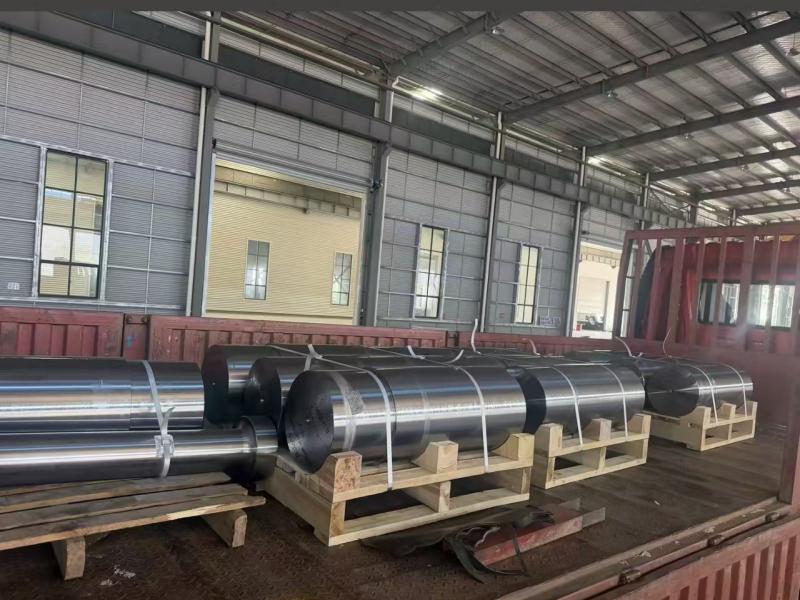
Only parts passing all tests receive official certification from classification societies. This rigorous process ensures marine forgings achieve a service life of 20–30 years under extreme operating conditions.
4. Materials Used in Marine Forgings and Their Applications
Material selection directly determines the performance, durability, and certification suitability of marine forgings. Below are the most widely used materials and their typical applications.
4.1 Carbon Steel Forgings
Cost‑effective, strong, and easily forged, carbon steel is used for structural brackets, flanges, hull fasteners, and non‑critical components. Common grades: Q235, Q355, A36, A105.
4.2 Alloy Steel Forgings
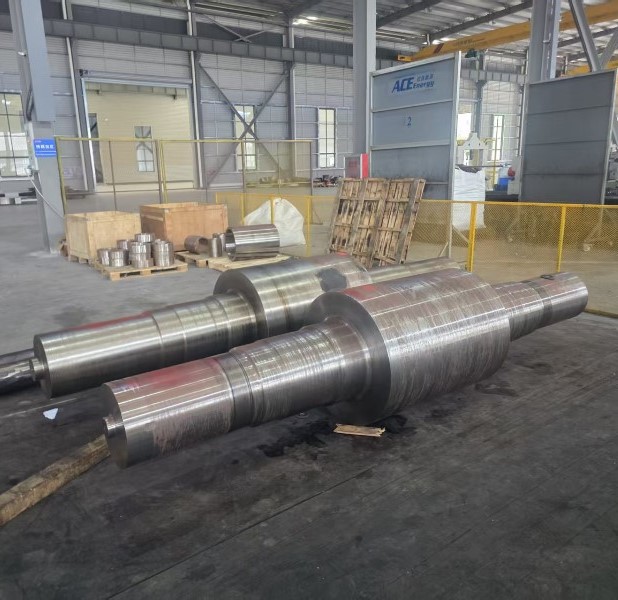
The most common material for high‑performance marine forgings. Alloying elements such as Cr, Mo, Ni, and V deliver exceptional strength, toughness, and fatigue resistance. Typical grades: 42CrMo, 35CrMo, 4140. Applications: propeller shafts, crankshafts, connecting rods, rudder parts, high‑load flanges.
4.3 Stainless Steel Forgings
304, 316L, and duplex stainless steels provide superior saltwater corrosion resistance. Used in valves, pumps, fasteners, deck equipment, and offshore components.
4.4 Copper Alloy Forgings
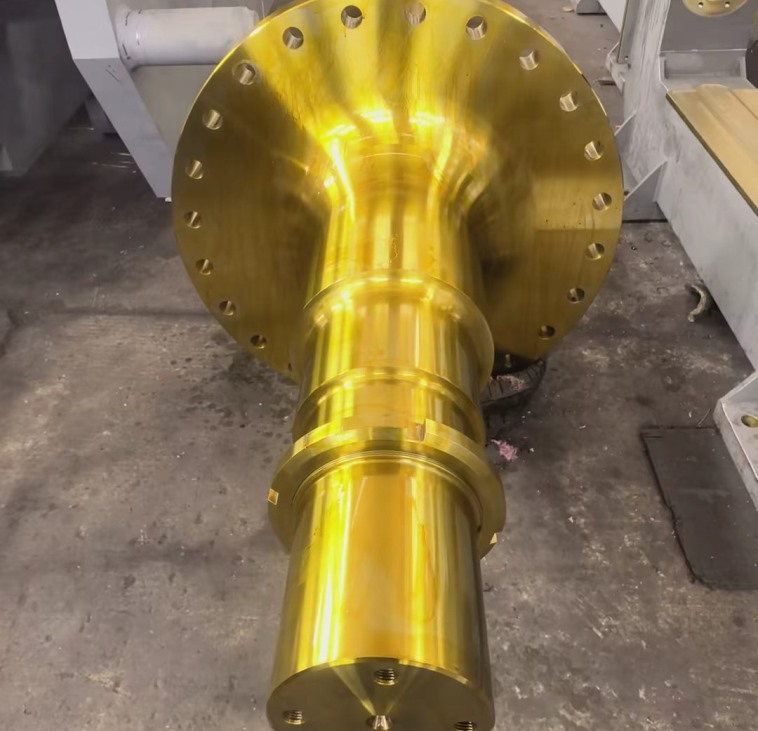
Bronze and brass forgings offer excellent corrosion resistance and anti‑fouling properties. Ideal for seawater valves, fittings, and propeller components.
4.5 High‑Strength Low‑Alloy Steel Forgings
Used for large structural parts in modern shipbuilding and port machinery, offering excellent strength‑to‑weight ratio, weldability, and atmospheric corrosion resistance.
5. Key Applications of Marine Forgings in Ships and Port Machinery
Marine forgings are irreplaceable across nearly all safety‑critical and load‑bearing systems in the maritime industry. Below are the primary application areas.
5.1 Propulsion and Power System Components
Crankshafts, camshafts, connecting rods, gear shafts, propeller shafts, piston rods, and bearing housings. These parts operate under high speed, temperature, and load—only forgings are acceptable.
5.2 Steering and Rudder Systems
Rudder shafts, rudder horns, tillers, hinge parts, and steering gear components control vessel direction and withstand massive hydraulic forces.
5.3 Hull Structure and Connections
High‑strength forgings maintain hull integrity under wave impact, torsion, and bending stress. Used for brackets, supports, and structural connectors.
5.4 Mooring and Anchoring Equipment
Anchor chain components, shackles, swivels, bollards, winch parts, and fairleads. These parts endure extreme tension and shock during mooring operations.
5.5 Port and Container Crane Components
Crane hooks, lifting lugs, boom components, coupling flanges, and gear parts. These forgings safely lift loads of hundreds of tons.
5.6 Offshore and Subsea Engineering
Flanges, valve bodies, connectors, and structural components for deep‑sea and offshore wind applications, resisting high pressure and corrosion.
Marine forgings for naval ships meet additional ballistic and shock resistance requirements, ensuring operational capability under extreme conditions.
6. Marine Forgings vs. Castings: Full Performance Comparison
The table below provides a direct, data‑driven comparison between marine forgings and marine castings across key performance indicators.
| Performance Index | Marine Forgings | Marine Castings |
|---|---|---|
| Tensile Strength | 20–30% higher | Lower & unstable |
| Fatigue Resistance | Excellent | Poor |
| Impact Toughness | Superior | Weak |
| Internal Porosity | Almost none | Common |
| Service Life | 20–30 years | 3–5 years |
| Classification Certification | Fully approved | Limited |
While castings may appear cheaper upfront, their short service life, high failure risk, and lack of certification make them unsuitable for critical marine applications. Marine forgings deliver significantly lower total cost of ownership over the lifecycle of a vessel or port machine.
7. One‑Stop Forging Solutions for Marine Applications
Modern shipbuilding and port projects demand streamlined supply chains, reduced lead times, and guaranteed quality consistency. One‑stop forging solutions integrate all processes under a single manufacturer, eliminating risks from multi‑vendor coordination.
7.1 Full Scope of One‑Stop Forging Services
- Custom engineering design and optimization
- Material selection and certified procurement
- Hot forging, warm forging, and cold forging production
- Professional heat treatment
- Precision CNC machining
- Welding fabrication and assembly
- Non‑destructive testing and certification
- Packaging, logistics, and after‑sales support
7.2 Non‑Standard Customized Forgings for Special Marine Needs
Many vessels and port machines require unique, non‑standard components. Professional forging manufacturers regularly produce non‑standard customized forgings based on customer drawings, 3D models, or performance specifications. These parts support special‑purpose ships, offshore equipment, retrofits, and automated port systems.
Whether for a large‑diameter flange, special propulsion shaft, custom crane component, or unique hull bracket, non‑standard customized forgings ensure perfect fit, performance, and classification compliance.
8. Quality Control and International Certification Standards
Marine forgings are among the most heavily regulated industrial components globally. Compliance with classification society standards is not optional—it is mandatory for legal and safe operation at sea.
8.1 Major Recognized Classification Societies
- ABS (American Bureau of Shipping)
- DNV (Det Norske Veritas)
- LR (Lloyd’s Register)
- BV (Bureau Veritas)
- CCS (China Classification Society)
- NK (Nippon Kaiji Kyokai)
8.2 Comprehensive Quality Control System
Professional marine forging manufacturers implement full‑process traceability, including raw material inspection, forging parameters, heat treatment records, machining data, NDT results, and certification documents. Every component can be traced back to its original batch of material.
This level of control ensures consistent quality, compliance with international standards, and full support for shipyard inspection and audit requirements.
9. Future Development Trends of Marine Forgings
The marine forging industry is evolving rapidly in response to green shipping, digitalization, automation, and high‑performance material demands. Key trends include:
9.1 High‑Performance New Materials
Titanium alloys, super‑duplex stainless steels, and advanced high‑strength alloys are increasingly used to reduce weight, improve corrosion resistance, and enhance efficiency.
9.2 Near‑Net‑Shape Forging Technology
Advanced die forging reduces material waste, shortens production cycles, and improves grain structure consistency, further boosting performance.
9.3 Intelligent and Digital Manufacturing
AI‑controlled forging lines, real‑time monitoring, and digital quality management improve stability, consistency, and production efficiency.
9.4 Green and Sustainable Production
Energy‑efficient furnaces, waste reduction, and environmentally friendly processes align with global decarbonization goals.
9.5 Increased Customization and Integration
Demand for non‑standard customized forgings and integrated welding fabrication assemblies will continue growing as shipbuilding and port machinery become more specialized.
10. Frequently Asked Questions About Marine Forgings
Q1: What exactly are marine forgings?
A: Marine forgings are high‑strength, corrosion‑resistant metal components manufactured through the forging process, designed specifically for use in ships, port machinery, and offshore equipment. They meet strict classification society standards for safety and reliability.
Q2: Why are marine forgings better than castings?
A: Marine forgings have a dense, defect‑free internal structure and directional grain flow, delivering 20–30% higher tensile strength, superior fatigue resistance, and a service life 5–10 times longer than castings. Castings cannot meet marine certification for critical parts.
Q3: What materials are used in marine forgings?
A: Common materials include carbon steel, alloy steel, stainless steel, duplex stainless steel, copper alloy, and high‑strength low‑alloy steel, selected based on load, environment, and corrosion requirements.
Q4: Do marine forgings require official certification?
A: Yes. All marine forgings must be certified by classification societies such as ABS, DNV, LR, BV, CCS, or NK to be legally installed on commercial vessels or port equipment.
Q5: What are the most common applications?
A: Marine forgings are widely used in propeller shafts, crankshafts, rudder parts, mooring equipment, port crane components, hull structures, and critical shipboard machinery.
Q6: Can you produce non‑standard customized marine forgings?
A: Yes. Professional one‑stop forging manufacturers specialize in non‑standard customized forgings based on customer drawings, specifications, and performance requirements.
Q7: How long do marine forgings last?
A: High‑quality certified marine forgings typically last 20–30 years under normal operating conditions, far longer than cast components.
Q8: Is welding fabrication available for marine forgings?
A: Yes. Many marine forging assemblies require professional welding fabrication, which is fully integrated into one‑stop forging solutions.
Message Us Right Now!
-
Mobile Terminal
-
Quick Links
Products About Us Equipment & Capacity Quality News Contact Us -
Product Category
Power‑Generation Forgings OEM Machined Forgings CUSTOMIZED MADE FORGING PARTS Ship and Port Machinery Forgings Mining and Metallurgy Forgings Food and Feed Machinery Forgings Welding Fabrication Petrochemical Industry Forgings -
Contact Us
Mob.: +86-173 7218 0878 Tel.: +86-515-8389 0396 E-mail: ivy.zhai@aceprocess.cn Add.: No.21 Jinfeng Road, Economic Development Park, Dafeng District, Yancheng City, Jiangsu, China
Copyright © 2025 Yancheng ACE Machinery Co., Ltd. All Rights Reserved.
China open die forgings manufacturer
custom precision forgings supplier
