

 English
 中文简体
中文简体

Industry News
Home / News / Industry News / Weldment Forgings: Engineering the Balance Between Structural Complexity and Material Integrity
 Home / News / Industry News / Weldment Forgings: Engineering the Balance Between Structural Complexity and Material Integrity
Industry News
Weldment Forgings: Engineering the Balance Between Structural Complexity and Material Integrity
2026-02-07
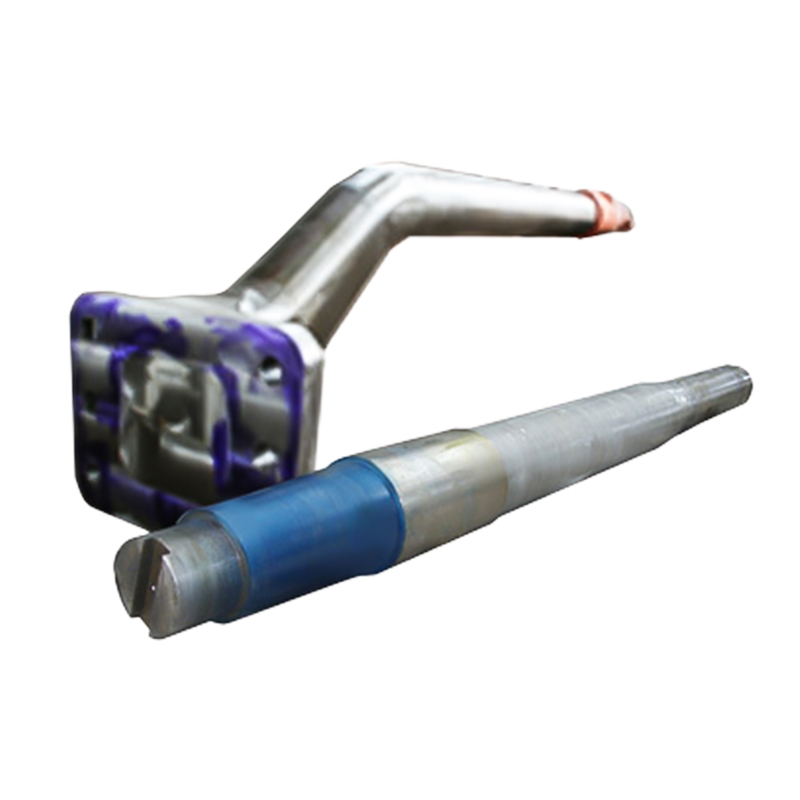
In the demanding landscape of 2026 industrial design, the limitations of single-piece casting and standard forging are becoming increasingly apparent. Weldment Forgings have emerged as the premier solution for applications requiring the high-density strength of a forge with the geometric flexibility of a weldment. By splicing forged components into arbitrarily complex sizes, engineers can now create large-span structures and compact equipment frames that were previously impossible to manufacture as a single unit.
The defining characteristic of our weldment forgings is the stability of the joint performance. Through advanced metallurgical control and specialized welding processes, the assembly achieves a stable structural integrity that rivals monolithic components, while offering the versatility to mix materials for multi-dimensional requirements such as corrosion resistance and high-tensile strength.
Content
Core Technical Advantages: Optimization and Customization
Our weldment forgings are engineered for "lightweight and high efficiency." By utilizing finite element analysis (FEA), we optimize the structure to maximize the load-to-weight ratio.
| Advantage Pillar | Technical Specification | Operational Impact |
|---|---|---|
| Flexible Sizing | Modular Splicing & Custom Geometry | Adapts to large-span or compact spaces |
| Material Versatility | Mixed-Alloy Compatibility | Meets strength & corrosion demands |
| Weight Optimization | Stiffening Ribs & Weight-Reduction Holes | Reduces mass while enhancing load capacity |
| Joint Stability | High-Precision Weld Interfaces | Ensures full-load structural integrity |
Key Application Selling Points Across Major Industries
1. Construction Machinery & Infrastructure
In the heavy machinery sector, weldment forgings act as core load-bearing components. They are designed to withstand the extreme hydraulic forces of construction equipment and the wide spans required in modern architecture. The ability to integrate stiffening ribs directly into the forged assembly allows for higher load capacities without the bulk of traditional steel casting.
2. Aerospace & Transportation
For high-speed trains and aerospace equipment like drones, lightweighting is synonymous with fuel efficiency and endurance. By designing precise weight-reduction holes and selecting lightweight alloys, these forgings reduce the overall mass of the vehicle chassis or aircraft frame, directly impacting energy consumption and operational range.
3. Chemical & Medical Fields
Where environments are harsh or hygienic standards are absolute, weldment forgings provide the necessary resistance.
- **Chemical Processing:** Resists erosion from acids, alkalis, and high-pressure corrosive media.
- **Medical Devices:** Meets strict biocompatibility and hygiene standards for large-scale diagnostic equipment frames.
Conclusion: A Cost-Effective Solution for Large-Scale Innovation
The balance between cost and performance makes weldment forgings an ideal candidate for large-scale industrial applications. By moving away from the "one-size-fits-all" approach of standard forging and embracing the modular, optimized design of forged weldments, manufacturers can achieve superior durability and efficiency.
Investing in specialized weldment forgings is a commitment to precision engineering. Whether your project involves a high-load construction crane or a lightweight aerospace component, our custom-sized and material-versatile forgings provide the structural foundation required for 2026’s most challenging environments.
Message Us Right Now!
-
Mobile Terminal
-
Quick Links
Products About Us Equipment & Capacity Quality News Contact Us -
Product Category
Power‑Generation Forgings OEM Machined Forgings CUSTOMIZED MADE FORGING PARTS Ship and Port Machinery Forgings Mining and Metallurgy Forgings Food and Feed Machinery Forgings Welding Fabrication Petrochemical Industry Forgings -
Contact Us
Mob.: +86-173 7218 0878 Tel.: +86-515-8389 0396 E-mail: ivy.zhai@aceprocess.cn Add.: No.21 Jinfeng Road, Economic Development Park, Dafeng District, Yancheng City, Jiangsu, China
Copyright © 2025 Yancheng ACE Machinery Co., Ltd. All Rights Reserved.
China open die forgings manufacturer
custom precision forgings supplier
