

 English
 中文简体
中文简体

Industry News


Industry News
What Are Marine Shaft Forgings?
2026-06-05
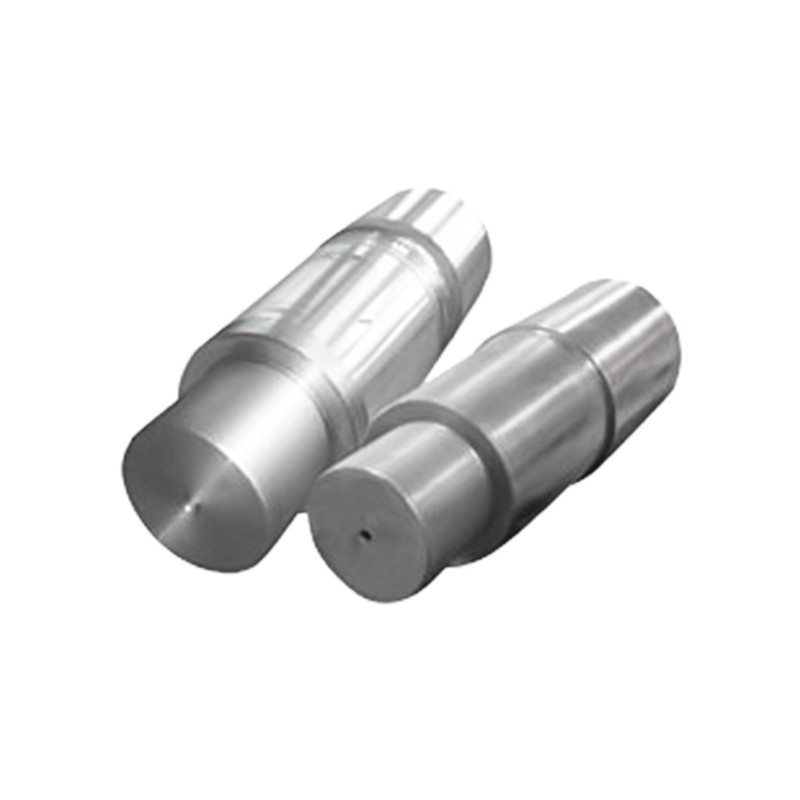
Marine shaft forgings are high-strength, precision-manufactured metal components produced through forging processes — typically free forging or precision die forging — using special alloy steel materials, specifically designed for use in the shafting systems, propulsion assemblies, rudder mechanisms, and power transmission equipment of ships and port machinery. Unlike cast or machined-from-bar components, forgings derive their superior mechanical properties from the controlled plastic deformation of the metal during the forging process, which refines the grain structure, eliminates internal voids, and aligns the metal's flow lines with the direction of applied stress.
In the marine industry, where components must endure continuous torsional loads, cyclic fatigue, saltwater corrosion, and extreme mechanical stress over service lives measured in decades, forgings represent the manufacturing method of choice for critical drivetrain and structural components. The demanding operating environment of marine and port applications tolerates no compromise in material quality or structural integrity — and marine shaft forgings are engineered specifically to meet those requirements.
Content
- 1 What Makes Marine Shaft Forgings Different from Other Metal Components
- 2 Types of Marine Shaft Forgings and Their Applications
- 3 Materials Used in Marine Shaft Forgings
- 4 The Manufacturing Process for Marine Shaft Forgings
- 5 Key Performance Advantages of Marine Shaft Forgings
- 6 Classification Society Standards and Certification
- 7 Maintenance, Inspection, and Technical Upgrading of Marine Shaft Forgings
- 8 ACE Group: An Integrated Manufacturer of Marine Shaft Forgings
What Makes Marine Shaft Forgings Different from Other Metal Components
To understand the significance of marine shaft forgings, it helps to compare the forging process against the two main alternatives — casting and machining from rolled bar stock — and understand why neither alternative is adequate for the most demanding marine applications.
| Property | Forging | Casting | Machined from Bar |
|---|---|---|---|
| Grain structure | Refined, aligned with load path | Coarse, random orientation | Random (depends on rolling) |
| Internal voids / porosity | Eliminated by compression | Common; shrinkage porosity risk | Low (depends on source stock) |
| Tensile strength | Highest | Lower | Moderate |
| Fatigue resistance | Excellent | Poor to moderate | Moderate |
| Impact toughness | Very high | Low to moderate | Moderate |
| Dimensional consistency | High (die forging) | Moderate | High |
| Material utilization | Moderate | High | Low (significant waste) |
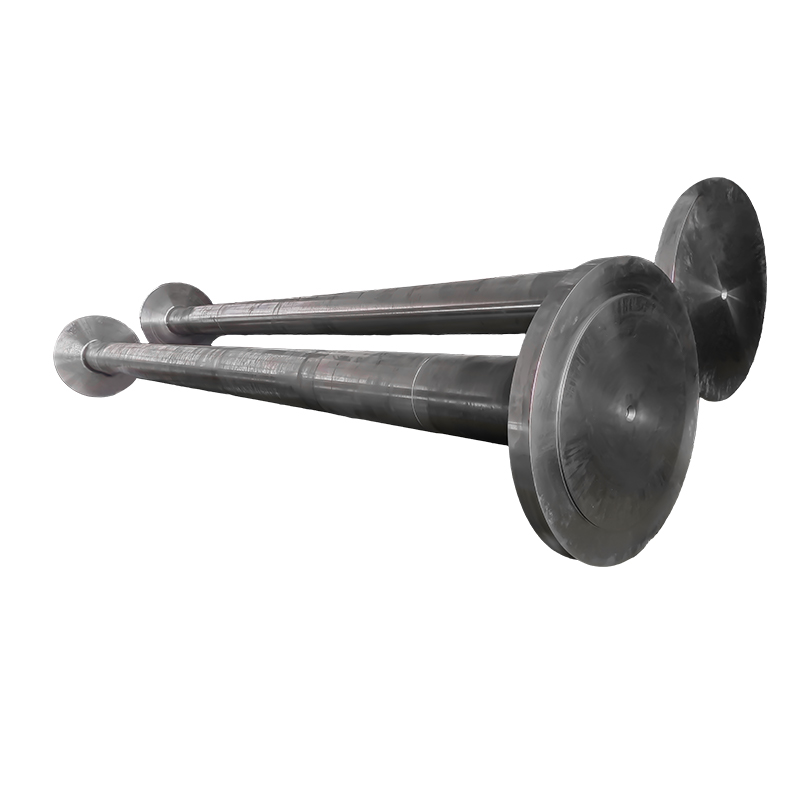
The key differentiator of forgings is what metallurgists call the wrought grain flow structure. When metal is compressed and shaped under high force at elevated temperature, the grain boundaries are physically elongated and oriented along the shape of the part. In a propeller shaft forging, these grain flow lines run along the axis of the shaft — exactly the direction in which torsional and bending stresses are applied during operation. This structural alignment is the primary reason forged shafts outperform cast or bar-turned equivalents in fatigue life by factors of two to four times under equivalent load conditions.
Types of Marine Shaft Forgings and Their Applications
Marine shaft forgings encompass a broad family of components that serve distinct roles across the propulsion, steering, power transmission, and materials handling systems of vessels and port equipment. Understanding each type clarifies the range of demands these components must satisfy.
Propeller Shafts and Intermediate Shafts
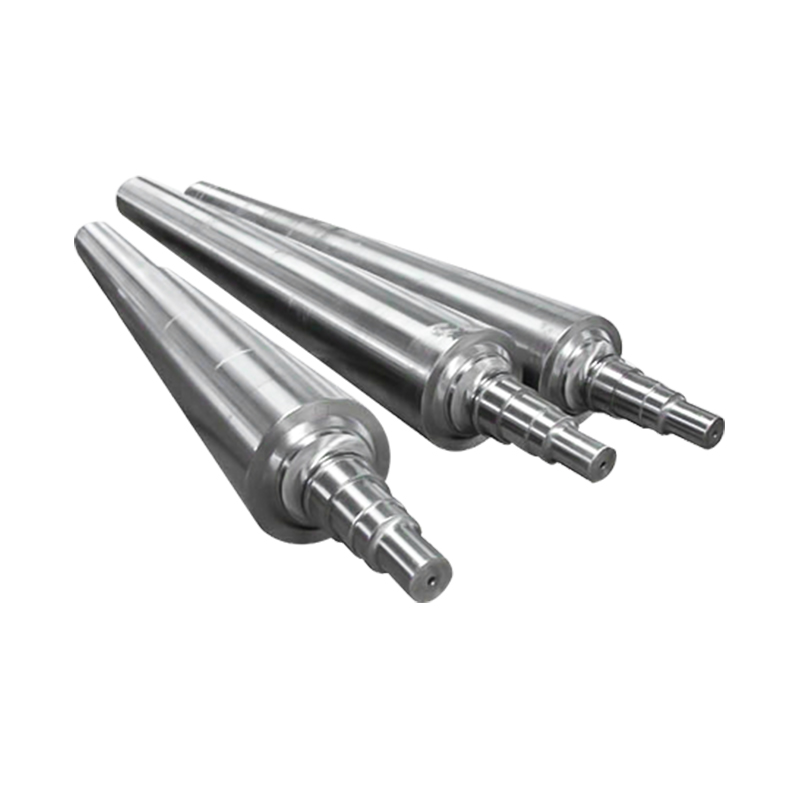
The propeller shaft (also called the tail shaft) is the primary power transmission element connecting the ship's propulsion engine to the propeller. It must transmit full engine torque continuously while bearing bending loads from the propeller's weight and thrust reaction forces, all in a permanently submerged, salt-water environment. Intermediate shafts connect the propeller shaft to the gearbox or engine through the ship's hull. Both components are among the largest and most highly stressed forgings in any marine drivetrain. Large vessel propeller shafts may exceed 15 meters in length and 800 mm in diameter, requiring forging presses capable of handling ingots weighing many tonnes.
Rudder Stocks and Pintles
The rudder stock is the vertical forged shaft that transmits steering forces from the ship's steering gear to the rudder blade. It must withstand very high torsional loads and bending moments — particularly in emergency maneuvering situations — while operating in seawater. Rudder pintles are the forged pins that support the rudder blade and allow its rotation. Both components require the high toughness and corrosion resistance that only quality forgings can reliably provide. A rudder stock failure at sea can render a vessel completely unsteerable — making the integrity of this forging literally critical to navigation safety.
Gearbox Shafts and Couplings
Marine gearboxes reduce the high rotational speed of diesel or gas turbine engines to the lower speeds required for efficient propeller operation, while transmitting full engine power. The input shafts, output shafts, and gear blanks within these gearboxes are precision forgings capable of withstanding not only full rated torque but also transient torque spikes that can exceed rated load by factors of three or more during crash stop maneuvers or propeller cavitation events.
Crane and Port Handling Equipment Shafts
Port loading and unloading cranes, ship-to-shore gantry cranes, and bulk cargo handling equipment all depend on large forged shafts for their hoisting, slewing, and luffing mechanisms. These components operate under cyclic loading from repeated lift cycles — potentially hundreds of thousands of cycles over a crane's operational life — making fatigue resistance the primary design driver. Forged shafts in crane applications must maintain their structural integrity under these demanding duty cycles without crack initiation or propagation.
Marine Bolts and Fasteners
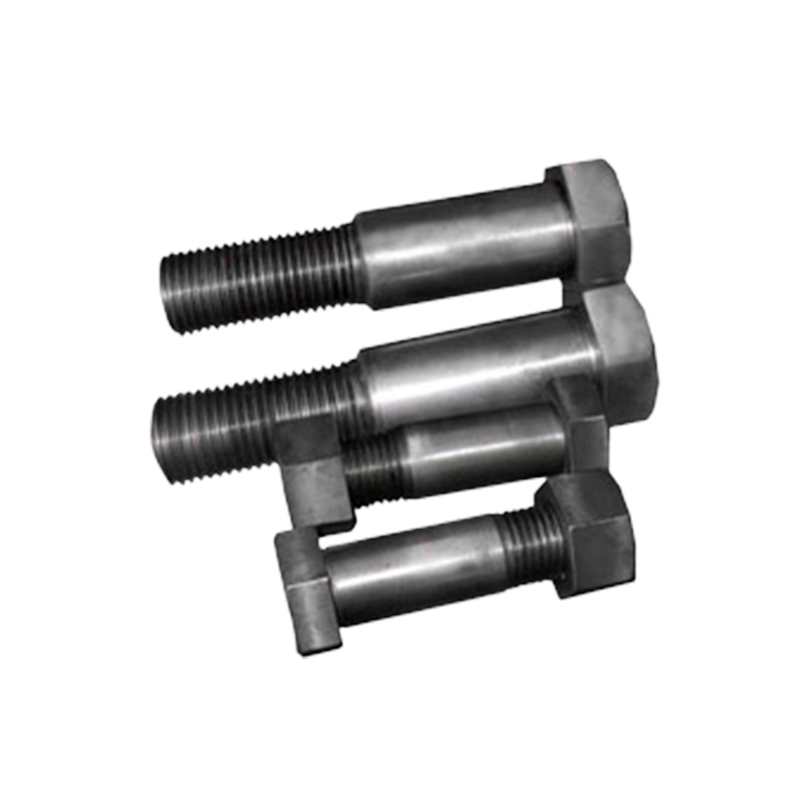
High-specification marine fasteners — including propeller nuts, shaft coupling bolts, and structural fasteners for critical marine applications — are also produced as forgings. Forged bolts offer superior fatigue resistance compared to machined bolts cut from bar stock, particularly in applications subject to vibration and dynamic loading. The headed geometry of a bolt forging ensures that grain flow lines run continuously around the head-to-shank radius — the highest stress concentration point — rather than being cut through as they would be in a machined equivalent.
Materials Used in Marine Shaft Forgings
Material selection for marine shaft forgings is governed by the combination of mechanical properties required — particularly strength, toughness, and fatigue resistance — combined with resistance to the corrosive marine environment. The materials used are invariably special alloy steels, carefully selected and specified to meet classification society standards and the specific demands of each application.
Carbon and Carbon-Manganese Steels
Medium carbon and carbon-manganese steels — such as grades equivalent to AISI 1045 through 1060 — are used for lower-stressed shafting applications. These steels respond well to heat treatment (quenching and tempering) and offer a good balance of strength and machinability after forging. Typical normalized tensile strengths range from 580–700 MPa, with yield strengths of 350–450 MPa. They are most appropriate for intermediate shafts and less demanding gearbox applications.
Alloy Steels for High-Performance Applications
The most demanding marine shaft applications — propeller shafts, large rudder stocks, main gearbox input shafts — require alloy steels with significantly higher strength and toughness. Commonly specified alloy grades include:
- Nickel-chromium-molybdenum steels (Ni-Cr-Mo) — offer excellent hardenability, high strength after heat treatment, and superior toughness at sub-zero temperatures; tensile strengths of 800–1,100 MPa achievable after quench and temper
- Chromium-molybdenum steels (Cr-Mo) — excellent combination of strength, creep resistance, and weldability; widely used in gearbox shafting and high-load marine drive components
- Stainless steel grades (316, 316L, duplex grades) — used in applications where direct seawater contact and corrosion resistance are the primary design drivers, such as submerged shafting and rudder fittings in coastal and offshore service
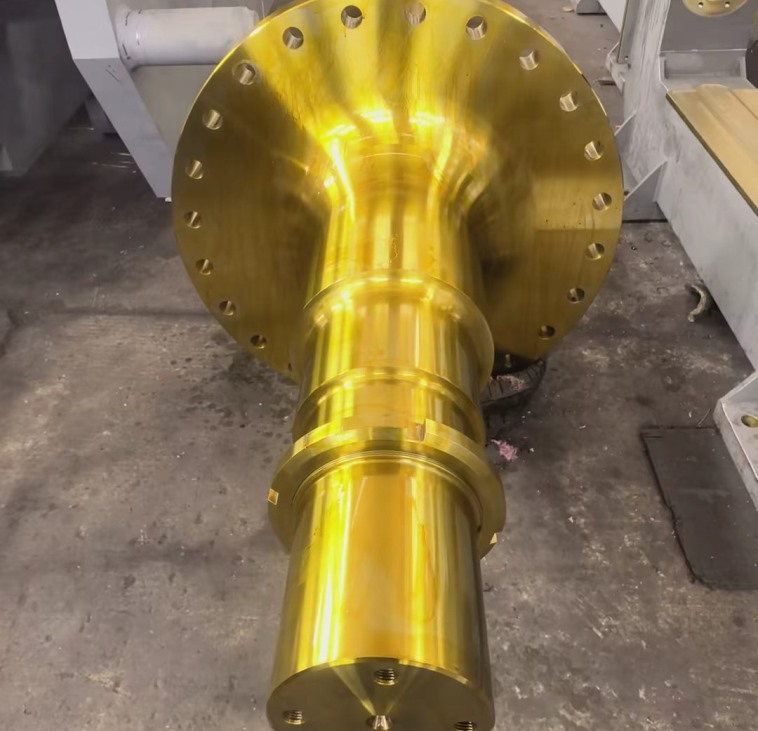
- Copper alloy forgings (naval brass, aluminum bronze) — used for propeller shaft sleeves, stern tube bushings, and other components where both corrosion resistance and wear resistance in a seawater-lubricated environment are required
Material Cleanliness and Inclusion Control
For marine shaft forgings, the cleanliness of the steel — meaning the size, distribution, and type of non-metallic inclusions present — is as important as the alloy composition. Inclusions act as stress concentration points and crack initiation sites under fatigue loading. Premium marine shaft forgings are produced from vacuum degassed and ladle-refined steel to minimize inclusion content to the levels required by classification society standards such as those of Lloyd's Register, DNV, Bureau Veritas, and ABS.
The Manufacturing Process for Marine Shaft Forgings
The production of a marine shaft forging involves a carefully controlled sequence of operations, each of which contributes to the final component's properties. Deviation from best practice at any stage can compromise the integrity of the finished forging — which is why quality marine shaft forgings are produced only by manufacturers with deep expertise and rigorous process control throughout the entire production chain.
Stage 1 — Steel Melting and Ingot Casting
The process begins with melting of the specified alloy steel in an electric arc furnace, followed by secondary metallurgical processing — typically ladle refining and vacuum degassing — to achieve the required chemical composition and inclusion cleanliness. The refined liquid steel is then cast into ingots or continuous cast blooms sized appropriately for the forging to be produced. The quality of the starting ingot is the foundation upon which all subsequent processing builds — no amount of subsequent forging or heat treatment can fully compensate for poor steel quality at this stage.
Stage 2 — Heating and Free Forging or Die Forging
The ingot or bloom is heated to the appropriate forging temperature — typically 1,100–1,250°C for alloy steels — and then shaped by one of two primary forging methods:
- Free forging (open-die forging) — the heated billet is worked between flat or simple-profile dies on a hydraulic press or forging hammer. The operator manipulates the workpiece through repeated press strokes to achieve the required shape. Free forging is the standard method for large marine shafts that are too large for closed dies and whose complex dimensional requirements are addressed in subsequent machining. Large forging presses for marine shaft work may have capacities of 5,000 to 12,500 tonnes or more.
- Precision die forging (closed-die forging) — the heated billet is compressed into a precision machined die cavity that defines the exact shape of the finished forging. Die forging produces near-net-shape components with tighter dimensional tolerances and better surface finish than free forging, and is used for smaller marine components such as gearbox shafts, couplings, flanges, and marine fasteners where volume production justifies the die investment.
The forging reduction ratio — the ratio of the cross-sectional area of the starting ingot to the finished forging — is a critical process parameter. Higher reduction ratios produce finer grain structures and better mechanical properties. For high-integrity marine shaft forgings, a minimum forging ratio of 3:1 to 5:1 is typically specified, with higher ratios required for the most demanding classifications.
Stage 3 — Heat Treatment
After forging, advanced heat treatment is applied to develop the required mechanical properties in the finished component. The specific heat treatment sequence depends on the alloy and the target property profile:
- Annealing or normalizing — relieves forging stresses and refines grain structure; often the first step after forging to prepare the material for subsequent processing or final heat treatment
- Quenching and tempering (Q+T) — the primary strengthening heat treatment for alloy steel marine forgings; the forging is heated to the austenitizing temperature, rapidly quenched in water or oil to develop martensite, then tempered at a controlled temperature to achieve the target strength-toughness balance
- Surface hardening — induction hardening or nitriding of specific bearing surfaces or spline profiles to improve wear resistance while retaining a tough core
- Stress relief — applied after rough machining to relieve any residual stresses introduced during material removal before finish machining to final tolerances
Stage 4 — Precision Machining
After heat treatment, the forging undergoes precision machining to achieve the final dimensional tolerances, surface finishes, and geometric accuracies required for assembly and operation. Marine shaft machining operations include turning, grinding, key-way milling, thread cutting, and bore drilling. Large propeller shafts require specialized heavy machining equipment capable of handling components of several tonnes while maintaining diametric tolerances typically in the range of ±0.01 to ±0.05 mm.
Stage 5 — Non-Destructive Testing and Inspection
Strict flaw detection and inspection measures are a non-negotiable requirement for marine shaft forgings. The inspection program typically includes:
- Ultrasonic testing (UT) — detects internal defects such as inclusion clusters, pipe, segregation, and flakes throughout the full cross-section of the forging; mandatory for all critical marine shafts
- Magnetic particle inspection (MPI) — detects surface and near-surface cracks and defects; applied after final machining and heat treatment
- Liquid penetrant testing (LPT) — detects surface-breaking defects in non-magnetic materials such as stainless steel and copper alloy forgings
- Dimensional inspection — full dimensional verification against drawing requirements, typically including CMM (Coordinate Measuring Machine) measurement for precision components
- Mechanical property testing — tensile test, hardness measurement, and Charpy impact testing from test pieces cut from the same forging heat or from integral prolongations
Key Performance Advantages of Marine Shaft Forgings
The combination of controlled forging processes, carefully selected alloy steels, advanced heat treatment, and rigorous inspection produces marine shaft forgings with a performance profile that is uniquely suited to the demands of the marine operating environment.
High Strength and Load-Carrying Capacity
Marine shaft forgings in quenched and tempered alloy steel achieve tensile strengths of 800–1,100 MPa with yield strengths of 650–900 MPa, enabling compact shaft geometries that transmit very high torque and bending moments without excessive weight or diameter. This is critical in vessel design where drivetrain weight and the diameter of shaft penetrations through hull structures are constrained.
Superior Fatigue Resistance
Fatigue — the progressive growth of cracks under cyclic loading — is the dominant failure mechanism for rotating marine shafts. A propeller shaft on a commercial vessel may complete over 100 million stress cycles during its service life, and every cycle represents an opportunity for crack initiation and growth. The refined grain structure, absence of internal porosity, and favorable grain flow alignment produced by the forging process result in fatigue limits significantly higher than those of cast or bar-turned equivalent materials. The smooth, transition-controlled forged geometry minimizes stress concentrations at critical cross-section changes such as fillets and keyway ends.
High Toughness and Impact Resistance
Marine shafting must withstand sudden shock loads from propeller impacts with floating debris, emergency stopping maneuvers, and rough sea operation. High Charpy impact values — typically greater than 40 J at −20°C for the most demanding classification society specifications — ensure that the forging can absorb these transient energy inputs without brittle fracture. This low-temperature toughness is particularly critical for vessels operating in Arctic or sub-Arctic waters.
Excellent Corrosion Resistance in Marine Environments
The marine environment is one of the most corrosive conditions that metal components can encounter. Salt water, biological fouling, galvanic coupling between dissimilar metals, and alternating wet-dry cycles combine to create aggressive corrosion conditions. Marine shaft forgings are specified with appropriate corrosion resistance through alloy selection — stainless steels and copper alloys where direct seawater exposure is unavoidable — and through protective coatings (epoxy painting, metallic spraying) and sacrificial anode cathodic protection systems where carbon or alloy steel shafts operate in submerged or immersed conditions.
High Dimensional Precision and Reliability
After precision machining and inspection, marine shaft forgings meet the tight dimensional tolerances required for assembly with bearings, couplings, shaft seals, and propeller hubs. Precise concentricity and straightness are critical for minimizing vibration in high-speed shafting systems — vibration that would otherwise accelerate bearing wear, increase noise levels, and impose additional fatigue stress on the shaft. The consistent, defect-free microstructure of a quality forging ensures that machined surfaces will hold their geometry under operational loads without creep or stress relaxation.
Classification Society Standards and Certification
Marine shaft forgings for commercial vessels must be produced, tested, and certified in accordance with the rules of the relevant classification society. Classification societies set detailed requirements covering material specifications, heat treatment procedures, mechanical property test requirements, non-destructive testing acceptance criteria, and the qualifications of the surveyors witnessing production and testing.
| Classification Society | Region / Scope | Key Forging Standard Reference |
|---|---|---|
| Lloyd's Register (LR) | Global | Rules for the Manufacture, Testing and Certification of Materials |
| DNV (Det Norske Veritas) | Global / Offshore | DNV Rules for Classification — Metallic Materials |
| Bureau Veritas (BV) | Global | BV Rules for Materials and Welding |
| American Bureau of Shipping (ABS) | Americas / Global | ABS Rules for Materials and Welding |
| China Classification Society (CCS) | China / Global | CCS Rules for Classification of Sea-Going Steel Ships |
| Nippon Kaiji Kyokai (NK) | Japan / Global | NK Rules and Guidance for the Survey and Construction of Steel Ships |
Classification certification requires that a surveyor from the relevant society witnesses key stages of production — including heat treatment, mechanical property testing, and non-destructive testing — and signs the material certificate confirming that all requirements have been met. Without valid classification certification, marine shaft forgings cannot be installed in a classed vessel, making certified production a commercial and regulatory necessity rather than an optional quality measure.
Maintenance, Inspection, and Technical Upgrading of Marine Shaft Forgings
Marine shaft forgings are designed for long service lives — a well-maintained propeller shaft on a commercial vessel may remain in service for 20–30 years — but they require systematic maintenance and periodic inspection to ensure continued safe operation. The service scope for marine shaft forgings encompasses both in-service maintenance and technical upgrading to extend component life or improve performance.
Periodic Inspection Requirements
Classification society rules typically require propeller shafts to be withdrawn and fully inspected at intervals not exceeding four to five years, depending on the shaft material, sealing arrangement, and service environment. Inspection procedures include:
- Visual examination of all accessible surfaces for corrosion, mechanical damage, and wear
- Magnetic particle inspection of tapered cone sections, keyways, and other stress concentration zones
- Dimensional checks to verify that wear has not reduced critical diameters below acceptable limits
- Examination of the propeller-to-shaft taper contact, which must maintain a specified bearing area to transmit torque reliably
Common In-Service Damage Modes
The most frequently encountered damage conditions in marine shaft forgings in service include corrosion pitting at keyways and seal areas, fretting corrosion at propeller hub and coupling interfaces, and fatigue cracking initiated at stress concentration features. Early detection through regular inspection allows corrective action — corrosion protection treatment, surface repair, or controlled re-machining — to be taken before damage reaches a critical level.
Technical Upgrading Services
Technical upgrading of existing marine shaft systems — whether to increase power transmission capacity, improve corrosion resistance, or replace worn components with improved designs — requires the same depth of material and manufacturing expertise as original production. Replacement shaft sections, modified coupling flanges, and upgraded rudder stocks must be produced to the same or superior specifications as the original components and certified by the relevant classification society before installation.
ACE Group: An Integrated Manufacturer of Marine Shaft Forgings
The technical demands of marine shaft forging production — from steel melting and forging through heat treatment, precision machining, and certified inspection — require a manufacturer with deep, integrated capabilities across the entire production chain. Relying on multiple subcontractors for different stages introduces quality control risks and complicates certification traceability. Manufacturers who own and control every stage of the production process provide both better quality assurance and more responsive service to their customers.
ACE Group is a comprehensive enterprise group focused on the heavy industrial manufacturing sector, serving as a China Marine Shaft Forgings Supplier and Marine Shaft Forgings Company. The group's business spans the full range of core production processes required for high-integrity industrial forgings: forging, heat treatment, precision machining, welded structures, and heavy-duty power and free chain spraying production. This integrated layout — covering every step from raw material through finished, inspected component — combines technological strength with large-scale production capabilities, enabling ACE Group to serve the full spectrum of marine and port industry requirements from a single, coordinated manufacturing base.
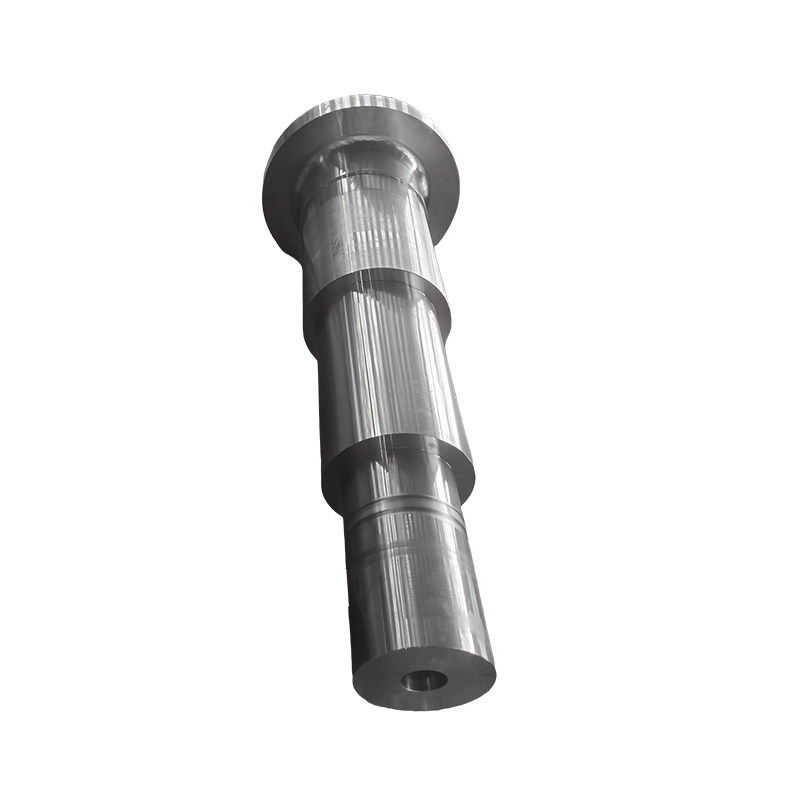
The scope of ACE Group's marine forging products encompasses shafting forgings, rudder system components, gearbox parts, crane and port handling equipment shafts, and marine bolts — all produced from special alloy steel materials using precision die forging and free forging processes, with advanced heat treatment to develop the required mechanical properties and strict non-destructive testing throughout. The service scope extends beyond supply of new components to encompass maintenance support and technical upgrading of existing marine installations, providing customers with a single-source partner for the full lifecycle of their marine shaft forging requirements.
The reliable operation of marine vessels and port machinery ultimately depends on the integrity of the forged components at the heart of their propulsion, steering, and materials handling systems. Specifying and sourcing those components from a manufacturer with proven integrated capabilities, rigorous quality management, and established classification society recognition is the foundation of marine engineering reliability.

Message Us Right Now!
-
Mobile Terminal
-
Quick Links
Products About Us Equipment & Capacity Quality News Contact Us -
Product Category
Power‑Generation Forgings OEM Machined Forgings CUSTOMIZED MADE FORGING PARTS Ship and Port Machinery Forgings Mining and Metallurgy Forgings Food and Feed Machinery Forgings Welding Fabrication Petrochemical Industry Forgings -
Contact Us
Mob.: +86-173 7218 0878 Tel.: +86-515-8389 0396 E-mail: ivy.zhai@aceprocess.cn Add.: No.21 Jinfeng Road, Economic Development Park, Dafeng District, Yancheng City, Jiangsu, China
Copyright © 2025 Yancheng ACE Machinery Co., Ltd. All Rights Reserved.
China open die forgings manufacturer
custom precision forgings supplier
