

 English
 中文简体
中文简体

Industry News


Industry News
What is a flanged wheel?
2026-08-21
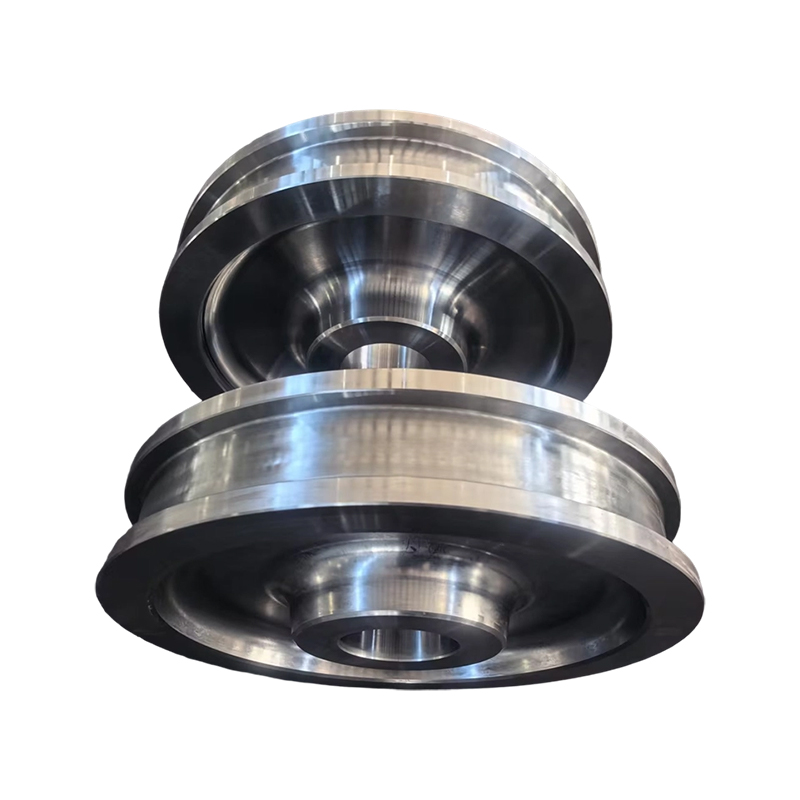
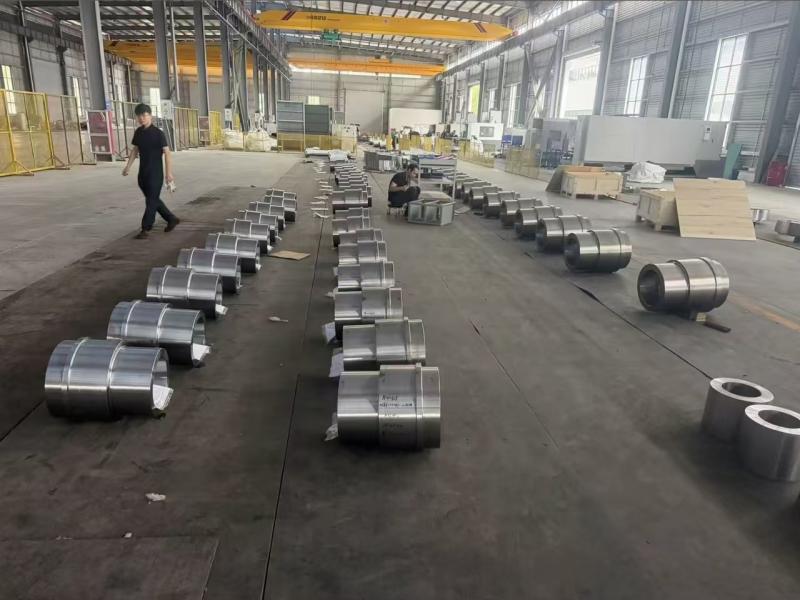
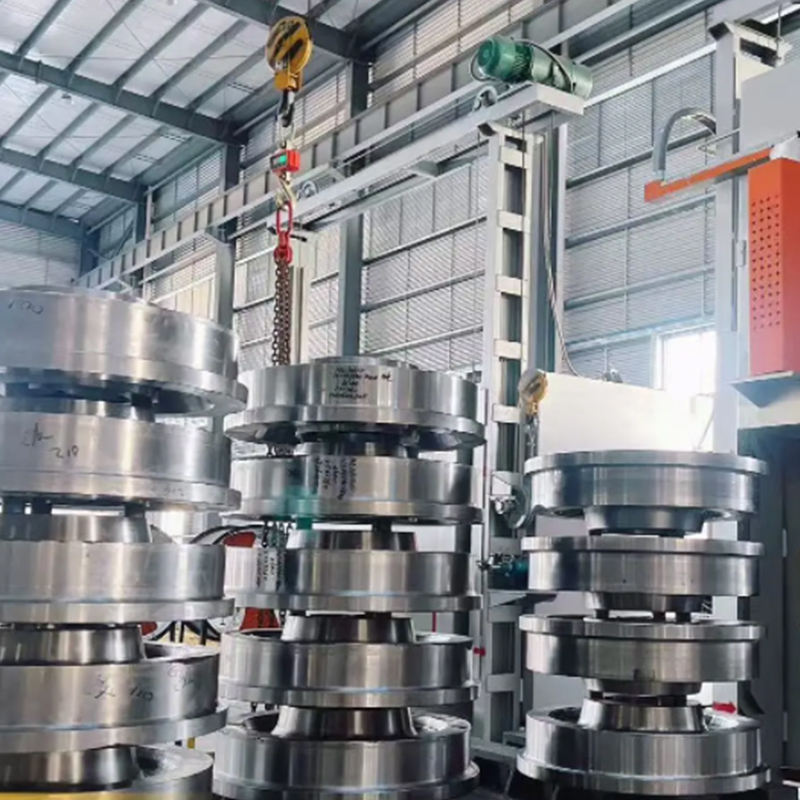
A Flanged Wheel is a wheel that incorporates an integral projecting rim, called a flange, running along one or both edges of its tread or hub. The flange serves one of two closely related purposes depending on the application: it acts as a guide that keeps the wheel tracking correctly along a rail or track, preventing it from shifting sideways or derailing under load, or it functions as a mounting and load bearing shoulder that lets the wheel connect securely to an axle, shaft or adjoining component. In heavy industrial and forged component contexts, this same design principle scales up dramatically, since large forged flanged wheels are manufactured as precision engineered blanks used inside gearbox assemblies, crane systems and heavy machinery where the flange must carry substantial structural and dynamic loads.
Content
- 1 The Anatomy of a Flanged Wheel
- 2 The Classic Application: Railway Wheels
- 3 Crane and Heavy Industrial Applications
- 4 Forged Flanged Wheels in Gearbox and Heavy Machinery Assemblies
- 5 Why Forging Outperforms Casting for Heavy Duty Flanged Wheels
- 6 Key Specifications to Check When Selecting a Flanged Wheel
- 7 Matching Flanged Wheel Type to Application
The Anatomy of a Flanged Wheel
Regardless of scale, a flanged wheel shares the same basic structural elements. The tread is the outer surface that makes contact with the rail, track or mating surface, the flange is the raised rim positioned at the edge of the tread, and the hub or bore is the central section that connects the wheel to its axle or shaft. In railway and crane applications, this flange sits perpendicular to the tread and rides along the inner edge of the rail, while in gearbox and mechanical assembly contexts, a flanged wheel's rim more often functions as a bolted or keyed connection surface joining one component to another within a larger drivetrain.
The Classic Application: Railway Wheels
The flanged wheel's best known role is on railway vehicles, where the flange functions specifically as an anti derailment device. Forging industry documentation on railway wheel history explains that flanged wheels were what made rail travel efficient and safe as transportation shifted from horse drawn carts to locomotives, since the raised flange keeps each wheel locked to the inside edge of the rail even as the vehicle accelerates, decelerates and moves through curves. The same source notes that this same flange principle expanded well beyond railways over time, appearing today on bicycles, handcarts, amusement park rides and a wide range of industrial equipment, including elevators, wherever a wheel needs to stay precisely aligned to a fixed track.
Crane and Heavy Industrial Applications
Beyond railways, flanged wheels are a core structural component in overhead and gantry crane systems, where they guide the crane's bridge or trolley along a fixed rail while carrying substantial vertical and lateral loads. Crane wheel engineering guidance notes that wheel dimensions, including tread diameter, flange height, flange thickness and tread width, are standardized under specifications such as DIN 15070 and the closely harmonized GB/T 10183 standard, which define wheel profile geometry relative to rail head width to ensure correct contact and prevent flange to rail foot interference. Flange height typically falls between 20 and 30 percent of the total wheel diameter depending on the wheel series, and insufficient flange height under high lateral load is identified as the leading cause of flange override, one of the most serious failure modes a crane wheel can experience.
Single Flange vs Double Flange Design
Crane wheel configurations generally fall into single flange and double flange designs, with the choice depending on how much lateral guidance the application requires. Single flange wheels are typically paired with a second, flangeless or differently configured wheel on the opposite rail, while double flange wheels provide guidance from both sides of the rail, offering tighter tracking control at the cost of increased rolling friction. Some crane systems instead use flangeless wheels entirely, relying on external horizontal guide rollers, a design suited to heavy duty applications where a traditional flange might physically interfere with adjoining components.
Forged Flanged Wheels in Gearbox and Heavy Machinery Assemblies
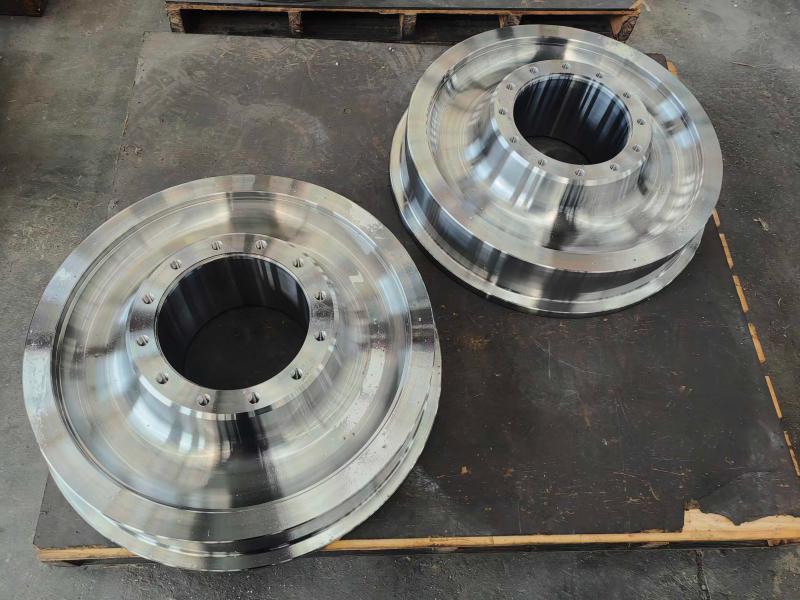
In large scale mechanical assemblies such as wind turbine gearboxes, cranes and marine or port handling equipment, flanged wheels frequently take the form of forged structural blanks rather than simple guide wheels. Patent documentation on modular wind turbine gearbox design describes flanges specifically as ring shaped connecting components that join separate gear stage modules together, with fastening components securing each module to opposite sides of the flange. This same principle applies to forged flanged wheel blanks used as gear wheel bases, hub connectors and structural discs within a gearbox drivetrain, where the flange provides both a precise mounting interface and the structural rigidity needed to transmit high torque loads reliably between rotating components.
Why Forging Outperforms Casting for Heavy Duty Flanged Wheels
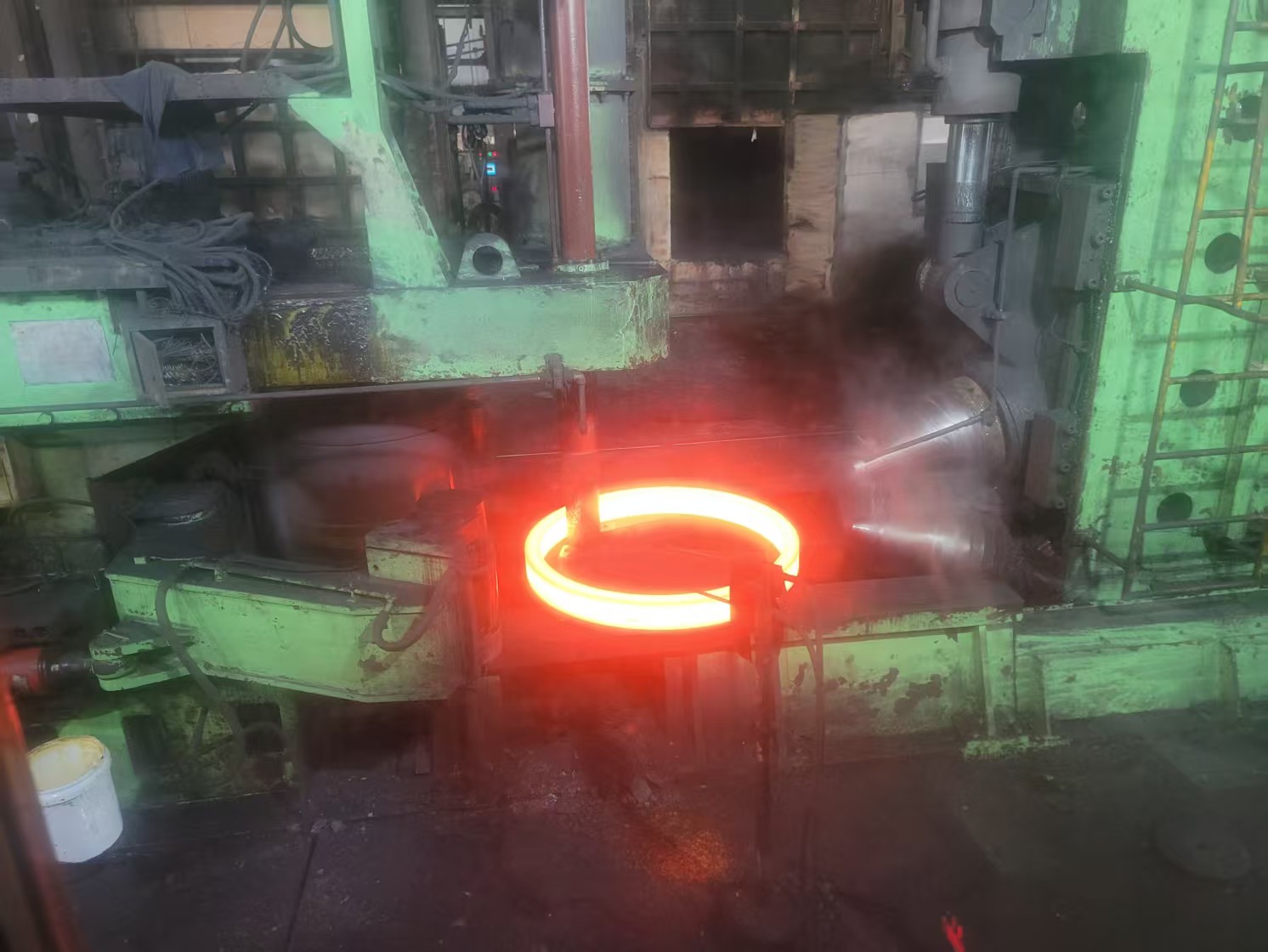
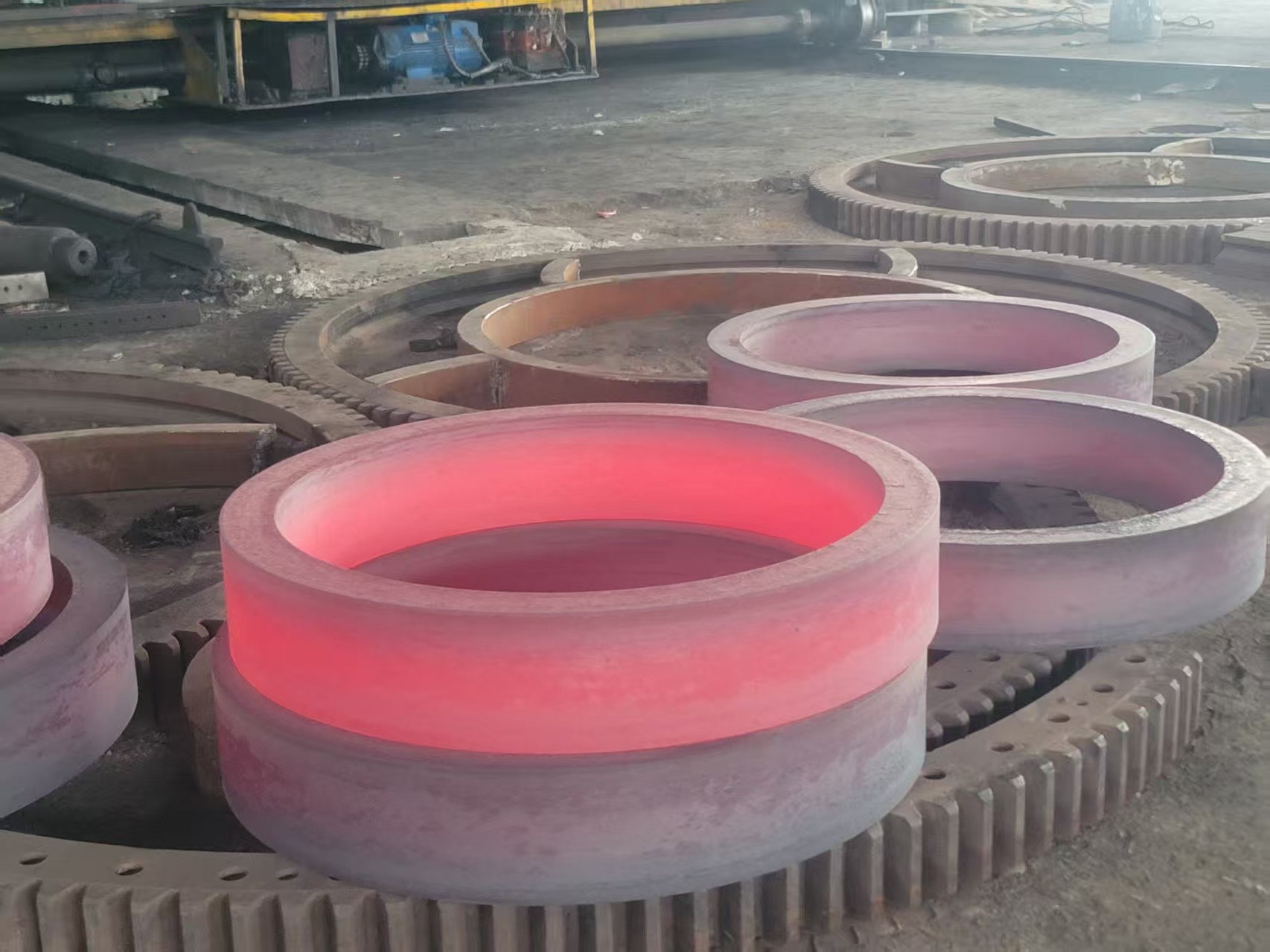
Material and manufacturing process have a direct effect on how a flanged wheel performs under sustained load, and this is where forging shows a clear structural advantage over casting. Comparative engineering analysis of forged versus cast wheel construction explains that forging eliminates the internal porosity, shrinkage and loose grain structure inherent in cast material, instead producing a continuous metal flow line that follows the wheel's contour, particularly through the tread and flange areas, which optimizes tensile strength, impact toughness and fatigue resistance. Forged material typically achieves a grain size of around 20 micrometers compared with roughly 80 micrometers in cast material, resulting in a denser microstructure with meaningfully higher strength and toughness. Forged wheels also accept heat treatment more readily, allowing manufacturers to apply deep surface hardening, commonly reaching HRC 38 to 46 with a hardened depth of several millimeters, which significantly extends service life under repeated rolling contact and heavy dynamic loading.
Forged vs Cast Flanged Wheel Comparison
| Factor | Forged Flanged Wheel | Cast Flanged Wheel |
| Grain Structure | Continuous flow line, dense and fine grained | Loose, porous, coarser grain structure |
| Impact Resistance | High, suited to heavy dynamic loads | Lower, more prone to brittle failure |
| Heat Treatment Response | Accepts deep hardening reliably | Limited hardening capability |
| Best Suited For | Heavy duty cranes, gearboxes, harsh operating environments | Light to medium duty applications, cost sensitive projects |
Key Specifications to Check When Selecting a Flanged Wheel
Selecting the right flanged wheel for a mechanical or structural application depends on matching several dimensional and material parameters to the actual operating conditions rather than relying on a general size category alone.
- Wheel diameter, since a larger diameter reduces contact stress for a given load
- Flange height and thickness, sized to prevent flange override under maximum expected lateral load
- Tread width, generally specified 20 to 30mm wider than the mating rail head per common crane wheel guidance
- Material grade and hardness, matched to duty cycle, with forged alloy steel favored for high cycle, heavy load applications
- Bore or hub configuration, confirmed against the mating axle or shaft dimensions and tolerances
Matching Flanged Wheel Type to Application
- Confirm whether the application requires lateral guidance along a rail or a structural mounting connection within an assembly
- Choose single flange, double flange or flangeless configuration based on required tracking precision
- Specify forged construction for heavy duty, high cycle or harsh environment applications where fatigue resistance matters most
- Verify dimensional compliance with relevant standards such as DIN 15070 or GB/T 10183 for crane and rail applications
- Confirm heat treatment specifications match the expected load cycle and wear requirements of the application
A flanged wheel is defined by its integral rim, which either guides the wheel precisely along a track to prevent derailment, as seen in railway and crane systems, or serves as a structural mounting interface within a larger mechanical assembly, as seen in gearbox and heavy machinery applications. The material and manufacturing method behind that flange matter as much as its dimensions, since forged construction delivers a denser, more fatigue resistant structure that stands up to heavy, repeated loading far better than cast alternatives. A properly specified forged Flanged Wheel gives engineers a dependable structural component capable of handling the demanding load, tracking and connection requirements found across cranes, gearboxes and other heavy industrial machinery.
Message Us Right Now!
-
Mobile Terminal
-
Quick Links
Products About Us Equipment & Capacity Quality News Contact Us -
Product Category
Power‑Generation Forgings OEM Machined Forgings CUSTOMIZED MADE FORGING PARTS Ship and Port Machinery Forgings Mining and Metallurgy Forgings Food and Feed Machinery Forgings Welding Fabrication Petrochemical Industry Forgings -
Contact Us
Mob.: +86-173 7218 0878 Tel.: +86-515-8389 0396 E-mail: ivy.zhai@aceprocess.cn Add.: No.21 Jinfeng Road, Economic Development Park, Dafeng District, Yancheng City, Jiangsu, China
Copyright © 2025 Yancheng ACE Machinery Co., Ltd. All Rights Reserved.
China open die forgings manufacturer
custom precision forgings supplier
