

 English
 中文简体
中文简体

Industry News
Home / News / Industry News / Weldment Forgings Explained: How to Choose the Right Components for Strength, Weight, and Corrosion Resistance
 Home / News / Industry News / Weldment Forgings Explained: How to Choose the Right Components for Strength, Weight, and Corrosion Resistance
Industry News
Weldment Forgings Explained: How to Choose the Right Components for Strength, Weight, and Corrosion Resistance
2026-03-09
Content
- 1 What Are Weldment Forgings and Why Do They Matter in Heavy Industry?
- 2 The Core Technical Advantages of Weldment Forgings
- 3 Industry Applications: Where Weldment Forgings Deliver the Most Value
- 4 ACE Group's Manufacturing Capabilities: What Integrated Production Actually Means
- 5 Quality Assurance: Certifications, Inspection Systems, and the 100% Outgoing Inspection Standard
- 6 Frequently Asked Questions About Weldment Forgings
- 6.1 Q: What is the difference between a weldment forging and a casting in structural applications?
- 6.2 Q: How is joint integrity maintained at the weld connections in a weldment forging?
- 6.3 Q: Can weldment forgings be produced from multiple different alloys in the same assembly?
- 6.4 Q: What size range of weldment forgings can ACE Group manufacture?
- 6.5 Q: What surface protection options are available for weldment forgings from ACE Group?
- 6.6 Q: Does ACE Group provide non-destructive testing (NDT) for weldment forgings?
What Are Weldment Forgings and Why Do They Matter in Heavy Industry?
Weldment forgings represent a category of structural and functional components that combine two of heavy manufacturing's most powerful production technologies: forging, which produces dense, high-integrity metal parts with superior mechanical properties through controlled plastic deformation, and welding, which allows individual forged sections to be joined into assemblies of virtually any size, geometry, and complexity. The result is a class of components that delivers the grain structure strength of forged metal in configurations that no single forging die could produce — making weldment forgings the engineering solution of choice for large, complex, high-load structural applications across construction, transportation, aerospace, chemical processing, and medical equipment manufacturing.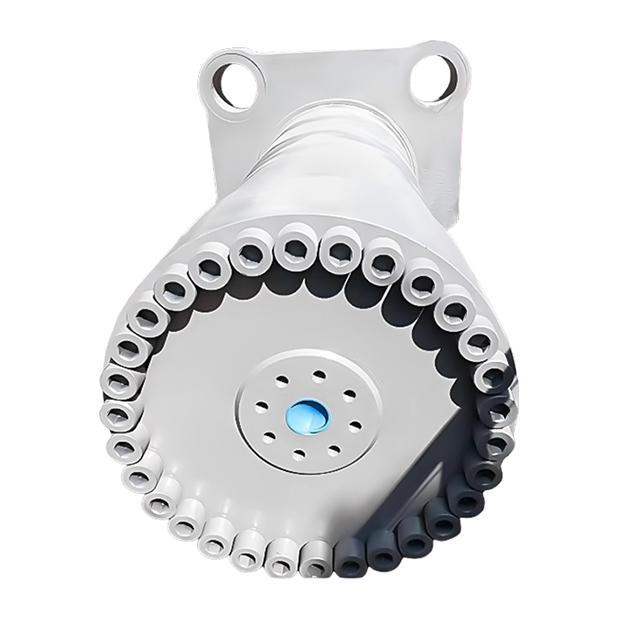
The distinction between a simple weldment and a weldment forging is significant. A standard weldment joins rolled or cut steel sections — plate, bar, tube, or structural profiles — whose internal grain structure reflects the original rolling or cutting process. A weldment forging joins sections that were individually forged, meaning each component enters the welded assembly with the refined, directional grain structure, freedom from porosity, and superior fatigue resistance that only the forging process produces. At the weld joints, careful design and qualified welding procedures maintain structural continuity, so the assembled component performs as an integrated load-bearing structure rather than as a collection of parts held together at their interfaces.
For engineers and procurement professionals specifying components for demanding applications — where failure is not an acceptable outcome and where weight, strength, and dimensional precision all matter simultaneously — understanding the specific advantages and application fit of weldment forgings is essential knowledge. This guide covers those fundamentals, along with the manufacturing capabilities that determine whether a supplier can actually deliver on the specification requirements these components demand.
The Core Technical Advantages of Weldment Forgings
Three engineering advantages define the weldment forging's value proposition across the industries that use them most intensively: dimensional flexibility, material versatility, and the ability to achieve lightweight efficiency without sacrificing structural performance.
Flexible Sizing: No Dimensional Ceiling on Component Complexity
Conventional forging is constrained by press capacity and die size. A single forged component can only be as large as the largest die that a given forging press can fill — and for extremely large structural components, the forging equipment required would be impractical or prohibitively expensive. Weldment forgings remove this constraint entirely. Individual forged sections of manageable size are produced on available equipment, then welded together into assemblies that can span meters or tens of meters with the same structural integrity as a single-piece forging at the joint lines.
This scalability is not just about size — it is also about geometric complexity. A component with multiple functional zones requiring different cross-sections, different load-bearing orientations, or different surface treatments can be broken into logical forged sections that are individually optimized, then assembled into the final configuration. The result is a component that would be impossible to produce as a single forging but performs as if it were one.
Material Versatility: Matching Alloy to Application Demand
Not every section of a complex weldment forging faces the same service conditions. A crane boom, for example, may need maximum tensile strength at its root section where bending moments are highest, while the tip section may benefit more from low weight than from raw strength. A chemical plant reactor frame may need standard structural steel for most of its volume but stainless steel or duplex alloy at surfaces in contact with corrosive process media.
Weldment forgings allow different alloys to be used in different sections of the same assembly, with each material selected to optimize performance in its specific zone. This multi-material capability — provided the welding procedure is qualified for the material combination — delivers performance and cost efficiency that a single-alloy component cannot match. High-strength low-alloy steels, stainless grades, titanium alloys, aluminum alloys, and specialty materials can all be incorporated into weldment forging assemblies where the application demands it.
Lightweight Efficiency Through Structural Optimization
The freedom to design each section of a weldment forging independently enables a level of structural optimization that is simply not achievable with a single cast or forged component. Stiffening ribs can be added exactly where bending or torsional loads require them, increasing rigidity and load-bearing capacity without adding material throughout the component. Weight-reduction holes and pockets can be incorporated in sections where the stress analysis shows low utilization, removing mass that contributes nothing to structural performance. The combined effect is a component that carries more load per kilogram of material than a conventionally designed equivalent — a direct contribution to fuel efficiency in transportation applications, to payload capacity in construction machinery, and to installation and handling ease across all applications.
Industry Applications: Where Weldment Forgings Deliver the Most Value
The combination of size flexibility, material versatility, and optimized structural efficiency makes weldment forgings applicable across a remarkably broad range of industries. Each sector places a specific set of demands on its components, and weldment forgings address those demands with tailored advantages.
Construction and Construction Machinery
In construction, structural components face the dual challenge of carrying enormous static and dynamic loads while spanning large distances or fitting within constrained spatial envelopes. Crane booms, excavator arms, loader frames, and bridge structural elements are all applications where large-span, high-strength weldment forgings outperform alternatives. The ability to produce components that span tens of meters while maintaining the fatigue resistance and dimensional precision that construction machinery requires makes weldment forgings the specification of choice for equipment OEMs and structural engineering contractors working at the upper limits of load and scale.
Construction machinery frames specifically benefit from the stiffening rib and weight-reduction hole design freedom that weldment forgings enable — achieving the maximum structural stiffness-to-weight ratio that keeps machine operating weight within manageable limits while maintaining the load capacity that makes the equipment commercially useful.
Transportation and Aerospace
In transportation and aerospace, every kilogram of structural component weight is a kilogram that cannot be used for payload, or a kilogram that increases fuel consumption over the life of the vehicle. For commercial trucks and high-speed trains, lightweight weldment forging chassis and structural components reduce unladen vehicle mass, directly improving fuel economy and payload efficiency. Studies of commercial truck fuel consumption consistently show that a 10% reduction in vehicle tare weight produces roughly a 5–8% improvement in fuel efficiency at typical highway operating loads — a saving that accumulates into significant operating cost reductions over a commercial vehicle's multi-year service life.
For aerospace applications — drone frames, aircraft structural components, satellite support structures — the weight sensitivity is even more acute. Lightweight aluminum alloy and titanium alloy weldment forgings enable the strength-to-weight ratios that aerospace performance requirements demand while maintaining the dimensional precision and fatigue life that flight safety certification requires.
Chemical Industry
Chemical processing environments are among the most aggressive that any structural component will encounter. Continuous exposure to acids, alkalis, oxidizing agents, high temperatures, and pressurized process media attacks component materials through corrosion, stress corrosion cracking, and chemical degradation. Corrosion-resistant weldment forgings — incorporating stainless steel grades, duplex alloys, or nickel-based alloys in sections with direct process media contact — provide the combination of structural strength and chemical resistance that reactor vessels, pressure vessel supports, piping structural components, and process equipment frames require. The forging process's inherent freedom from porosity is particularly valuable in chemical applications, where cast components with internal voids can fail by localized corrosion that penetrates through porosity channels invisible at the surface.
Medical Equipment
Medical device frames and structural components face a unique combination of requirements: biocompatibility, dimensional precision, cleanability, and long-term structural reliability under repeated sterilization cycles. Weldment forgings produced from medical-grade stainless steel or titanium alloys meet these requirements while providing the complex geometries and size ranges needed for imaging equipment gantries, surgical table frames, rehabilitation equipment structures, and laboratory instrument supports. The weld joint integrity that quality weldment forging manufacturing achieves ensures there are no crevices or surface discontinuities that would trap contaminants or compromise the hygiene performance of the finished component.
| Industry | Primary Performance Requirement | Key Material Consideration | Design Priority |
|---|---|---|---|
| Construction Machinery | High strength, large span | High-strength low-alloy steel | Load capacity, stiffness |
| Transportation | Lightweight, fuel efficiency | Aluminum alloy, HSLA steel | Weight reduction |
| Aerospace | Strength-to-weight ratio, fatigue life | Titanium alloy, aerospace aluminum | Minimum weight, maximum reliability |
| Chemical Industry | Corrosion resistance, pressure integrity | Stainless steel, duplex alloy | Chemical resistance, leak-free joints |
| Medical Equipment | Biocompatibility, precision, cleanability | Medical-grade stainless steel, titanium | Hygiene, dimensional accuracy |
ACE Group's Manufacturing Capabilities: What Integrated Production Actually Means
The quality and performance of weldment forgings are inseparable from the manufacturing capabilities of the supplier producing them. A component specification that calls for precise forging grain orientation, controlled heat treatment, qualified weld procedures, precision machined mating surfaces, and protective surface coating requires a manufacturer with genuine competency in every one of those process steps — not just access to subcontractors who perform them separately.
ACE Group has structured its operations around exactly this integrated capability. The group's business spans forging, heat treatment, precision machining, welded structures, and heavy-duty surface coating — covering every core production process required to take a weldment forging from raw material to finished, inspected, coated component ready for installation.
Jiangsu ACE Energy Technology Co., Ltd.: Forging and Heat Treatment Core
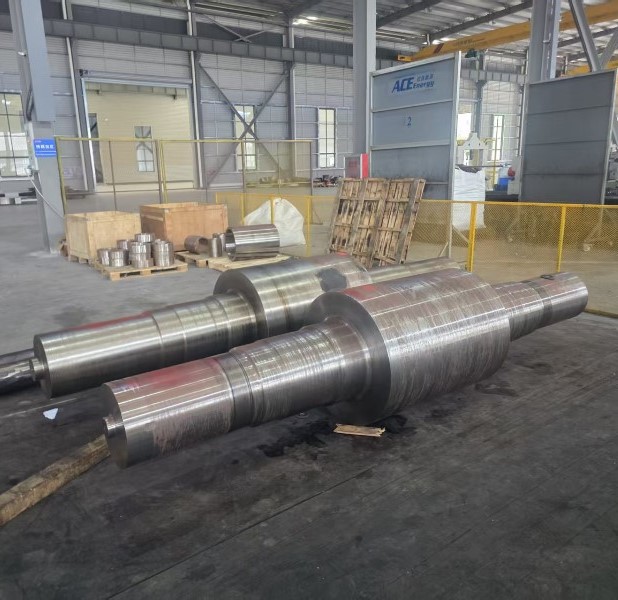
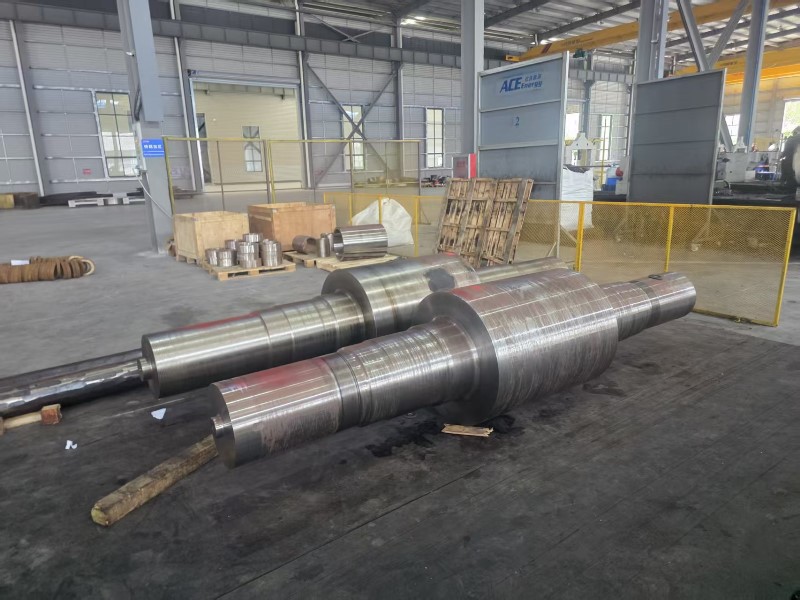
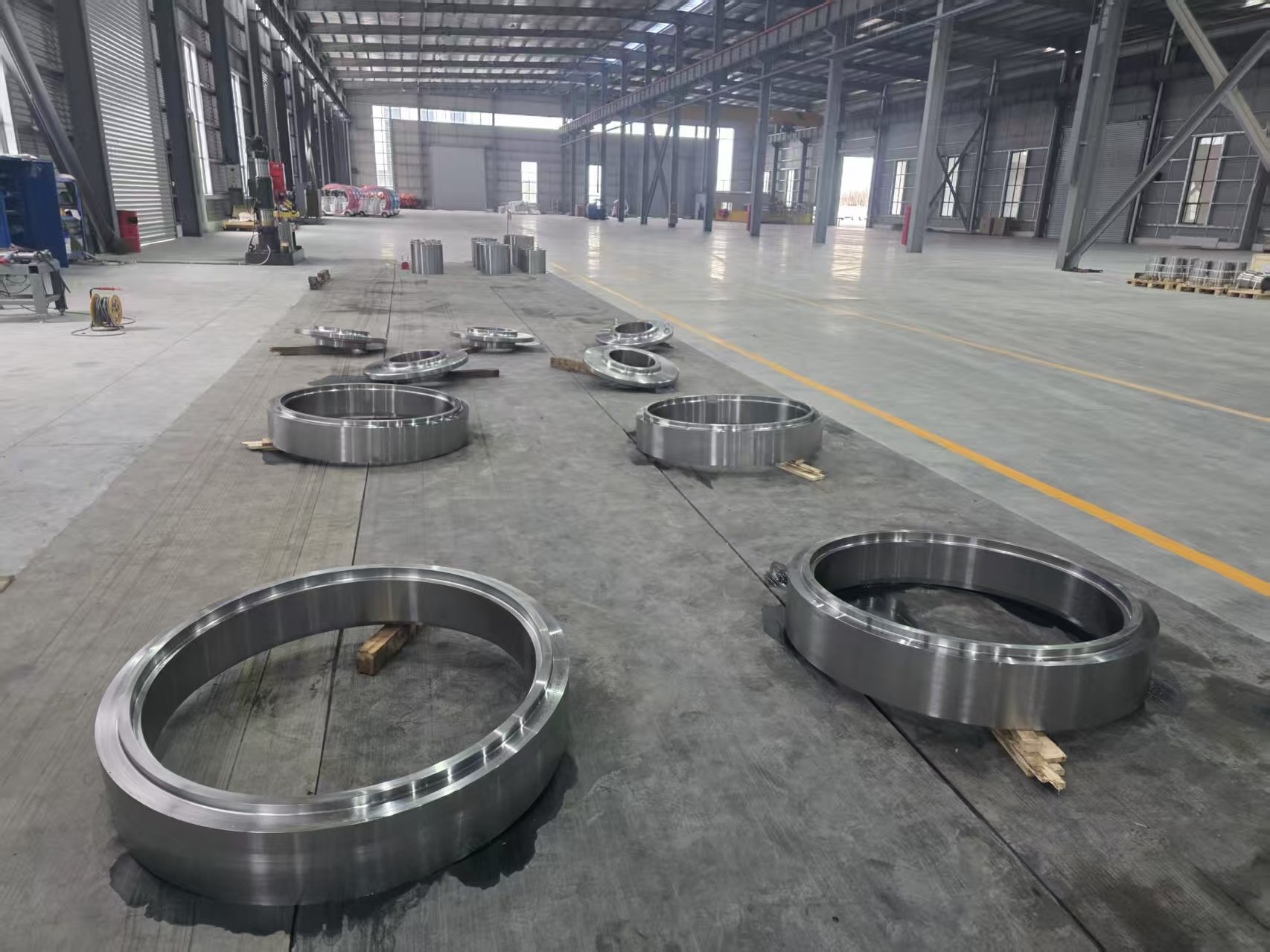
The group's core production base in Jiangsu — officially operational from November 2025 — occupies 55 acres with over 50,018 square meters of floor area. The forging equipment includes 3-ton, 5-ton, and 15-ton electro-hydraulic hammers alongside 1-meter and 1.5-meter vertical ring rolling machines, providing the capacity range to produce forged sections from small precision components to large ring and disc forgings. Energy-efficient natural gas heating furnaces, heat treatment resistance furnaces, quenching tanks, and induction hardening equipment give the facility comprehensive heat treatment capability — critical because the mechanical properties of forged components are only fully developed through precisely controlled heat treatment after forging.
Yancheng ACE Machinery Co., Ltd.: Welding, Straightening, and Precision Machining
Established in 2019 and occupying 20 acres with 13,333 square meters of floor space, Yancheng ACE Machinery operates an integrated welding-straightening structural steel production line alongside a precision machining workshop. The welding-straightening line addresses one of the practical challenges in large weldment fabrication — the thermal distortion that welding inevitably introduces, and which must be corrected to achieve the dimensional tolerances that precision assemblies require. The precision machining workshop provides the final dimensional control for mating surfaces, bearing seats, bolt hole patterns, and other features where tolerances are too tight for weld fabrication alone to achieve.
Yancheng ACE Surface Treatment Technology Co., Ltd.: 400μm Coating Performance
The group's surface treatment subsidiary operates a heavy-duty power-and-free chain large-scale powder coating production line capable of achieving single-application coating thickness of 400μm — a specification that places ACE's coating performance well above the 60–120μm typical of standard industrial powder coating. At 400μm, the coating system provides genuine long-term anti-corrosion protection suitable for outdoor, marine-adjacent, and chemically active environments, not merely cosmetic surface finishing. This in-house coating capability means finished weldment forgings can be delivered fully protected without the lead time, handling risk, and quality coordination challenges of outsourced surface treatment.
Quality Assurance: Certifications, Inspection Systems, and the 100% Outgoing Inspection Standard
For structural components in load-bearing applications, quality assurance is not a marketing statement — it is an engineering requirement with safety implications. ACE Group has built a quality infrastructure that reflects this reality.
ACE Machinery holds TÜV Rheinland ISO 9001 Quality Management System certification alongside ISO 14001 (environmental management), ISO 45001 (occupational health and safety), and ISO 50001 (energy management) — a full suite of management system certifications that reflects organizational maturity across operational, safety, and environmental dimensions. The company also holds recognition as a Specialised, Refined, Unique, and Innovative Enterprise, a National High-Tech Enterprise, and a 3A-level enterprise credit rating — independent assessments that validate both technical capability and commercial reliability.
The group's quality control system implements 100% outgoing inspection on all products — not statistical sampling, but verification of every unit before shipment. Inspection capabilities include non-destructive testing equipment for internal defect detection, dimensional inspection tools for geometric verification, and qualified personnel competent to interpret results against applicable international and domestic standards. A CNAS-standard laboratory is being established to further formalize and extend testing capabilities, providing scientific support for both production quality control and ongoing technological R&D.
The group's operations are supported by integrated MES (Manufacturing Execution System) and ERP (Enterprise Resource Planning) management systems, with data cloud storage providing traceability and audit capability across production records. This information infrastructure supports the kind of documented process control and production traceability that demanding customers in aerospace, chemical, and medical sectors require as part of their own supply chain qualification processes.
Frequently Asked Questions About Weldment Forgings
Q: What is the difference between a weldment forging and a casting in structural applications?
Castings are produced by pouring molten metal into a mold, which can produce complex shapes but often results in internal porosity, shrinkage cavities, and a coarser, less directional grain structure compared to forgings. Weldment forgings use forged sections — which are dense, have refined grain structure, and are free from casting porosity — joined by welding. For applications requiring high fatigue resistance, tensile strength, and impact toughness, weldment forgings consistently outperform equivalent castings, particularly in dynamic load applications such as crane booms, vehicle frames, and rotating equipment supports.
Q: How is joint integrity maintained at the weld connections in a weldment forging?
Joint integrity in weldment forgings is achieved through qualified welding procedures, certified welding personnel, appropriate joint design, and post-weld inspection. Joint design — including weld preparation geometry, filler metal selection, and preheat requirements — is tailored to the base material alloys being joined and the service loads the joint must carry. Post-weld heat treatment may be applied to relieve residual stresses and restore heat-affected zone toughness in critical applications. Non-destructive testing (ultrasonic testing, radiographic testing, magnetic particle inspection) verifies internal and surface weld quality before the component is released for service.
Q: Can weldment forgings be produced from multiple different alloys in the same assembly?
Yes. One of the key design advantages of weldment forgings is the ability to use different alloys in different sections of the same assembly, provided the welding procedure is qualified for the specific material combination. This allows each zone of the component to be optimized for its specific service conditions — high-strength steel where loads are highest, corrosion-resistant alloy where chemical exposure is greatest, lightweight alloy where mass reduction is the priority — in a single integrated assembly.
Q: What size range of weldment forgings can ACE Group manufacture?
ACE Group's forging equipment — including 3-ton, 5-ton, and 15-ton electro-hydraulic hammers and ring rolling machines — supports a wide range of individual forging sizes, and the welded structure production line at Yancheng ACE Machinery can assemble these forgings into large structural assemblies. Customers with specific size or weight requirements should contact ACE Group's engineering team directly for a capability assessment against their project requirements.
Q: What surface protection options are available for weldment forgings from ACE Group?
ACE Group's surface treatment subsidiary provides heavy-duty powder coating with a single-application thickness of 400μm — significantly thicker than standard industrial coatings — through its power-and-free chain large-scale production line. This coating system provides long-term anti-corrosion and weather resistance suitable for outdoor, industrial, and harsh-environment applications. Custom color and finish requirements can be accommodated within the powder coating process capabilities.
Q: Does ACE Group provide non-destructive testing (NDT) for weldment forgings?
Yes. ACE Group's quality system includes non-destructive testing equipment and qualified NDT personnel as part of its comprehensive inspection infrastructure. All outgoing products undergo 100% inspection covering both internal material quality and external dimensional and appearance verification. The planned CNAS-standard laboratory will further extend the group's formal testing and calibration capabilities to support both production quality control and customer-specific inspection requirements.
Message Us Right Now!
-
Mobile Terminal
-
Quick Links
Products About Us Equipment & Capacity Quality News Contact Us -
Product Category
Power‑Generation Forgings OEM Machined Forgings CUSTOMIZED MADE FORGING PARTS Ship and Port Machinery Forgings Mining and Metallurgy Forgings Food and Feed Machinery Forgings Welding Fabrication Petrochemical Industry Forgings -
Contact Us
Mob.: +86-173 7218 0878 Tel.: +86-515-8389 0396 E-mail: ivy.zhai@aceprocess.cn Add.: No.21 Jinfeng Road, Economic Development Park, Dafeng District, Yancheng City, Jiangsu, China
Copyright © 2025 Yancheng ACE Machinery Co., Ltd. All Rights Reserved.
China open die forgings manufacturer
custom precision forgings supplier
