

 English
 中文简体
中文简体

Industry News
Home / News / Industry News / What Are Cooling Plate Forgings and Why Are They Critical for High-Power Modern Equipment?
 Home / News / Industry News / What Are Cooling Plate Forgings and Why Are They Critical for High-Power Modern Equipment?
Industry News
What Are Cooling Plate Forgings and Why Are They Critical for High-Power Modern Equipment?
2026-03-16
Content
- 1 What Is a Cooling Plate Forging and How Does It Work?
- 2 The Core Value of Cooling Plates: On-Demand Heat Dissipation and Scenario Adaptation
- 3 Why Forging Is the Right Manufacturing Process for High-Performance Cooling Plates
- 4 Key Industries and Applications: Where Cooling Plate Forgings Are Indispensable
- 5 Material Selection for Cooling Plate Forgings: Matching Alloy to Thermal and Environmental Requirements
- 6 ACE Group's Integrated Manufacturing Capability for Cooling Plate Forgings
- 7 Quality Assurance: 100% Inspection and Certified Management Systems
- 8 Frequently Asked Questions About Cooling Plate Forgings
- 8.1 Q: What is the difference between a forged cooling plate and a cast cooling plate?
- 8.2 Q: Why is aluminum the most common material for cooling plate forgings?
- 8.3 Q: How are internal coolant channels created in a forged cooling plate?
- 8.4 Q: What pressure rating should a cooling plate forging meet for liquid cooling applications?
- 8.5 Q: Can ACE Group produce custom cooling plate forgings for non-standard specifications?
- 8.6 Q: How does the 400μm surface coating protect cooling plate forgings in harsh environments?
What Is a Cooling Plate Forging and How Does It Work?
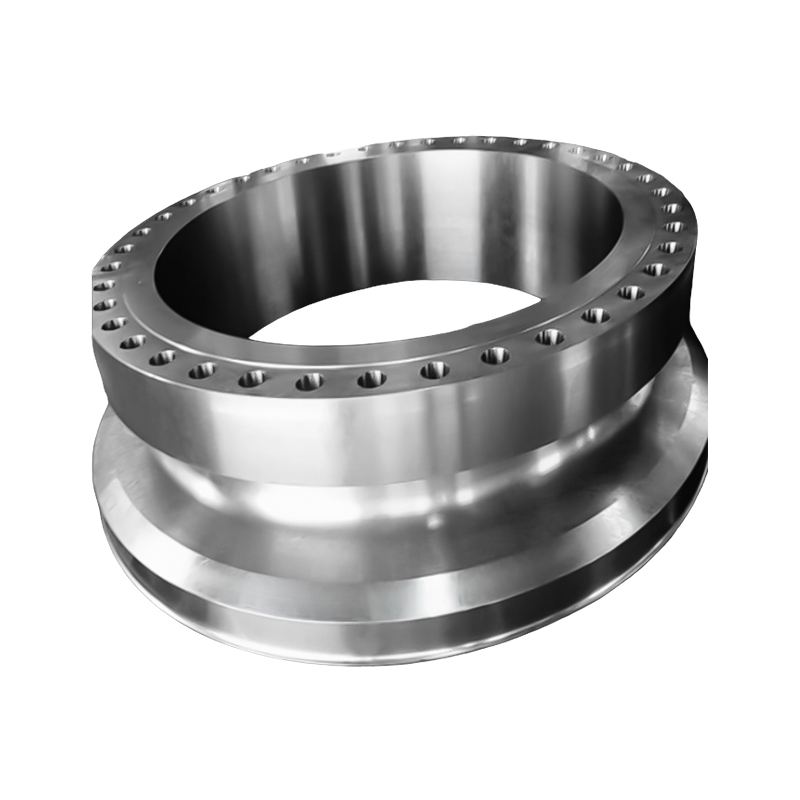
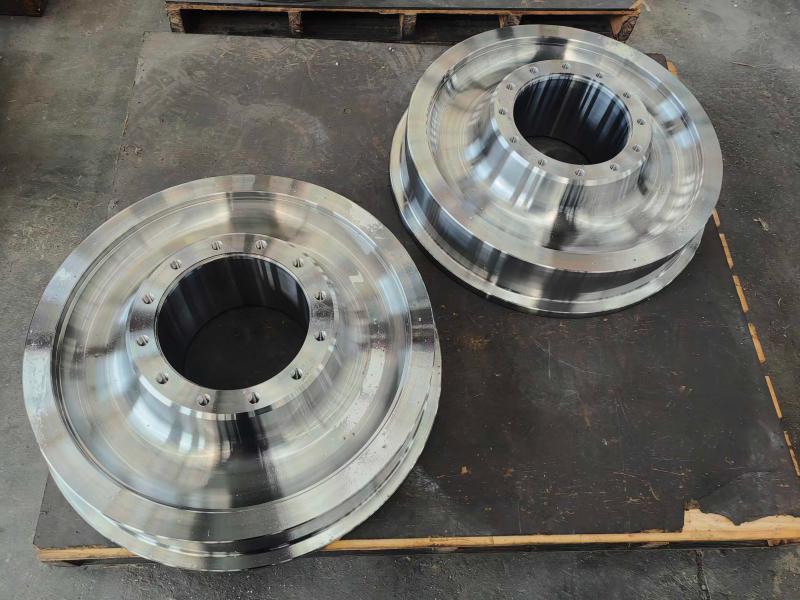
A cooling plate forging is a precision-manufactured heat dissipation component produced through the forging process — where metal is shaped under high compressive force to produce a dense, refined-grain structure — and subsequently machined to incorporate the internal channels, surface features, and dimensional tolerances required for efficient thermal management. Unlike cast or machined-from-plate cold plates, forged cooling plates benefit from the superior mechanical integrity that the forging process delivers: freedom from internal porosity, directional grain structure that improves strength and fatigue resistance, and consistent material density that supports reliable, long-term thermal performance.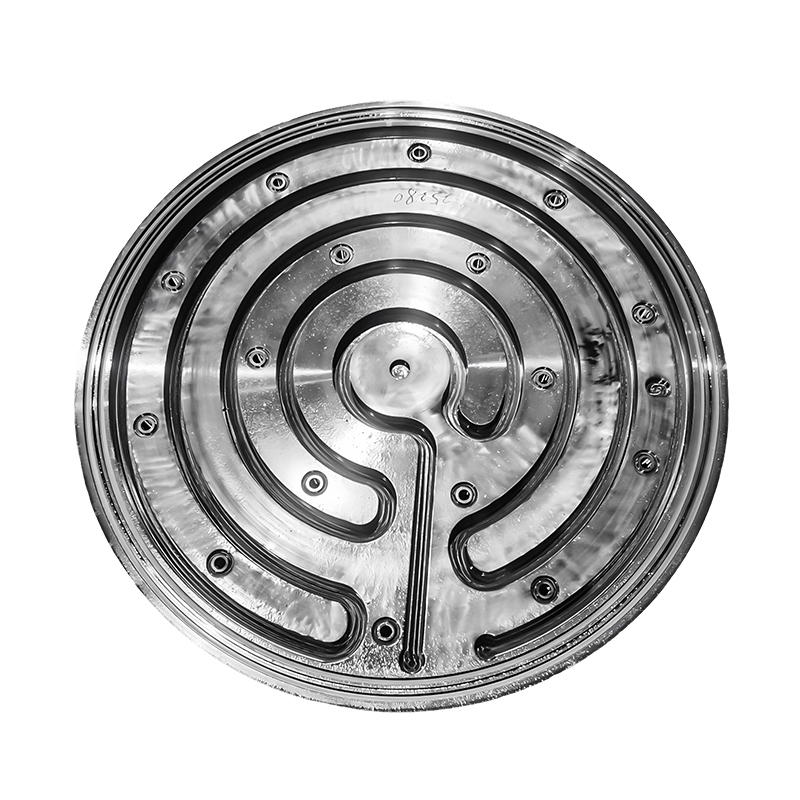
The function of a cooling plate is to transfer heat generated by equipment or systems away from heat-producing components — whether through conduction (direct contact heat transfer through the plate material), convection (fluid flowing through internal channels carrying heat away), or phase change (refrigerant evaporating inside the plate to absorb large quantities of latent heat) — maintaining operating temperatures within the ranges that ensure equipment performance, reliability, and safety.
The growing importance of cooling plate forgings in modern industry is directly tied to the trajectory of equipment development. As systems push toward higher power density, smaller physical footprint, and greater functional integration — trends visible in new energy vehicle battery packs, high-performance computing hardware, power electronics, laser systems, and industrial automation — the thermal loads that must be managed per unit volume increase dramatically. A cooling plate that worked adequately for a previous equipment generation may be entirely insufficient for the next. This reality places cooling plate design and manufacturing quality at the center of product development cycles across multiple industries.
The Core Value of Cooling Plates: On-Demand Heat Dissipation and Scenario Adaptation
The defining value proposition of a well-engineered cooling plate can be summarized as "on-demand heat dissipation combined with scenario adaptation" — the ability to deliver the precise thermal management performance required by a specific application while being designed and manufactured to survive that application's unique environmental, mechanical, and operational demands.
Different applications impose fundamentally different thermal management requirements. A battery thermal management system in an electric vehicle needs to maintain cell temperatures within a narrow band — typically 15°C to 35°C — across a wide range of ambient temperatures, charge-discharge rates, and operating durations, with the additional constraint that the cooling system must be lightweight and occupy minimal space within an already tightly packaged battery enclosure. A power electronics cooling plate in an industrial inverter may need to handle concentrated heat flux from individual IGBT modules without allowing local hotspots to develop, while surviving years of thermal cycling without fatigue cracking at solder joints or brazed interfaces. A laser system cooling plate may require extremely precise and uniform temperature distribution across the entire laser aperture to prevent thermal lensing that would degrade beam quality.
Each of these scenarios requires a different cooling plate design — different channel geometry, different material, different surface finish, different mounting interface. The manufacturing process that produces the plate must be capable of realizing these design requirements with the dimensional precision and material quality that thermal performance calculations assume. This is precisely where forged cooling plates from a vertically integrated manufacturer carry a decisive advantage over alternatives produced by less capable supply chains.
Why Forging Is the Right Manufacturing Process for High-Performance Cooling Plates
Cooling plates can be manufactured by several methods — casting, machining from wrought plate stock, extrusion, or forging followed by precision machining. Each process produces a component with different internal material characteristics, and those characteristics directly affect thermal and mechanical performance in service.
Superior Thermal Conductivity Through Material Density
The forging process eliminates the internal porosity and micro-voids that are inherent in cast components. Porosity acts as a thermal insulator within the plate material — air pockets have thermal conductivity orders of magnitude lower than the surrounding metal, creating local barriers to heat flow. In a cooling plate where the fundamental performance mechanism is efficient conduction of heat through the plate body to the coolant channel walls, a dense, void-free forged microstructure maximizes effective thermal conductivity through the plate thickness. For aluminum alloy cooling plates — the most common material choice for applications requiring a combination of high thermal conductivity, low weight, and corrosion resistance — forging achieves material density that casting cannot reliably match.
Fatigue Resistance Under Thermal Cycling
Cooling plates in service experience continuous thermal cycling — they heat up when equipment is under load and cool down when equipment is idle or between operating cycles. This repeated thermal expansion and contraction places cyclic mechanical stress on the plate material, particularly at geometric stress concentrations such as channel corners, port entrances, and mounting bolt holes. Over thousands or tens of thousands of thermal cycles, these stresses can initiate and propagate fatigue cracks that eventually cause coolant leakage or structural failure. The refined grain structure produced by forging — where controlled deformation breaks down coarse as-cast grain structures and creates a finer, more uniform microstructure — significantly improves fatigue crack initiation resistance and crack propagation resistance compared to cast equivalents, directly extending service life in thermally cycled applications.
Dimensional Precision for Tight Thermal Interface Requirements
The thermal resistance between a heat-generating component and the cooling plate surface is critically sensitive to the flatness and surface finish of the mating interface. A 1μm increase in average surface roughness or a few tenths of a millimeter of flatness deviation can increase interface thermal resistance significantly when multiplied across a large contact area — requiring more thermal interface material (TIM), increasing system thermal resistance, and elevating component operating temperatures. Forged cooling plates, followed by precision machining of mounting surfaces, achieve the flatness tolerances and surface finish specifications that minimize interface thermal resistance and allow TIM to perform optimally.
Key Industries and Applications: Where Cooling Plate Forgings Are Indispensable
The shift toward higher power density and greater functional integration across multiple industries is creating growing demand for cooling plate forgings wherever conventional heat sinking is no longer adequate.
- New Energy Vehicles (NEV) Battery Thermal Management: Battery packs in electric vehicles generate significant heat during fast charging and high-rate discharge. Cooling plates integrated into the battery module structure maintain cell temperatures within the optimal operating window, preventing thermal runaway, extending cycle life, and supporting the fast-charging capability that consumer adoption requires. As energy density in NEV battery packs continues to increase — with leading manufacturers targeting pack-level energy densities above 300 Wh/kg — the thermal load per unit volume increases proportionally, intensifying the performance requirements placed on cooling plate design and manufacturing quality.
- Power Electronics and Inverters: IGBT modules, SiC power devices, and high-frequency converters in industrial drives, renewable energy inverters, and traction drives generate concentrated heat fluxes that can exceed 100 W/cm² at the device footprint. Cooling plate forgings with precision-machined microchannel or mini-channel internal geometries provide the combination of high heat transfer coefficient, low thermal resistance, and mechanical robustness that these applications demand.
- High-Performance Computing and Data Centers: Server processors and GPU accelerators in AI training and high-performance computing infrastructure now generate thermal design powers (TDP) exceeding 700W per chip for leading devices, with per-rack power densities that air cooling cannot manage. Liquid cooling plates mounted directly on processor packages — cold plates — are the enabling technology for these next-generation computing systems.
- Laser Systems and Photonics: Solid-state lasers, diode laser arrays, and fiber laser pump sources require precise, uniform temperature control to maintain wavelength stability, beam quality, and long-term performance. Cooling plate forgings with highly uniform internal channel distribution prevent thermal gradients across the laser aperture that would cause beam quality degradation.
- Aerospace and Defense Electronics: Avionics, radar systems, and electronic warfare equipment operating in flight environments require cooling solutions that are lightweight, mechanically robust under vibration and shock loads, and reliable across wide temperature ranges. Forged aluminum alloy cooling plates meet all of these requirements simultaneously.
- Industrial Automation and Robotics: High-power servo drives, motion controllers, and precision actuator systems in automated manufacturing lines generate heat loads that must be managed without allowing temperature drift that would affect positioning accuracy or control system stability.
| Application | Heat Transfer Mode | Key Design Requirement | Preferred Material |
|---|---|---|---|
| NEV Battery Thermal Management | Liquid convection | Uniform temperature, lightweight | Aluminum alloy |
| Power Electronics | Liquid convection | High heat flux handling, low thermal resistance | Aluminum alloy, copper |
| HPC / Data Center | Liquid convection / phase change | 700W+ per chip TDP management | Copper, aluminum alloy |
| Laser Systems | Liquid convection | Temperature uniformity across aperture | Aluminum alloy, copper |
| Aerospace Electronics | Conduction / liquid convection | Lightweight, vibration resistance | Aerospace aluminum, titanium |
Material Selection for Cooling Plate Forgings: Matching Alloy to Thermal and Environmental Requirements
Material selection for cooling plate forgings involves balancing thermal conductivity, mechanical strength, weight, corrosion resistance, and machinability — and different applications prioritize these properties in different orders.
Aluminum Alloys
Aluminum alloys are the dominant material for cooling plate forgings across most applications. The 6xxx series alloys — particularly 6061 and 6082 — combine thermal conductivity in the range of 150–170 W/(m·K) with good strength after T6 heat treatment, excellent machinability for channel fabrication, natural corrosion resistance, and density of approximately 2.7 g/cm³ that is roughly one-third that of steel or copper. For NEV battery cooling, power electronics, aerospace, and general industrial applications, aluminum alloy forged cooling plates represent the optimal balance of performance, weight, and cost.
Copper Alloys
Where maximum thermal conductivity is required — particularly for cooling extremely high heat flux devices where the temperature gradient through the plate material itself is significant — copper alloys provide thermal conductivity of approximately 380–400 W/(m·K), more than double that of aluminum. Copper cooling plates are used in high-power laser systems, concentrated photovoltaic receivers, and certain semiconductor manufacturing equipment where aluminum's thermal conductivity is insufficient to prevent unacceptable temperature rise across the plate thickness. The trade-off is higher weight and material cost compared to aluminum.
Stainless Steel and Specialty Alloys
In applications involving corrosive coolants, aggressive chemical environments, or biocompatibility requirements — such as medical device cooling systems and certain chemical process equipment — stainless steel cooling plates provide the necessary chemical resistance at the cost of lower thermal conductivity (approximately 15–20 W/(m·K) for austenitic grades). For these applications, the design compensates for lower bulk conductivity through increased channel density, higher coolant flow rates, or enhanced surface features within the channels.
ACE Group's Integrated Manufacturing Capability for Cooling Plate Forgings
Producing a high-performance cooling plate forging to specification requires competency across multiple manufacturing disciplines simultaneously — forging to produce the correct material properties, precision machining to achieve the channel geometries and surface tolerances that thermal performance requires, heat treatment to develop the alloy's full mechanical potential, and surface treatment to protect the finished component in its service environment. A supplier who controls all of these processes under one quality management system delivers more consistent results than one assembling the same capability from multiple subcontractors.
ACE Group has structured its operations to provide exactly this integrated capability. The group's business spans forging, heat treatment, precision machining, welded structures, and surface treatment — a complete production chain for complex cooling plate forgings managed under a unified quality system holding TÜV Rheinland ISO 9001 certification alongside ISO 14001, ISO 45001, and ISO 50001 certifications.
Forging and Heat Treatment: Jiangsu ACE Energy Technology Co., Ltd.
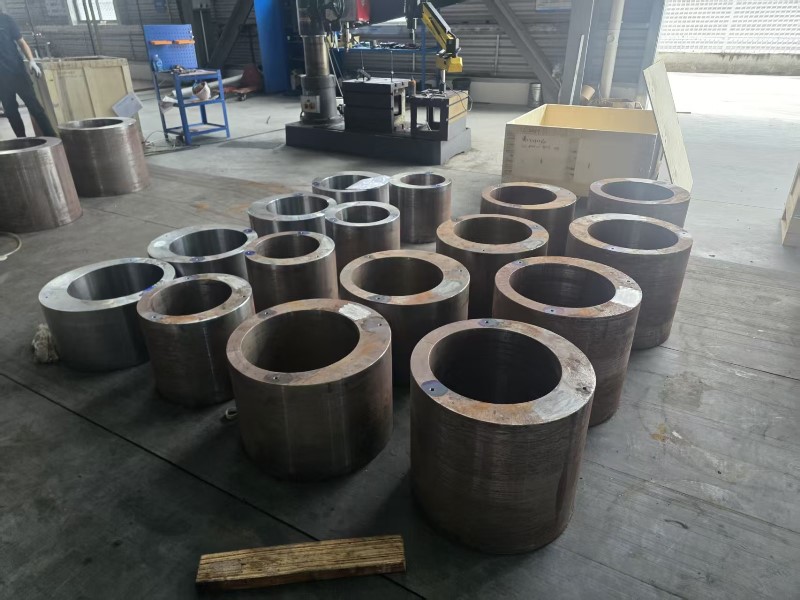
The group's core production base in Jiangsu — officially operational from November 2025 — occupies 55 acres with over 50,018 square meters of floor area and is equipped with 3-ton, 5-ton, and 15-ton electro-hydraulic hammers alongside ring rolling machines, energy-efficient natural gas heating furnaces, heat treatment resistance furnaces, quenching tanks, and induction hardening equipment. The combination of forging and heat treatment under the same roof and the same quality system ensures that the mechanical property development of each cooling plate forging — grain refinement during forging, solution treatment and aging to achieve T6 or equivalent temper — is executed as a controlled, documented, traceable process rather than as sequential operations in separate facilities with separate quality systems.
Precision Machining: Yancheng ACE Machinery Co., Ltd.
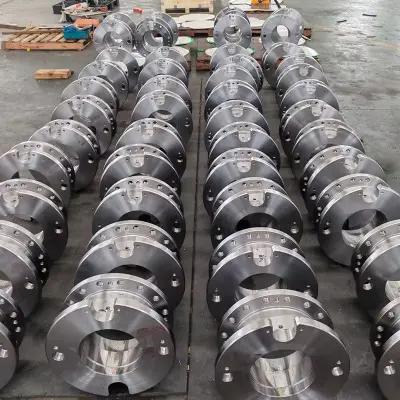
The precision machining workshop at Yancheng ACE Machinery provides the dimensional control capability that cooling plate performance requires. CNC machining centers fabricate the internal coolant channels, inlet and outlet port features, mounting bolt patterns, and precision-finished thermal interface surfaces that determine how well the cooling plate performs in its installed application. The integrated welding-straightening production line at the same facility supports cooling plate assemblies that combine forged sections with welded structures — relevant for large-format cooling plates or complex assemblies that cannot be produced as single forgings.
Surface Treatment: 400μm Coating Performance
ACE Group's surface treatment subsidiary provides powder coating to a single-application thickness of 400μm — a specification that delivers genuine long-term corrosion and weather protection for cooling plates installed in outdoor, industrial, or chemically active environments. This coating thickness is more than three times the 100–120μm typical of standard industrial powder coating, providing a substantially more robust protective barrier for components expected to remain in service for years or decades without coating failure.
Quality Assurance: 100% Inspection and Certified Management Systems
For cooling plate forgings used in safety-critical or performance-critical applications — battery thermal management, power electronics, aerospace — quality assurance is not optional. A cooling plate that leaks coolant into an electronics enclosure, fails mechanically under thermal cycling, or delivers inadequate heat transfer due to internal manufacturing defects can cause catastrophic system failure. ACE Group's quality philosophy addresses this with a policy of 100% outgoing product inspection — every unit is verified before shipment, not sampled statistically.
The inspection infrastructure includes non-destructive testing equipment for internal defect detection, dimensional inspection tools for geometric verification against drawing requirements, and qualified personnel trained to international and domestic standards. The group's integrated MES and ERP management systems with data cloud storage provide production traceability — the ability to reconstruct the complete production history of any component from raw material lot through every processing step to final inspection. This traceability is increasingly required by demanding customers in automotive, aerospace, and industrial sectors as part of their supplier qualification and ongoing quality management requirements.
The planned CNAS-standard laboratory will provide accredited testing support for both production quality control and customer-specific acceptance testing, adding a formal third-party accredited framework to the group's existing internal quality capability.
Frequently Asked Questions About Cooling Plate Forgings
Q: What is the difference between a forged cooling plate and a cast cooling plate?
Forged cooling plates are produced by mechanically deforming metal under high compressive force, which eliminates internal porosity, refines the grain structure, and produces a denser, stronger material than casting. Cast cooling plates are produced by pouring molten metal into a mold, which can create complex shapes but may introduce micro-porosity and coarser grain structure. In thermal performance terms, forged plates offer higher effective thermal conductivity (due to the absence of void-related thermal resistance) and superior fatigue life under thermal cycling compared to equivalent cast components.
Q: Why is aluminum the most common material for cooling plate forgings?
Aluminum alloys provide the best combination of thermal conductivity (150–170 W/(m·K)), low density (2.7 g/cm³), good mechanical strength after heat treatment, natural corrosion resistance, and machinability for most cooling plate applications. For weight-sensitive applications such as electric vehicle batteries and aerospace electronics, aluminum's density advantage over copper (approximately 3.3× lighter) makes it the only practical choice. Copper is reserved for applications requiring thermal conductivity above what aluminum can deliver.
Q: How are internal coolant channels created in a forged cooling plate?
Internal coolant channels in forged cooling plates are typically created through precision CNC machining after forging — either by drilling straight channels that are then plugged at access points, by milling open channel patterns that are subsequently sealed with a cover plate through brazing or friction stir welding, or by a combination of approaches depending on the channel geometry required. The precision machining workshop capability of the manufacturing facility is critical to achieving the channel dimensions, surface finish, and port geometry that the hydraulic and thermal performance calculations specify.
Q: What pressure rating should a cooling plate forging meet for liquid cooling applications?
Pressure requirements vary significantly by application. NEV battery cooling systems typically operate at coolant pressures of 1.5 to 3 bar, while industrial liquid cooling circuits and high-performance computing cooling loops may operate at 4 to 6 bar or higher. Cooling plates should be proof-pressure tested and leak-tested to a multiple of the operating pressure — typically 1.5× working pressure for proof testing — and the forged plate material and channel wall thickness must be designed to maintain structural integrity at the maximum system pressure with appropriate safety margin.
Q: Can ACE Group produce custom cooling plate forgings for non-standard specifications?
Yes. ACE Group's integrated manufacturing capability — forging, heat treatment, precision machining, and surface treatment under a unified quality system — supports custom cooling plate forging production across a range of alloys, dimensions, channel geometries, and surface treatment specifications. The group's engineering team, experienced in materials, heat treatment, and machining, works with customers to translate thermal management requirements into production-ready manufacturing specifications. All custom products are subject to the same 100% outgoing inspection standard as standard product lines.
Q: How does the 400μm surface coating protect cooling plate forgings in harsh environments?
The 400μm single-application powder coating provided by ACE Group's surface treatment subsidiary delivers a protective layer more than three times thicker than standard industrial powder coating. This thickness provides a substantially more robust barrier against moisture ingress, UV degradation, chemical attack from coolant additives or environmental contaminants, and mechanical abrasion — all of which degrade thinner coatings and eventually expose the base metal to corrosive attack. For cooling plates installed in outdoor environments, industrial facilities, or vehicle underbody locations, this coating performance directly extends service life and reduces maintenance requirements over the product's operational life.
Message Us Right Now!
-
Mobile Terminal
-
Quick Links
Products About Us Equipment & Capacity Quality News Contact Us -
Product Category
Power‑Generation Forgings OEM Machined Forgings CUSTOMIZED MADE FORGING PARTS Ship and Port Machinery Forgings Mining and Metallurgy Forgings Food and Feed Machinery Forgings Welding Fabrication Petrochemical Industry Forgings -
Contact Us
Mob.: +86-173 7218 0878 Tel.: +86-515-8389 0396 E-mail: ivy.zhai@aceprocess.cn Add.: No.21 Jinfeng Road, Economic Development Park, Dafeng District, Yancheng City, Jiangsu, China
Copyright © 2025 Yancheng ACE Machinery Co., Ltd. All Rights Reserved.
China open die forgings manufacturer
custom precision forgings supplier
