

 English
 中文简体
中文简体

Industry News
Home / News / Industry News / Wind Turbine Guide Vane Forgings: How Precision Fluid Control Components Improve Power Generation Efficiency and Reduce Maintenance Costs
 Home / News / Industry News / Wind Turbine Guide Vane Forgings: How Precision Fluid Control Components Improve Power Generation Efficiency and Reduce Maintenance Costs
Industry News
Wind Turbine Guide Vane Forgings: How Precision Fluid Control Components Improve Power Generation Efficiency and Reduce Maintenance Costs
2026-03-23
Content
- 1 What Are Guide Vane Forgings and Why Are They Critical to Wind Turbine Performance?
- 2 The Role of Pitch and Yaw Control in Wind Turbine Power Generation Efficiency
- 3 Material Selection: Why High-Strength, Wear-Resistant Alloys Are Non-Negotiable
- 4 Why Forging Is the Right Manufacturing Process for Wind Turbine Guide Vanes
- 5 High Reliability and Low Maintenance Cost: The Core Value for Wind Farm Operators
- 6 Onshore vs. Offshore Applications: Different Environments, Same Core Requirements
- 7 ACE Group's Manufacturing Platform for Wind Power Guide Vane Forgings
- 8 Quality Assurance: 100% Inspection and Certified Systems for Wind Industry Standards
- 9 Frequently Asked Questions About Wind Power Guide Vane Forgings
- 9.1 Q: What is the function of guide vanes in a wind turbine hydraulic pitch system?
- 9.2 Q: Why is stainless steel the preferred material for wind turbine guide vane forgings?
- 9.3 Q: How does guide vane quality affect wind turbine power generation efficiency?
- 9.4 Q: What service life should wind turbine guide vane forgings be designed for?
- 9.5 Q: Are ACE Group's guide vane forgings suitable for both onshore and offshore wind turbines?
- 9.6 Q: What certifications does ACE Group hold that are relevant to wind industry supply chain qualification?
What Are Guide Vane Forgings and Why Are They Critical to Wind Turbine Performance?
Guide vane forgings are precision-manufactured fluid control components used within the hydraulic pitch and yaw systems of wind turbines. Their function is to direct and regulate the flow of hydraulic oil through the control circuits that physically move turbine blades to their optimal angle relative to the wind — a process known as pitch control — and rotate the nacelle assembly to face the wind direction — a process known as yaw control. The accuracy, reliability, and durability of guide vane forgings directly determine how well a wind turbine tracks changing wind conditions, and therefore how much electrical energy it extracts from the wind resource available at its site.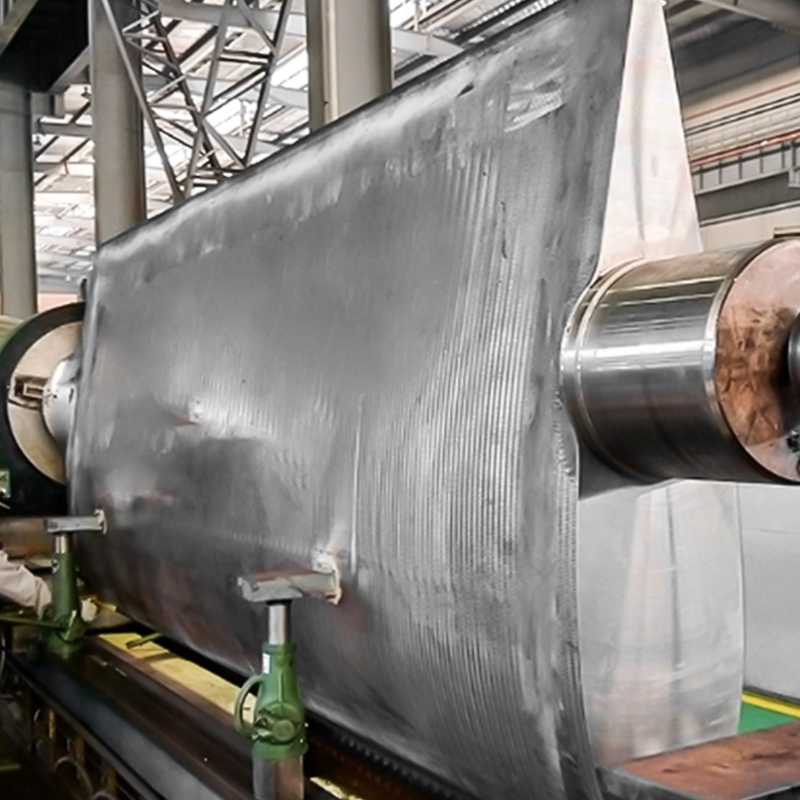
Understanding why these components matter requires a brief picture of how hydraulic pitch and yaw systems work. Modern wind turbines — particularly those with rated capacities above 2 MW — use hydraulic actuator systems to move blade pitch and nacelle yaw because hydraulic actuation delivers the combination of high force, precise positioning, and fail-safe operation that turbine control systems require. In a hydraulic pitch system, high-pressure oil is directed by control valves and guided by flow control components through circuits that extend and retract hydraulic cylinders, physically rotating each blade around its pitch axis. Guide vanes within this circuit control the flow path, flow rate, and flow stability of hydraulic oil moving between the pump, accumulator, control valves, and actuators. Any turbulence, flow restriction, or instability introduced by poorly designed or worn guide vanes translates directly into positioning errors at the blade pitch actuator — errors that reduce turbine power output, increase mechanical loading on drivetrain components, and in severe cases trigger protective shutdowns.
The operating environment that wind turbine hydraulic systems must survive makes the choice of guide vane material and manufacturing process critically important. Onshore wind turbines operate in environments ranging from desert sites with abrasive sand and dust to subarctic locations with temperatures below -30°C. Offshore wind turbines add saltwater corrosion and high humidity to these challenges. In either environment, a guide vane that corrodes, wears, or deforms in service does not merely underperform — it introduces flow instability that propagates through the entire hydraulic control system, degrading pitch and yaw accuracy across the full turbine.
The Role of Pitch and Yaw Control in Wind Turbine Power Generation Efficiency
To appreciate the value that precision guide vane forgings deliver, it helps to understand the quantitative relationship between pitch and yaw control accuracy and turbine power output.
Wind turbine power output follows the power curve — the relationship between wind speed and electrical output — that is unique to each turbine model. Below rated wind speed, the turbine operates in its variable-speed region where pitch control is used to maximize energy capture by keeping the blades at the angle of attack that produces maximum aerodynamic efficiency. Studies of wind turbine pitch control performance consistently show that pitch angle errors of just 1 to 2 degrees can reduce energy capture by 2 to 5% in the below-rated operating region — a reduction that may appear modest at the individual turbine level but becomes significant when multiplied across a wind farm of 50 to 150 turbines operating continuously over a 20-year project life.
Above rated wind speed, precise pitch control becomes a safety function as well as an efficiency function — blades must be pitched to shed excess aerodynamic force and prevent rotor overspeed. A pitch control system that cannot respond quickly and accurately due to hydraulic flow control instability introduced by worn or imprecise guide vanes represents both a power quality issue and a mechanical safety concern. Similarly, yaw misalignment — the nacelle pointing away from the wind direction — reduces power output by the cosine of the misalignment angle cubed, meaning a 10-degree yaw error reduces available power by approximately 5%. Accurate yaw drive hydraulics, supported by properly functioning guide vanes, maintain alignment and protect against the asymmetric rotor loading that yaw misalignment imposes on structural components.
This is the operational context in which guide vane forging quality matters most: these components are not passive structural parts that simply need to be strong enough not to break — they are precision functional elements whose dimensional accuracy, surface finish, and material stability under service conditions directly affect the control system performance of every wind turbine in which they are installed.
Material Selection: Why High-Strength, Wear-Resistant Alloys Are Non-Negotiable
The material requirements for wind turbine guide vane forgings are more demanding than for most hydraulic components because of the combination of environmental exposure, cyclic loading, and the precision dimensional stability required for consistent flow control performance over a service life exceeding 10 years without major maintenance intervention.
Stainless Steel: The Standard for Corrosion Resistance and Strength
Stainless steel — particularly austenitic grades such as 316L and martensitic grades such as 17-4PH — is the primary material choice for guide vane forgings in both onshore and offshore wind turbine applications. Austenitic grades provide excellent corrosion resistance against saltwater, humidity, and chemical contamination from hydraulic oil additives, while martensitic precipitation-hardening grades such as 17-4PH combine corrosion resistance with high yield strength and hardness that resist wear at guide vane surfaces in contact with flowing hydraulic oil. For offshore applications where saltwater corrosion is a continuous threat, 316L stainless steel — with its molybdenum addition that specifically improves pitting resistance in chloride environments — is the standard specification.
Low-Temperature Performance: Surviving Subarctic Operating Conditions
Wind resources at many of the best onshore sites globally are located in high-latitude regions where winter temperatures regularly reach -20°C to -40°C. Material selection for guide vane forgings at these sites must account for the ductile-to-brittle transition behavior of steels at low temperatures. Standard carbon steels lose impact toughness rapidly below 0°C and can fail in a brittle manner at temperatures that austenitic stainless steels remain fully ductile. Austenitic stainless steel's face-centered cubic crystal structure maintains its toughness to cryogenic temperatures — a fundamental materials science advantage that makes it the correct choice for cold-climate wind turbine applications regardless of the corrosion environment.
Wear Resistance for Long Service Life
Hydraulic oil flowing through guide vanes at the flow rates and pressures typical of pitch and yaw systems — commonly 150 to 250 bar working pressure with flow rates determined by actuator sizing — exerts continuous erosive wear on flow-directing surfaces. Sand and particulate contamination in the hydraulic oil, despite filtration, contributes to abrasive wear that progressively degrades surface geometry. Material hardness and wear resistance at guide vane flow surfaces directly determine how long the component maintains its original flow control precision before dimensional changes accumulate to the point where control system performance is affected. High-strength stainless steel grades, selected and heat-treated to achieve optimal hardness, provide the wear resistance that 10-year-plus service life targets require.
Why Forging Is the Right Manufacturing Process for Wind Turbine Guide Vanes
Guide vanes for wind turbine hydraulic systems could theoretically be produced by casting, machining from bar stock, or forging. Each process produces components with different internal material characteristics — and those differences have direct consequences for performance and service life in demanding hydraulic applications.
Porosity-Free Material for Reliable Pressure Integrity
Casting processes introduce internal porosity — micro-voids formed as metal solidifies and contracts in the mold. In hydraulic components operating at 150 to 250 bar, subsurface porosity creates stress concentrations that initiate fatigue cracks under cyclic pressure loading, and interconnected porosity paths can provide leak pathways for hydraulic oil. The forging process eliminates porosity entirely by consolidating the metal under compressive force — any voids present in the starting material are collapsed and welded shut during forging, producing a fully dense material with no internal leak pathways or fatigue initiation sites from porosity. For hydraulic guide vanes that must maintain pressure integrity over 10 or more years of cyclic service, this is a fundamental quality advantage.
Refined Grain Structure for Fatigue Resistance
Wind turbine hydraulic systems cycle continuously as wind speed and direction change — pitch adjustments occur many times per minute during normal operation, and each adjustment cycle pressurizes and depressurizes the hydraulic circuit. The resulting pressure cycling imposes fatigue loading on every hydraulic component in the circuit, including guide vanes. The forging process refines the grain structure of the metal — breaking down the coarse as-cast grain structure of the starting ingot into a finer, more uniform microstructure with superior fatigue crack initiation resistance. For components subject to millions of pressure cycles over a turbine's operating life, this grain structure refinement translates directly into extended fatigue life and reduced probability of in-service failure.
Dimensional Stability for Consistent Flow Control Precision
The flow control precision of a guide vane is determined by the accuracy of its internal geometry — the angles, radii, and surface finish of flow-directing surfaces that were specified by the hydraulic system designer. A forged guide vane blank, machined to final dimensions from a high-integrity forged material, holds the specified geometry more reliably over time than a cast blank that may have residual stresses from solidification or subsurface porosity that creates dimensional instability as the component is machined. Dimensional stability translates directly into consistent hydraulic system performance — a guide vane that maintains its specified geometry throughout its service life delivers consistent flow control, while one that distorts or wears differentially introduces progressive performance degradation into the control system.
High Reliability and Low Maintenance Cost: The Core Value for Wind Farm Operators
For wind farm operators, the economic case for high-quality guide vane forgings rests on two interconnected operational priorities: maximizing turbine availability and minimizing operation and maintenance (O&M) expenditure. These priorities are not independent — a component that fails in service requires both a replacement part and the maintenance labor, crane access, and turbine downtime that the replacement event entails.
Wind turbine O&M costs are a substantial portion of the levelized cost of energy (LCOE) for wind projects. Industry data consistently places O&M costs at 15 to 25% of total LCOE for onshore wind over a project lifetime, with offshore O&M costs higher still due to the logistics challenges of accessing turbines at sea. Within the O&M cost breakdown, hydraulic system maintenance — including component inspection, fluid servicing, seal replacement, and component replacement — represents a recurring cost category that disproportionately benefits from high-reliability components with extended service lives.
A guide vane forging with a documented service life exceeding 10 years, manufactured from high-strength wear-resistant stainless steel, does not merely avoid replacement cost during its service life — it avoids the entire maintenance event associated with that replacement: the crane mobilization, the turbine downtime during which no revenue is generated, the technician labor, the safety planning and execution for working at height, and the logistics of getting the replacement component to the turbine location. For offshore wind turbines where these logistics costs can exceed the component cost by a large multiple, the value of guide vane forgings that simply do not require replacement within the turbine's major maintenance interval is directly measurable in project economics.
Guide vane forgings also contribute to low-carbon compliance within the wind power industry's sustainability framework. Reduced maintenance frequency means fewer service vessel voyages for offshore turbines, fewer vehicle journeys for onshore access, and lower overall carbon footprint associated with turbine O&M activities — contributing to the lifecycle carbon performance that increasingly informs wind project environmental impact assessments and green financing frameworks.
Onshore vs. Offshore Applications: Different Environments, Same Core Requirements
While the fundamental function of guide vane forgings is identical in onshore and offshore wind turbine applications, the environmental demands differ in ways that influence material selection, surface treatment, and quality assurance emphasis.
| Requirement | Onshore Wind | Offshore Wind |
|---|---|---|
| Primary corrosion threat | Atmospheric humidity, sand/dust abrasion | Saltwater spray, high-humidity chloride environment |
| Temperature range | -40°C to +50°C (site dependent) | -20°C to +40°C (typically milder extremes) |
| Maintenance access | Relatively straightforward | Complex, weather-dependent, high cost |
| Service life target | 10+ years between major maintenance | 10+ years, premium on extended life due to access cost |
| Recommended material | Stainless steel (316L or equivalent) | 316L stainless or higher corrosion resistance grade |
| Surface treatment priority | Anti-corrosion, UV resistance | Maximum corrosion barrier, saltwater resistance |
For offshore applications specifically, the cost premium of higher-specification materials and surface treatments is justified by the disproportionate cost of any maintenance event that requires marine access. A crane vessel mobilization for offshore wind turbine component replacement costs tens of thousands to hundreds of thousands of dollars per day depending on vessel size and market conditions. A guide vane forging that eliminates even one unplanned maintenance event over its service life delivers a return on the material specification premium that dwarfs the incremental component cost.
ACE Group's Manufacturing Platform for Wind Power Guide Vane Forgings
Producing guide vane forgings that meet the dimensional precision, material quality, and surface integrity requirements of wind turbine hydraulic systems requires manufacturing capability that spans forging, heat treatment, precision machining, and surface treatment — and the quality management infrastructure to control and verify each process step. ACE Group has organized its subsidiaries to provide this complete capability under a unified quality framework.
Forging and Heat Treatment at Jiangsu ACE Energy Technology
ACE Group's core production base in Jiangsu — operational from November 2025 across 55 acres and over 50,018 square meters of floor area — houses the forging and heat treatment capability at the foundation of guide vane forging production. The 3-ton, 5-ton, and 15-ton electro-hydraulic hammers provide the controlled deformation force needed to refine grain structure and consolidate material across the range of guide vane sizes required by different turbine classes. The heat treatment facility — incorporating resistance furnaces, quenching tanks, and induction hardening equipment — develops the full mechanical property potential of the stainless and high-strength alloys used in wind turbine guide vanes, including the hardness and yield strength levels that determine wear resistance and fatigue life in service.
Precision Machining at Yancheng ACE Machinery
The precision machining workshop at Yancheng ACE Machinery provides the dimensional control needed to realize the flow geometry specifications that guide vane hydraulic performance requires. CNC machining centers produce the internal flow-directing surfaces, port geometries, and external mounting interfaces to the tight dimensional tolerances that hydraulic system designers specify — tolerances typically in the range of ±0.01 to ±0.05 mm for critical flow control dimensions. Surface finish on flow-contacting surfaces is controlled to minimize hydraulic resistance and erosive wear, extending the service life of both the guide vane and the hydraulic oil that flows through it.
Surface Treatment: 400μm Protective Coating for Extended Service Life
External surfaces of guide vane forgings exposed to the turbine nacelle environment benefit from the 400μm single-application powder coating provided by ACE Group's surface treatment subsidiary. At this thickness — more than three times standard industrial powder coating — the coating system provides a robust barrier against the corrosive humidity, salt spray, and temperature cycling that wind turbine nacelle environments impose on components over their operating life. For offshore turbines where the external corrosion environment is most aggressive, this coating performance directly supports the 10-year-plus service life targets that guide vane specifications require.
Quality Assurance: 100% Inspection and Certified Systems for Wind Industry Standards
Wind turbine hydraulic components that fail in service do not merely inconvenience operators — they can trigger emergency shutdowns, cause secondary damage to actuators and valves if hydraulic fluid is lost, and in worst-case scenarios compromise the turbine's ability to feather blades in high-wind conditions where rotor overspeed protection is critical. The quality assurance requirements for guide vane forgings therefore include both material quality verification and functional performance confirmation before components enter the supply chain.
ACE Group's quality system applies 100% outgoing inspection to all products — every guide vane forging is individually inspected against dimensional, material, and appearance requirements before shipment. Non-destructive testing equipment detects internal defects that visual inspection cannot reveal, including subsurface porosity, cracks, and inclusions that could initiate in-service failures under hydraulic pressure cycling. Qualified NDT personnel interpret results against applicable acceptance criteria under the group's TÜV Rheinland ISO 9001 certified quality management system.
The group's integrated MES and ERP management systems with cloud data storage provide complete production traceability for every component — from incoming raw material certification through forging, heat treatment, machining, surface treatment, and final inspection to shipment documentation. For wind turbine OEM customers and wind farm developers who require supply chain traceability as part of their quality management and warranty programs, this documentation infrastructure meets the standard of evidence that serious wind industry procurement processes require.
Frequently Asked Questions About Wind Power Guide Vane Forgings
Q: What is the function of guide vanes in a wind turbine hydraulic pitch system?
Guide vanes in a wind turbine hydraulic pitch system direct and regulate the flow of hydraulic oil through the control circuits that operate blade pitch actuators. They control the flow path, flow rate, and flow stability of hydraulic oil moving between the pump, accumulator, control valves, and pitch cylinders. Precise guide vane geometry ensures that hydraulic oil reaches pitch actuators with the pressure and flow characteristics needed for accurate, responsive blade angle adjustment — directly supporting the turbine's ability to maximize energy capture and protect itself from overspeed in high winds.
Q: Why is stainless steel the preferred material for wind turbine guide vane forgings?
Stainless steel provides the combination of corrosion resistance, wear resistance, low-temperature toughness, and high strength that wind turbine guide vane service conditions demand. Carbon steel corrodes progressively in the humidity, salt, and condensation environments of turbine nacelles — particularly offshore — leading to dimensional changes that degrade flow control precision and ultimately to component failure. Stainless grades maintain their corrosion resistance, dimensional stability, and mechanical properties throughout the 10-year-plus service life targets that wind industry maintenance economics require.
Q: How does guide vane quality affect wind turbine power generation efficiency?
Guide vane quality affects power generation efficiency through its influence on pitch control accuracy. Pitch angle errors of 1 to 2 degrees caused by hydraulic flow control instability from worn or imprecise guide vanes can reduce energy capture by 2 to 5% in below-rated wind conditions. Multiplied across a wind farm's turbine population and 20-year operating life, this efficiency gap represents a substantial revenue loss that far exceeds the cost difference between premium and standard-quality guide vane components.
Q: What service life should wind turbine guide vane forgings be designed for?
Guide vane forgings for wind turbine hydraulic systems should be designed for a minimum service life of 10 years — aligning with the major maintenance interval cycles of modern wind turbines. For offshore applications where maintenance access costs are highest, extended service life beyond 10 years provides disproportionate economic value by eliminating the cost of even a single unplanned maintenance event requiring marine vessel mobilization. Material selection, heat treatment, surface treatment, and dimensional precision all contribute to achieving extended service life targets.
Q: Are ACE Group's guide vane forgings suitable for both onshore and offshore wind turbines?
Yes. ACE Group produces guide vane forgings suitable for both onshore and offshore wind turbine applications. Material selection — including stainless steel grades optimized for the specific corrosion environment of each application — is tailored to the operating conditions of the intended installation. The group's 400μm powder coating capability provides the enhanced corrosion protection that offshore turbines require, while the comprehensive quality system and 100% inspection policy meet the documentation and traceability standards applicable to both onshore and offshore wind turbine supply chains.
Q: What certifications does ACE Group hold that are relevant to wind industry supply chain qualification?
ACE Machinery holds TÜV Rheinland ISO 9001 Quality Management System certification alongside ISO 14001, ISO 45001, and ISO 50001 certifications — the full suite of management system standards that wind turbine OEM supplier qualification processes typically require. Independent recognition as a National High-Tech Enterprise and a 3A-level enterprise credit rating provide additional third-party validation of technical capability and commercial reliability for procurement teams conducting formal supplier assessments.

Message Us Right Now!
-
Mobile Terminal
-
Quick Links
Products About Us Equipment & Capacity Quality News Contact Us -
Product Category
Power‑Generation Forgings OEM Machined Forgings CUSTOMIZED MADE FORGING PARTS Ship and Port Machinery Forgings Mining and Metallurgy Forgings Food and Feed Machinery Forgings Welding Fabrication Petrochemical Industry Forgings -
Contact Us
Mob.: +86-173 7218 0878 Tel.: +86-515-8389 0396 E-mail: ivy.zhai@aceprocess.cn Add.: No.21 Jinfeng Road, Economic Development Park, Dafeng District, Yancheng City, Jiangsu, China
Copyright © 2025 Yancheng ACE Machinery Co., Ltd. All Rights Reserved.
China open die forgings manufacturer
custom precision forgings supplier
