

 English
 中文简体
中文简体

Industry News


Industry News
What are the advantages of marine shaft forgings?
2026-04-03
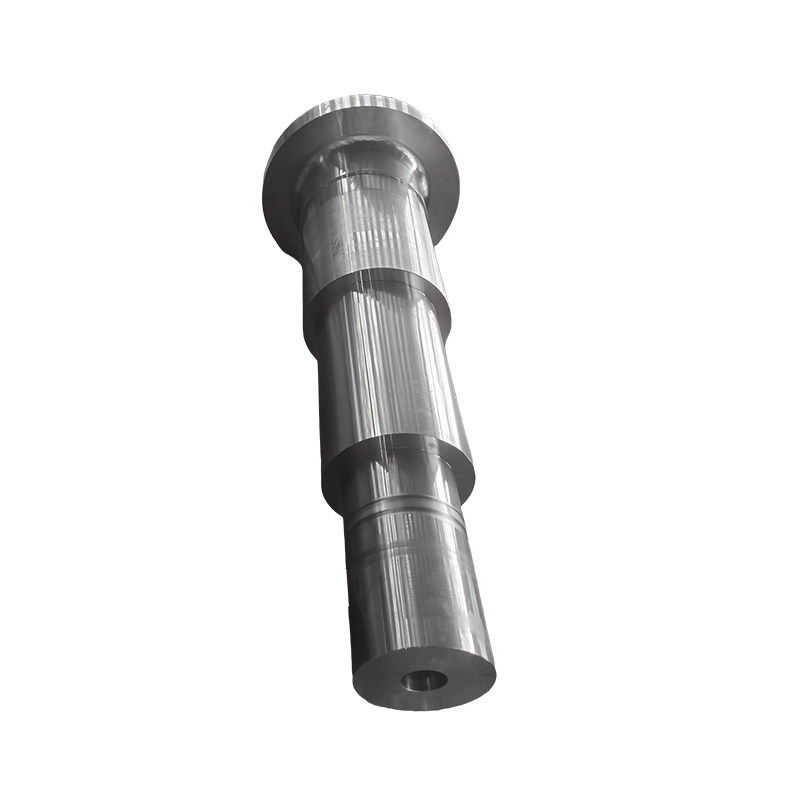
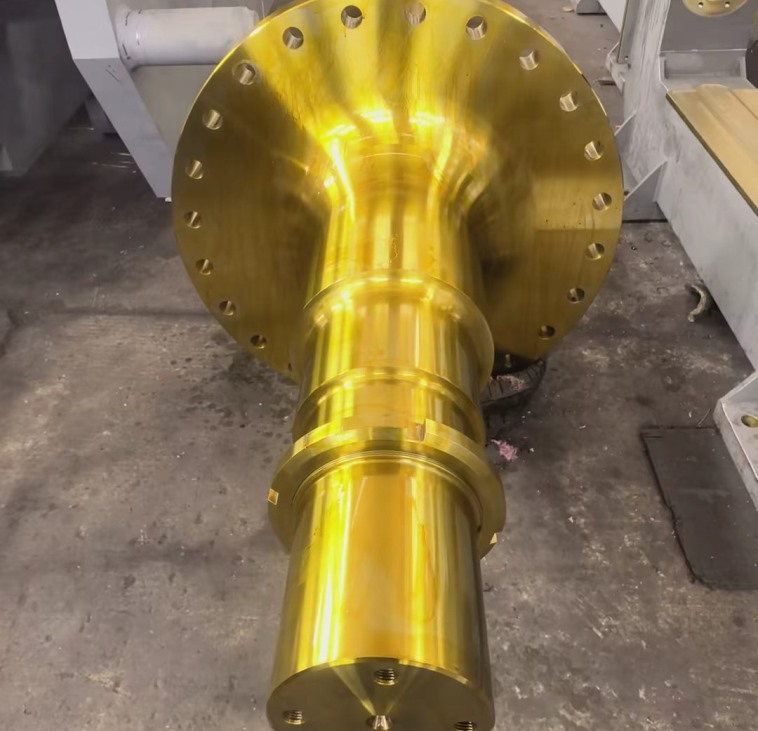
Marine shaft forgings offer superior mechanical performance compared to castings or fabricated alternatives because the forging process aligns the metal's grain structure along the shaft axis, producing higher tensile strength, fatigue resistance, and impact toughness in the precise directions where marine shafting experiences its highest service loads. For shafting, rudder systems, gearbox components, and crane structures operating in the demanding marine environment, forgings are the engineering standard rather than a premium option.
Content
High Strength and Toughness from the Forging Process
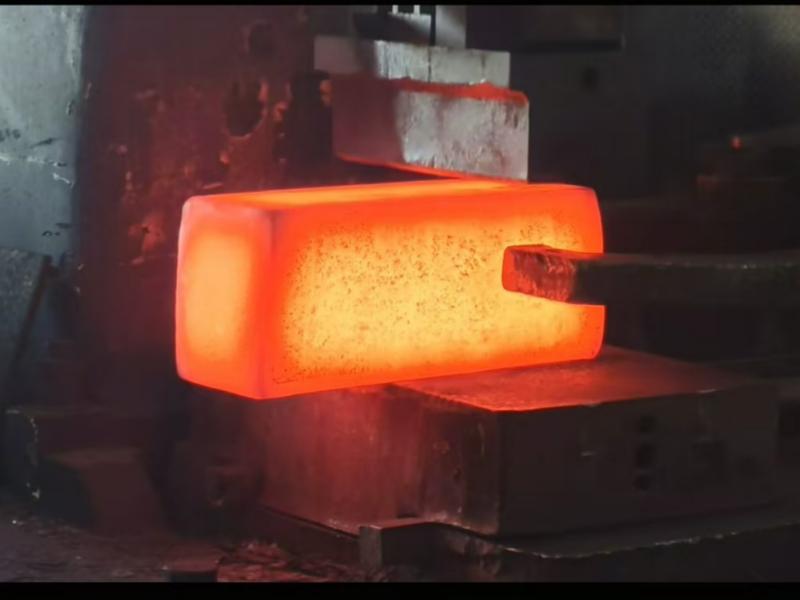
Forging subjects the steel billet to controlled compressive forces at elevated temperature, refining the grain structure and closing internal voids and porosity that are inherent in cast steel. The result is a shaft with measurably superior mechanical properties:
- Tensile strength: Marine-grade forged shaft steel (typically 34CrNiMo6 or equivalent alloy) achieves tensile strength of 900–1,100 MPa — compared to 550–700 MPa for equivalent cast steel grades
- Fatigue life: The aligned grain structure and absence of casting porosity give forged shafts a fatigue life 20–40% longer than cast equivalents under the cyclic torsional and bending loads imposed by propulsion systems
- Impact toughness: Marine shafting experiences shock loads during sudden thrust reversals, propeller strikes, and emergency stops; the Charpy impact values of forged shaft steel exceed casting values by 50–100% at operating temperatures
Corrosion Resistance in the Marine Environment
The marine environment presents extreme corrosion challenges — continuous exposure to saltwater, temperature fluctuation, galvanic corrosion from dissimilar metal contact, and biofouling. Marine shaft forgings address these challenges through:
- Special alloy steel composition: Chrome-nickel-molybdenum (CrNiMo) alloys provide inherent corrosion resistance beyond that of plain carbon steel; nickel addition particularly improves resistance to seawater attack
- Closed surface structure from forging: The compressed, pore-free surface of a forging resists corrosive penetration more effectively than the open-grained surface of a casting
- Surface protection compatibility: Forged surfaces accept cathodic protection systems, anti-corrosion coatings, and sleeve liners more reliably than cast surfaces with their inherent microporosity
Precision Manufacturing and Quality Assurance
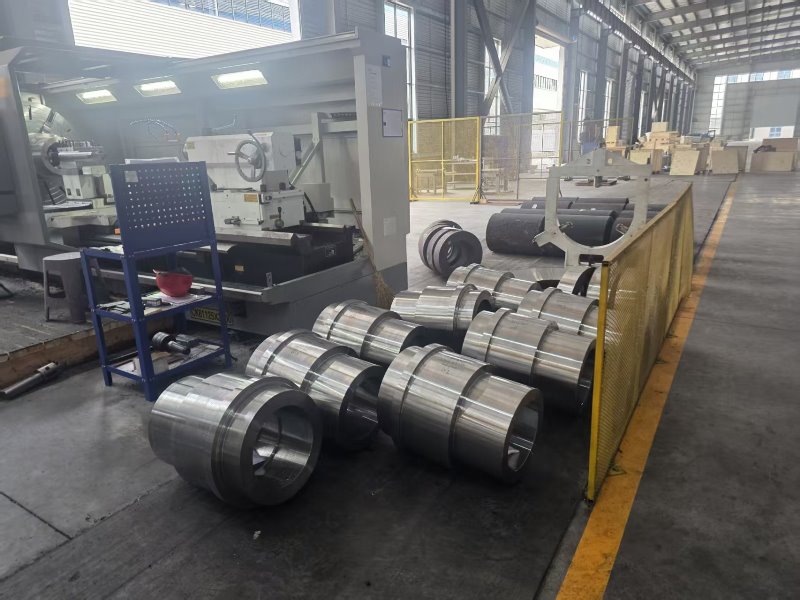
Marine shaft forgings are produced through precision die forging or free forging followed by advanced heat treatment — typically quenching and tempering — to achieve the specified mechanical property combination. Every forging is subject to rigorous quality verification:
- Ultrasonic testing (UT): 100% volumetric inspection detects internal discontinuities including porosity, inclusions, and forging laps that could cause in-service fracture
- Magnetic particle inspection (MPI): Surface and near-surface crack detection performed after final heat treatment and machining
- Dimensional verification: Critical shaft diameters, runout, and straightness are verified against drawing tolerances using precision measurement equipment
- Classification society certification: Marine shaft forgings are manufactured and tested in accordance with rules from recognized classification societies, providing the third-party certification required for regulatory compliance in commercial shipping
Applications Across Marine and Port Equipment
| Component | Forging Type | Key Load Requirement |
|---|---|---|
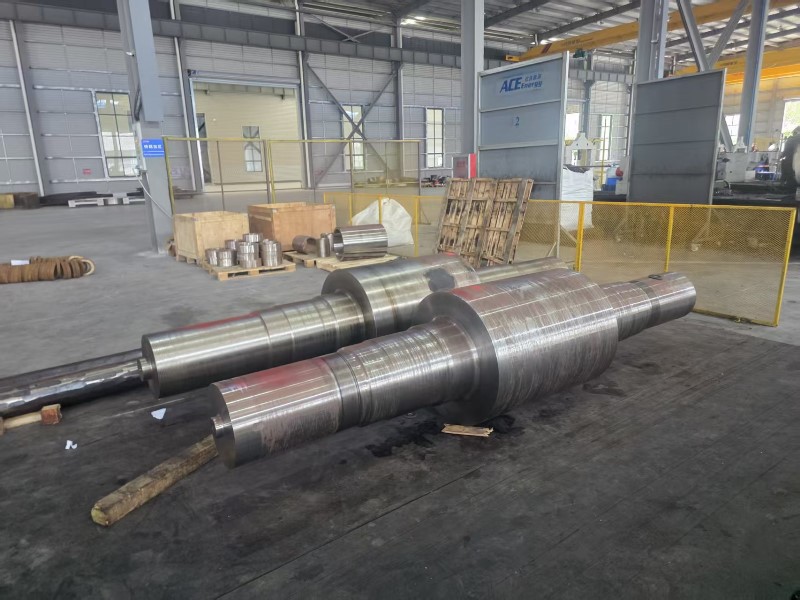
| Propeller shaft | Free forging, stepped shaft | Torsion, bending fatigue |
| Rudder stock | Open die forging | Bending, impact, corrosion |
| Gearbox shafts and pinions | Precision die forging | Gear tooth strength, fatigue |
| Crane hooks and lifting pins | Closed die forging | Tensile load, impact at overload |
| Marine bolts and fasteners | Cold or warm forging | Clamping force, corrosion resistance |
Message Us Right Now!
-
Mobile Terminal
-
Quick Links
Products About Us Equipment & Capacity Quality News Contact Us -
Product Category
Power‑Generation Forgings OEM Machined Forgings CUSTOMIZED MADE FORGING PARTS Ship and Port Machinery Forgings Mining and Metallurgy Forgings Food and Feed Machinery Forgings Welding Fabrication Petrochemical Industry Forgings -
Contact Us
Mob.: +86-173 7218 0878 Tel.: +86-515-8389 0396 E-mail: ivy.zhai@aceprocess.cn Add.: No.21 Jinfeng Road, Economic Development Park, Dafeng District, Yancheng City, Jiangsu, China
Copyright © 2025 Yancheng ACE Machinery Co., Ltd. All Rights Reserved.
China open die forgings manufacturer
custom precision forgings supplier
