

 English
 中文简体
中文简体

Industry News


Industry News
Selection of Forging Materials
2026-04-15
Content
Continuous Cast Billet
Continuous cast billet is made by pouring molten steel into round or square shapes, resulting in lower density. Its internal structure and mechanical properties are inferior to those of round steel. The advantages are: low cost, high yield, and it can be directly used for mass-produced products, such as turntable bearing inner and outer rings and annular forgings. Common materials used include 50Mn, 42CrMo, and 45 steel, which are often used in forging factories.
Rolled Round (Bar Stock)
Rolled round, also known as bar stock, is steel made by rolling round or square billets. It has better density and mechanical properties than continuous cast billets. The disadvantage is a lower yield and smaller batch production. It is commonly used for special materials and steel products that require higher performance, such as gear steels and bearing steels.
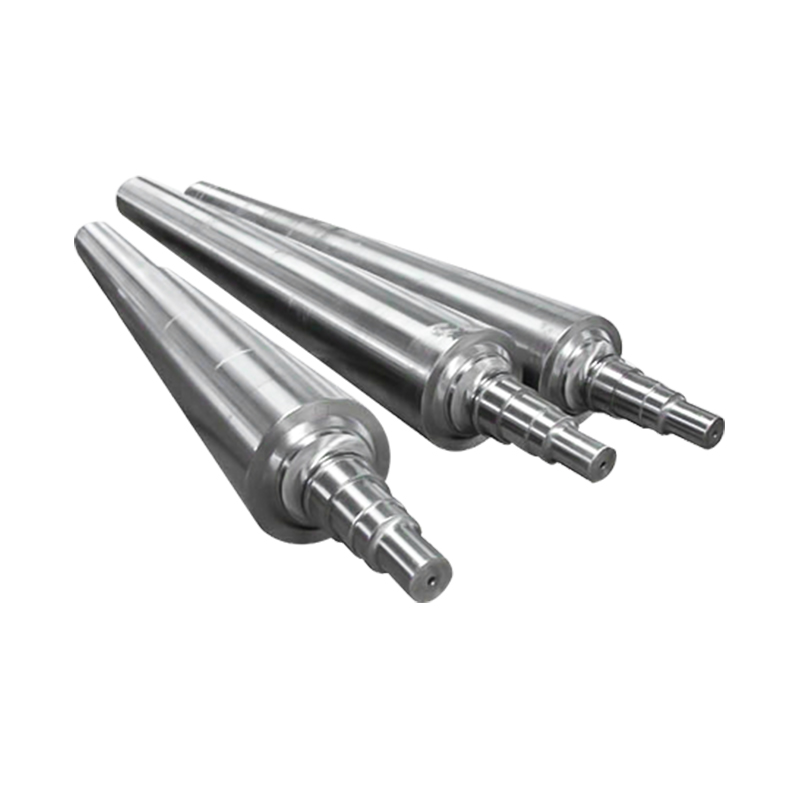
Steel Ingot
A steel ingot is a large billet made by pouring molten steel directly into a mold for cooling. The density and uniformity of its structure are superior to continuous cast billets, with larger cross-section mechanical properties being more stable and providing higher load-bearing capacity. The disadvantages include low yield, large losses from cutting heads and tails, long production cycles, and significantly higher costs compared to continuous cast billets. Steel ingots are commonly used for ultra-large, heavy-duty, and high-inspection requirement forgings, such as wind turbine spindles, large cylinders, heavy-duty modules, and large-diameter annular forgings. They are mostly used for alloy steels and large structural forgings.
Stainless Steel Ingot and Rolled Round Steel
Stainless steel ingots and rolled round steel are the primary raw materials for stainless steel forgings. Stainless steel ingots have uniform composition with minimal segregation, making them suitable for large cross-section, high-inspection requirement stainless steel forgings. Stainless steel rolled round steel has high density, good surface quality, and stable mechanical properties, making it the preferred raw material for precision stainless steel forgings like gears, shafts, flanges, and valve bodies. The disadvantages are that they are much more expensive than ordinary carbon steel, have lower yield, and require stricter production controls. These materials are often used in corrosive, high-strength environments, such as 1.4418, F51/F53 duplex steel, 304, and 316L stainless steel forgings, and are widely used in shipbuilding, chemical, and offshore engineering industries.
Message Us Right Now!
-
Mobile Terminal
-
Quick Links
Products About Us Equipment & Capacity Quality News Contact Us -
Product Category
Power‑Generation Forgings OEM Machined Forgings CUSTOMIZED MADE FORGING PARTS Ship and Port Machinery Forgings Mining and Metallurgy Forgings Food and Feed Machinery Forgings Welding Fabrication Petrochemical Industry Forgings -
Contact Us
Mob.: +86-173 7218 0878 Tel.: +86-515-8389 0396 E-mail: ivy.zhai@aceprocess.cn Add.: No.21 Jinfeng Road, Economic Development Park, Dafeng District, Yancheng City, Jiangsu, China
Copyright © 2025 Yancheng ACE Machinery Co., Ltd. All Rights Reserved.
China open die forgings manufacturer
custom precision forgings supplier
