

 English
 中文简体
中文简体

Industry News


Industry News
What are Hydro Turbine Forgings?
2026-04-17
Hydro turbine forgings are structural and rotating components of hydroelectric turbines produced through forging processes — where metal is shaped under high compressive force rather than cast from molten metal or machined from bar stock. The forging process produces a refined, directionally aligned grain structure in the metal that gives the finished component significantly higher strength, fatigue resistance, and toughness than an equivalent casting. These properties are critical for turbine components that operate under continuous hydraulic impact loads, high water pressure, and decades of uninterrupted service in demanding hydraulic environments.
Content
Key Components Produced as Hydro Turbine Forgings
Several critical components in a hydro turbine require the superior mechanical properties that only forging can provide:
Runner Blades
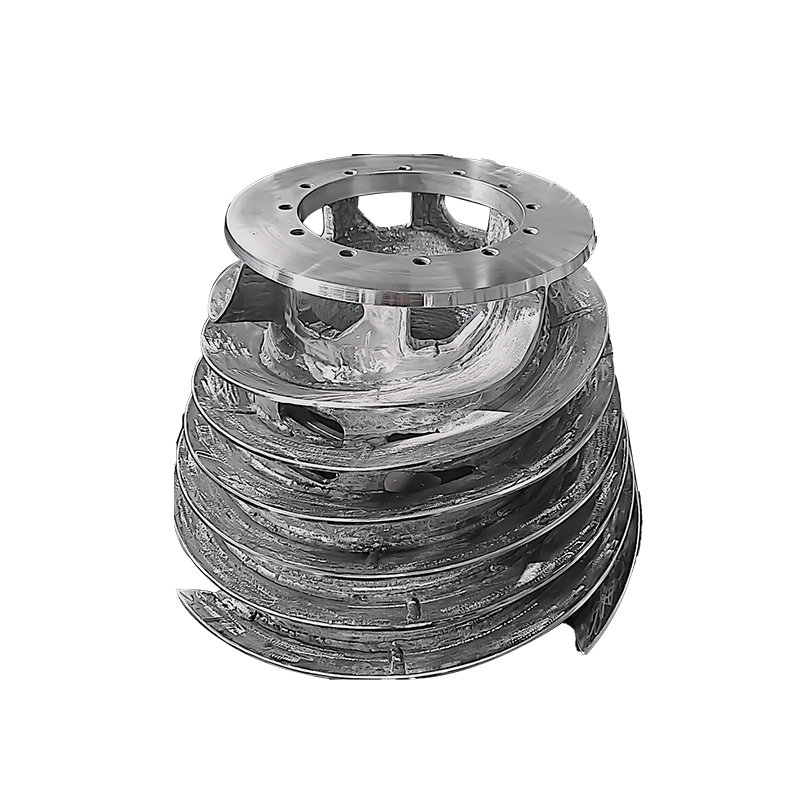
The runner is the rotating heart of the turbine — it converts the kinetic and pressure energy of flowing water directly into mechanical rotation. Runner blades in Francis, Kaplan, and Pelton turbines must withstand continuous cyclic hydraulic loading at pressures that can exceed 10 MPa, combined with erosive cavitation damage at surfaces where water flow velocity creates local pressure drops below vapor pressure. Forged stainless steel runner blades provide the fatigue strength and erosion resistance needed to meet operational lifespans measured in decades.
Turbine Shafts
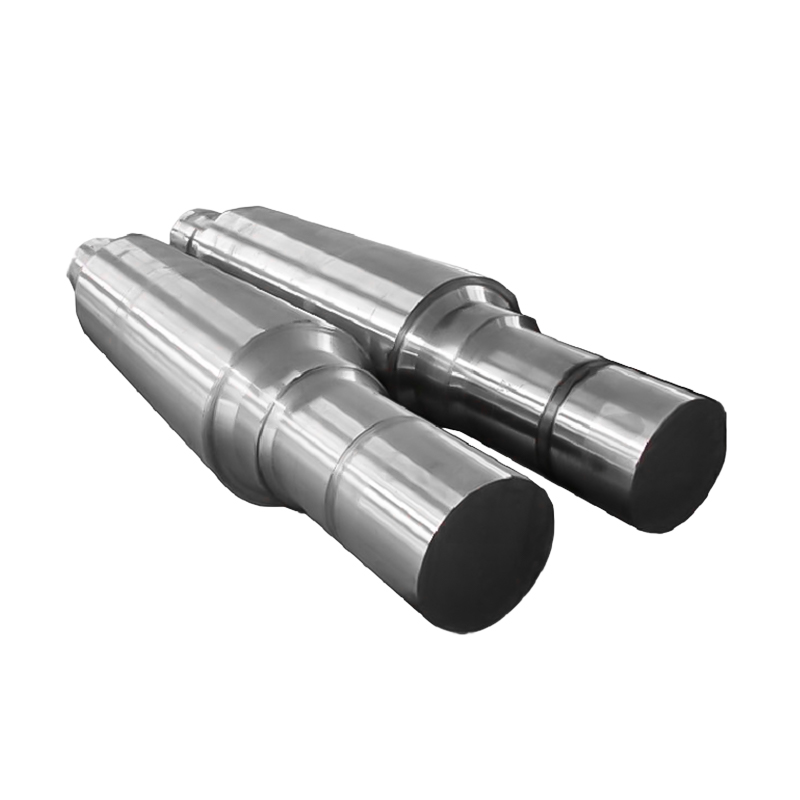
The main shaft transmits the full rotational torque of the runner to the generator. For large hydro turbines, shaft diameters can exceed 1 meter and lengths several meters — these are among the largest precision forgings produced in industrial manufacturing. The shaft must maintain dimensional accuracy and fatigue integrity through millions of start-stop cycles and continuous full-load operation, often in units designed for 40–60 year service lives.
Guide Vanes and Wicket Gates
Guide vanes regulate the flow of water entering the runner, controlling turbine speed and power output. These components experience frequent opening and closing cycles under high hydraulic pressure — the combined mechanical and hydraulic loading makes forged stainless steel or duplex stainless steel the material of choice for long-term reliable operation.
Bearing Housings and Hubs
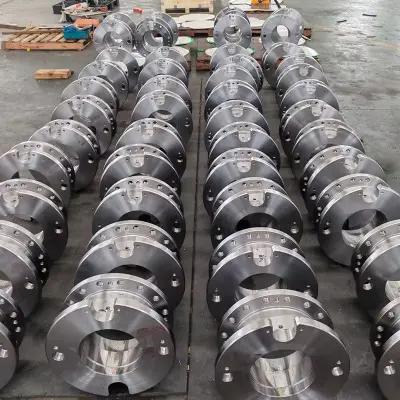
Forged steel bearing housings and runner hubs provide the structural integrity needed to support the loads transmitted through the bearing system, while the forged microstructure ensures consistent mechanical properties throughout these thick-section components.
Why Forgings Are Superior to Castings for Turbine Applications
The choice between forging and casting for turbine components is not arbitrary — the operating environment of a hydro turbine demands properties that castings structurally cannot achieve:
| Property | Forging | Casting |
|---|---|---|
| Grain structure | Refined, aligned with part shape | Random, dendritic solidification structure |
| Tensile strength | Higher (15–30% over casting) | Lower |
| Fatigue life | Significantly longer | Lower (porosity creates fatigue initiation sites) |
| Internal defects | Minimal (porosity closed by forging pressure) | Porosity and shrinkage voids possible |
| Impact toughness | Superior | Lower |
Materials Used in Hydro Turbine Forgings
Material selection for hydro turbine forgings must account for the combined demands of high mechanical strength, corrosion and erosion resistance in water, and weldability for repair work:
- Martensitic stainless steel (e.g., CA6NM, 13Cr4Ni): the dominant material for runner blades and guide vanes — provides excellent resistance to cavitation erosion and corrosion in water while maintaining the high yield strength needed for load-bearing components
- Carbon and low-alloy steel: used for shafts, hubs, and structural components where corrosion is controlled by protective coatings — provides the toughness and fatigue strength required for high-torque shaft applications
- Duplex stainless steel: increasingly specified for components requiring both high strength and superior corrosion resistance in challenging water chemistry environments
Manufacturing Process and Quality Inspection
The production of hydro turbine forgings follows a tightly controlled sequence of process steps and inspection checkpoints:
- Ingot selection and melting: high-quality steel ingots are selected and, for critical components, vacuum arc remelted (VAR) or electroslag remelted (ESR) to minimize non-metallic inclusions
- Hot forging: the heated billet is shaped under hydraulic press or hammer forging to the required form, with controlled reductions that refine the grain structure throughout the section
- Heat treatment: quenching and tempering cycles optimize the balance of strength and toughness in the finished material
- Non-destructive testing (NDT): ultrasonic testing (UT) verifies the absence of internal defects; magnetic particle inspection (MPI) checks surface and near-surface integrity; dye penetrant inspection (DPI) confirms surface quality
- Mechanical property testing: samples from each forging are tensile tested, impact tested, and hardness tested to verify conformance with the material specification
- Dimensional inspection: CMM or manual gauging confirms that all critical dimensions are within the drawing tolerances before the component is released for machining

Message Us Right Now!
-
Mobile Terminal
-
Quick Links
Products About Us Equipment & Capacity Quality News Contact Us -
Product Category
Power‑Generation Forgings OEM Machined Forgings CUSTOMIZED MADE FORGING PARTS Ship and Port Machinery Forgings Mining and Metallurgy Forgings Food and Feed Machinery Forgings Welding Fabrication Petrochemical Industry Forgings -
Contact Us
Mob.: +86-173 7218 0878 Tel.: +86-515-8389 0396 E-mail: ivy.zhai@aceprocess.cn Add.: No.21 Jinfeng Road, Economic Development Park, Dafeng District, Yancheng City, Jiangsu, China
Copyright © 2025 Yancheng ACE Machinery Co., Ltd. All Rights Reserved.
China open die forgings manufacturer
custom precision forgings supplier
