

 English
 中文简体
中文简体

Industry News


Industry News
What are the applications of Gearbox Forgings?
2026-04-10
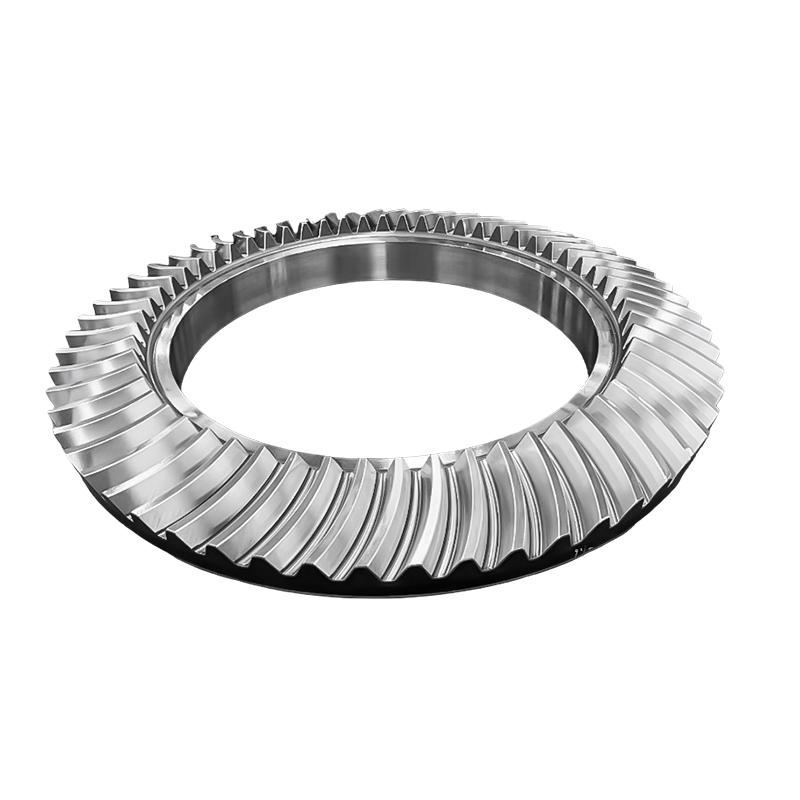
Gearbox forgings are critical components used in marine propulsion systems, automotive transmissions, aerospace applications, and industrial machinery. These forged components provide power transmission and speed regulation while offering superior strength, wear resistance, and impact resistance compared to cast or machined alternatives. The forging process aligns metal grain structure to enhance fatigue resistance and load-bearing capacity, making them essential for high-stress applications .
Content
Marine and Port Machinery Applications
Ship Propulsion Systems
Gearbox forgings serve as core components in marine propulsion systems, providing essential power transmission and speed regulation for vessels of all sizes. Marine engines typically operate at high speeds unsuitable for direct propeller use, and reduction gearboxes address this mismatch by adjusting engine output to optimal propeller requirements .Forged gearbox components in marine applications include reduction gears, reverse reduction gearboxes, and controllable pitch propeller gearboxes that enable vessels to achieve optimal speed, fuel efficiency, and maneuverability .
Port Handling Equipment
In port environments, gearbox forgings power cranes, loaders, and material handling systems that operate under complex and demanding conditions. These forged components must withstand harsh marine environments including saltwater exposure, high humidity, and continuous heavy loading cycles. The superior impact resistance and durability of forged gearboxes make them ideal for port machinery requiring reliable 24/7 operation.
Precision Requirements for Marine Applications
Marine gearbox forgings demand exceptional precision to ensure reliable operation. Advanced manufacturing achieves mounting hole concentricity error ≤0.02mm, preventing eccentric loads during gear meshing and reducing tooth wear. This precision extends equipment service life and minimizes maintenance requirements in critical marine operations where downtime is costly.
Automotive and Transportation Applications
Transmission Systems
The automotive industry represents one of the largest consumers of gearbox forgings, with cars and trucks containing more than 250 forged components throughout their drivetrains .Forged transmission components include drive shafts, clutch hubs, sliding gears, pinions, hollow shafts, and gearbox shafts that must endure constant torque reversals and high-impact loads .These components are produced through hot forging, warm forging, electro upsetting, or cold forging on high-capacity presses to achieve the strength and precision required for modern vehicles .
Differential Assemblies
Crown gears and differential assemblies in automotive applications rely heavily on forged components. The grain flow alignment achieved through forging enhances these gears' resistance to fatigue and fracture under the repeated loading conditions typical of differential operation .Forged differential components provide the toughness necessary to handle torque distribution between wheels while maintaining reliability under extreme driving conditions.
Electric and Hybrid Vehicle Adaptations
As the automotive industry transitions to electric and hybrid powertrains, gearbox forgings continue to play essential roles. EV gearboxes and shafts require the same high precision and strength as traditional transmissions, with manufacturers optimizing forged components for weight-to-performance ratios critical for electric vehicle efficiency .
Aerospace and Aviation Applications
Aircraft Engine Gearboxes
Aerospace applications demand the highest standards of material integrity and performance. Aircraft Mounted Accessory Gear Boxes (AMAGB) are critical single-input, multi-output gearboxes that take drive input from engines at rated speeds up to 16,810 rpm and distribute power to hydraulic pumps, generators, and starter units .These components are forged from steel and titanium alloys, then precision machined to meet exacting aviation standards.
Landing Gear and Structural Components
Many aircraft are designed around forgings, containing more than 450 structural forgings plus hundreds of forged engine parts .Forged gearbox-related components in aerospace include landing gear struts, wheels, brake carriers, and transmission elements that must withstand extreme temperatures ranging from 1,000°F to 2,000°F while maintaining high yield strength and creep rupture resistance .
Material Specifications
Aerospace gearbox forgings utilize premium materials including titanium, nickel-base superalloys, and cobalt-base superalloys. These materials provide the strength-to-weight ratios essential for aircraft performance, range, and payload capabilities .Component weights typically range from 10 kg to 300 kg depending on application requirements .
Industrial and Heavy Machinery Applications
Off-Highway and Construction Equipment
Off-highway equipment operates in harsh environments where reliability is paramount. Forged gearbox components in this sector include gears, sprockets, levers, shafts, spindles, and axle beams that must endure shock loads, abrasive conditions, and continuous operation .The superior impact resistance of forged gearboxes makes them essential for mining machinery, agricultural equipment, and heavy construction vehicles.
Power Generation and Energy Sector
Gearbox forgings play critical roles in power generation systems, including wind turbines, hydroelectric plants, and industrial power transmission equipment. These applications require components capable of handling high torque loads while maintaining precision alignment over extended operational periods.
The following table summarizes key application sectors and their specific requirements:
| Industry Sector | Key Applications | Critical Requirements |
|---|---|---|
| Marine | Propulsion reduction gears, port cranes | Corrosion resistance, concentricity ≤0.02mm |
| Automotive | Transmissions, differentials, drive shafts | Fatigue resistance, torque capacity |
| Aerospace | Engine gearboxes, landing gear | Strength-to-weight ratio, high temp resistance |
| Industrial | Mining, construction, agriculture | Impact resistance, wear resistance |
| Energy | Wind turbines, power transmission | Long-term reliability, precision |
Manufacturing Process and Quality Standards
Forging Process Steps
Gearbox forgings are produced through a rigorous multi-stage process. The journey begins with selecting high-grade steel alloys or specialized materials tailored to application requirements .Billets are heated to precise temperatures—typically 1,000°C to 1,300°C for steel—before being shaped under thousands of tons of pressure in forging presses . This hot forging process reorients the internal grain flow to match the component shape, significantly improving directional toughness and fatigue resistance.
Heat Treatment and Finishing
After forging, components undergo heat treatment including normalizing to remove residual stresses, followed by quenching and tempering to achieve desired hardness and toughness .Precision machining operations such as gear hobbing, grinding, and CNC machining refine the forged blanks to final dimensions .Surface finishes of 0.5 to 1.5 µm are achievable on gear teeth, though grinding is often required for optimal performance .
Quality Inspection Protocols
Rigorous inspection ensures gearbox forgings meet stringent industry standards. Quality control includes dimensional measurements, hardness testing, surface inspection, and non-destructive testing methods .Advanced metrology systems verify critical tolerances, with some manufacturers achieving zero defect standards for aerospace components .
Key Advantages of Forged Gearbox Components
Superior Mechanical Properties
Forged gearboxes offer distinct advantages over cast or machined alternatives. The forging process aligns grain flow along gear tooth configurations, enhancing fatigue resistance and eliminating porosity defects common in casting .Forged components demonstrate higher tensile strength, superior impact resistance, and improved load-bearing capacity—critical properties for gearbox applications subject to cyclic loading and shock .
Material Efficiency and Reliability
Forging minimizes material waste while producing components with exceptional reliability. The process creates dense, uniform metal structures free from voids and inclusions that could compromise performance .For alloy steels such as SCM440 or 4340, proper heat treatment after forging enables performance that exceeds cast iron or powder metal alternatives by significant margins .
Service and Support Capabilities
Comprehensive services for gearbox forgings include customized production tailored to specific application requirements, after-sales technical support, and maintenance programs. Manufacturers provide engineering support from concept through delivery, utilizing CAD, CAM, and FEA systems for custom design and prototyping .This full-service approach ensures optimal component performance throughout the equipment lifecycle.
Message Us Right Now!
-
Mobile Terminal
-
Quick Links
Products About Us Equipment & Capacity Quality News Contact Us -
Product Category
Power‑Generation Forgings OEM Machined Forgings CUSTOMIZED MADE FORGING PARTS Ship and Port Machinery Forgings Mining and Metallurgy Forgings Food and Feed Machinery Forgings Welding Fabrication Petrochemical Industry Forgings -
Contact Us
Mob.: +86-173 7218 0878 Tel.: +86-515-8389 0396 E-mail: ivy.zhai@aceprocess.cn Add.: No.21 Jinfeng Road, Economic Development Park, Dafeng District, Yancheng City, Jiangsu, China
Copyright © 2025 Yancheng ACE Machinery Co., Ltd. All Rights Reserved.
China open die forgings manufacturer
custom precision forgings supplier
