

 English
 中文简体
中文简体

Industry News


Industry News
What are Marine Bolts?
2026-04-24
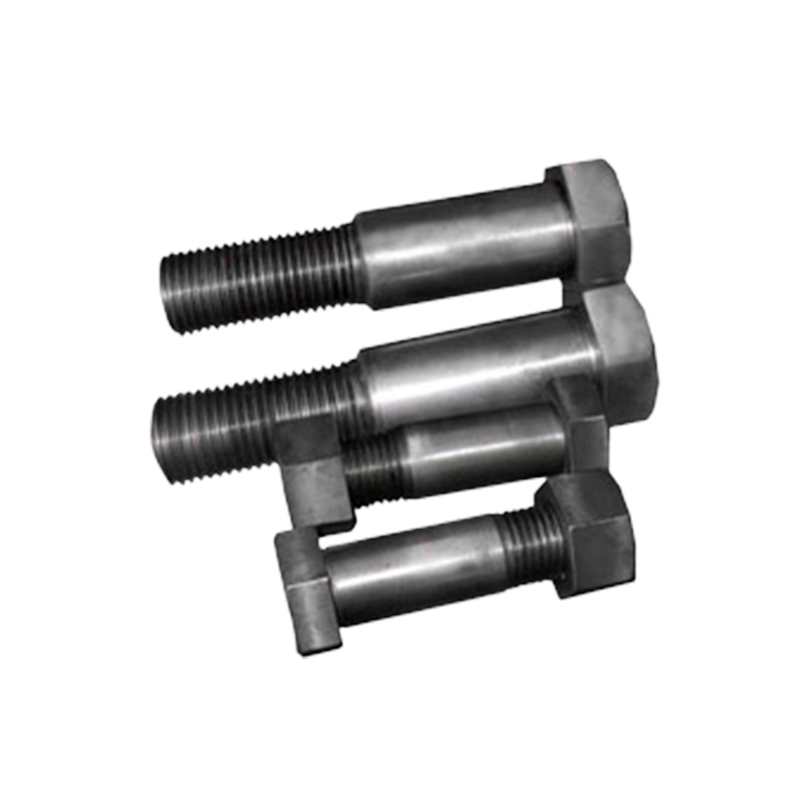
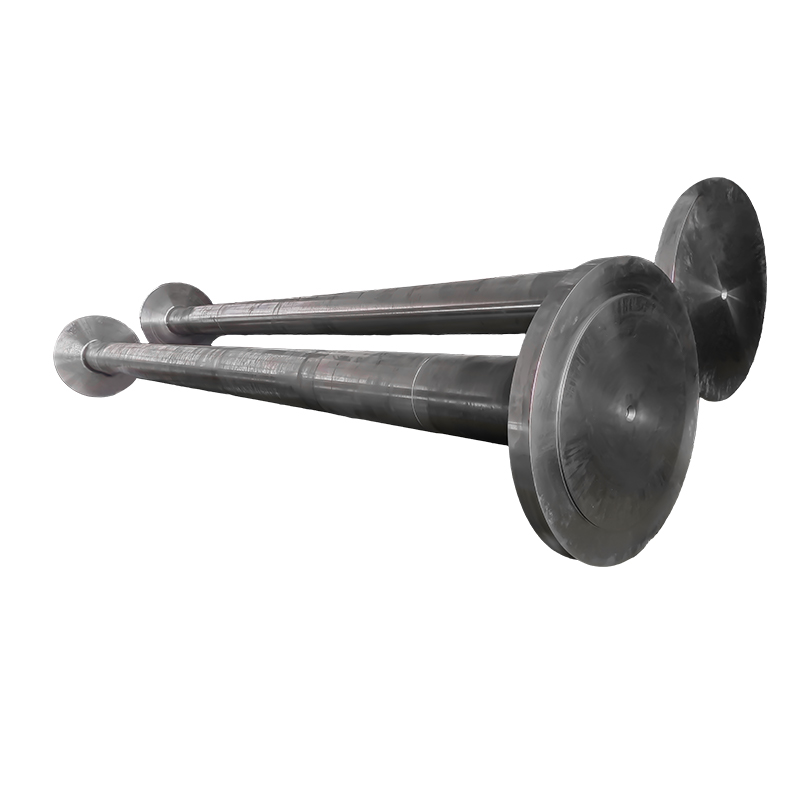
Marine bolts are specialized high-strength fasteners manufactured from corrosion-resistant materials — primarily stainless steel and alloy steel — designed to provide reliable structural connections in shipbuilding, offshore structures, and port machinery that operate in salt water environments. They differ from standard industrial fasteners in their material composition, corrosion protection specification, manufacturing process, and quality inspection requirements — all of which are dictated by the uniquely aggressive marine environment where conventional fasteners would corrode and fail within months. Marine bolts are used for hull structure connections, equipment mounting, propulsion system assembly, and port crane and loading equipment construction.
Content
Materials Used in Marine Bolts
Material selection is the single most important decision in marine bolt specification. The salt water and salt air environment of marine applications is among the most corrosively demanding in engineering:
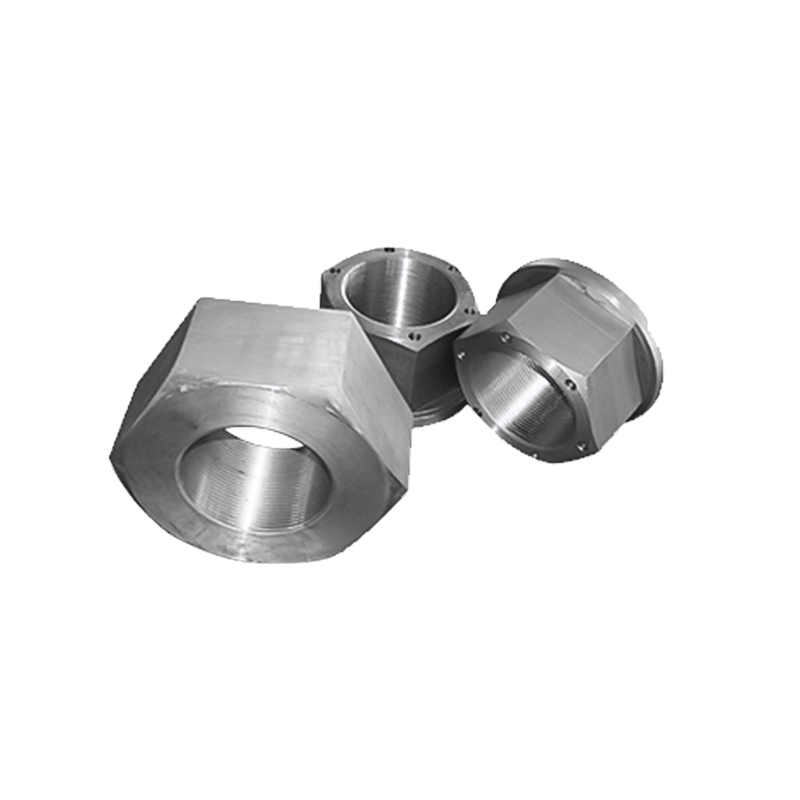
Stainless Steel Grades
Stainless steel is the dominant material for marine bolts in direct salt water contact. The most commonly specified grades are:
- 316 stainless steel (A4): the marine industry standard — the addition of 2–3% molybdenum gives it significantly better pitting and crevice corrosion resistance than 304 grade in chloride environments; used for hull fittings, deck hardware, and underwater connections
- 316L stainless steel: low-carbon variant with better weld joint corrosion resistance — used where bolts are welded into assemblies or where sensitization risk exists
- Duplex stainless steel (2205, 2507): for high-strength marine applications where standard 316 does not provide sufficient structural strength — approximately twice the yield strength of 316 with superior pitting resistance; used in offshore platform connections, anchor chain components, and propeller shaft bolts
Alloy Steel with Surface Protection
For high-strength structural applications where the tensile strength of stainless steel is insufficient, alloy steel bolts with hot-dip galvanizing, electroplating, or Dacromet (zinc-aluminum flake) coating are used. These are specified for port crane structures, vessel deck equipment, and engine room mounting hardware where the bolt may be inspected and replaced on a planned maintenance schedule.
Applications on Ships and in Port Machinery
Ship Applications
Marine bolts are used throughout the structure and equipment of a ship, from keel to mast:
- Hull structure connections: structural bolts connecting hull plating, frames, and longitudinals — subject to dynamic wave-induced loading and permanent immersion in seawater
- Propulsion system mounting: main engine bed bolts, propeller shaft flange connections, sterntube housing bolts — highly loaded fasteners that must maintain clamping force under vibration and thermal cycling
- Deck equipment: mooring cleats, winch bases, hatch covers, and navigation equipment mounts — exposed to spray, rain, and UV while also experiencing mechanical loading
- Underwater fittings: sea chest gratings, thruster guards, zinc anode mounting — permanently immersed and subject to the most severe corrosion conditions on the vessel
Port Machinery Applications
In port facilities, marine bolts ensure the structural integrity of:
- Ship-to-shore cranes and gantry structures: large-diameter structural bolts in rail connections, tower sections, and boom pivot joints that carry the full lifted load plus dynamic amplification factors
- Rubber-tyred gantry (RTG) cranes and straddle carriers: fasteners in running gear, spreader assemblies, and structural connections that operate in the aggressive port environment of diesel exhaust, salt spray, and hydraulic oil contamination
- Dock and quay fittings: mooring bollard anchor bolts, fender panel mounting hardware, and loading arm connections — subject to the combined loads of vessel mooring forces and tidal movement
Manufacturing Process and Quality Standards
Marine bolts are produced through controlled manufacturing processes that ensure the mechanical properties and dimensional accuracy required for structural safety applications:
Hot Forging and Cold Heading
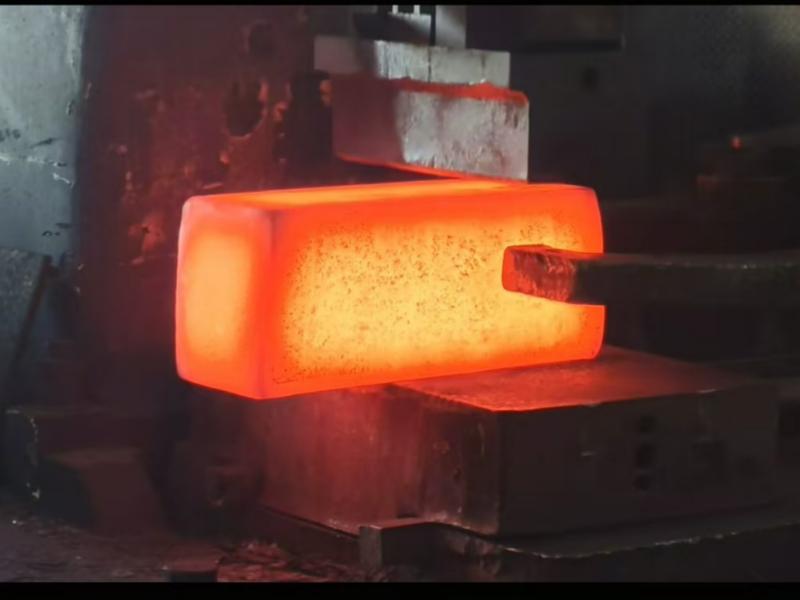
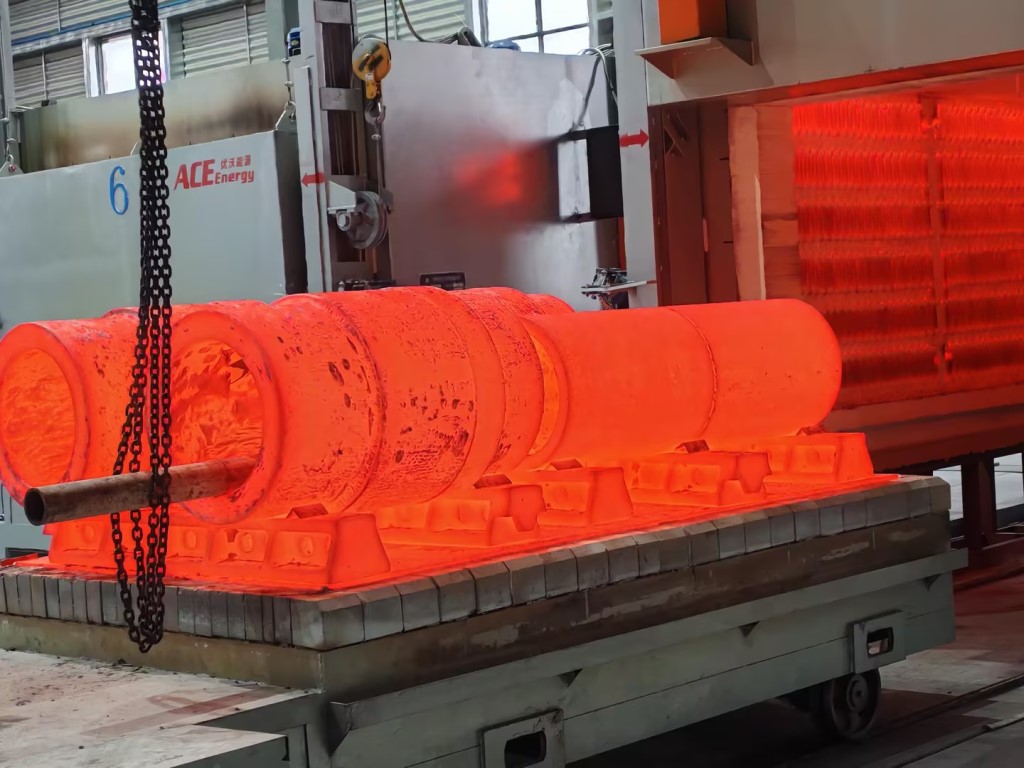
Large marine bolts (M24 and above) are typically produced by hot forging — heating the steel billet and shaping it under press or hammer forging to develop the aligned grain structure that gives forged fasteners superior fatigue resistance compared to machined bar. Smaller bolts (below M24) are produced by cold heading, which work-hardens the material and provides excellent dimensional consistency at high production rates.
Thread Machining and Surface Treatment
Threads are formed by rolling (preferred for strength — thread rolling increases fatigue life by inducing beneficial compressive residual stress in the thread root) or by CNC thread milling for precision applications. Surface treatments applied to protect alloy steel marine bolts include hot-dip galvanizing (typically 45–55 microns zinc), Dacromet coating, or electroless nickel plating depending on the corrosion protection level required.
Quality Inspection
Marine bolts for structural applications are subject to rigorous quality inspection requirements — typically specified by classification societies (such as those operating under IACS standards) or by international standards:
- Tensile testing: proof load, ultimate tensile strength, and elongation tested on samples from each production batch
- Hardness testing: Rockwell or Vickers hardness confirms heat treatment compliance across the bolt cross-section
- Ultrasonic or magnetic particle flaw detection: for large structural bolts, NDT confirms freedom from internal defects or surface cracks that could initiate fatigue failure under cyclic loading
- Salt spray corrosion testing: coated alloy steel bolts are tested in salt spray chambers to verify that the surface treatment provides the specified protection duration
- Dimensional inspection: thread gauge verification, head dimensions, and bolt length checked against drawing tolerances
Marine Bolt Grade and Material Selection Guide
| Material | Corrosion Resistance | Tensile Strength | Typical Application |
|---|---|---|---|
| 316 Stainless (A4-70) | Excellent | 700 MPa min | Deck hardware, hull fittings, underwater |
| Duplex SS 2205 | Superior | 800–900 MPa min | Offshore structures, propeller shafts |
| Alloy steel + hot-dip galvanized | Good (periodic inspection) | 800–1,200 MPa | Port cranes, structural connections |
| Alloy steel + Dacromet | Good (no hydrogen embrittlement risk) | 800–1,200 MPa | Engine room equipment, loading arms |
Message Us Right Now!
-
Mobile Terminal
-
Quick Links
Products About Us Equipment & Capacity Quality News Contact Us -
Product Category
Power‑Generation Forgings OEM Machined Forgings CUSTOMIZED MADE FORGING PARTS Ship and Port Machinery Forgings Mining and Metallurgy Forgings Food and Feed Machinery Forgings Welding Fabrication Petrochemical Industry Forgings -
Contact Us
Mob.: +86-173 7218 0878 Tel.: +86-515-8389 0396 E-mail: ivy.zhai@aceprocess.cn Add.: No.21 Jinfeng Road, Economic Development Park, Dafeng District, Yancheng City, Jiangsu, China
Copyright © 2025 Yancheng ACE Machinery Co., Ltd. All Rights Reserved.
China open die forgings manufacturer
custom precision forgings supplier
