

 English
 中文简体
中文简体

Industry News


Industry News
What are crusher forgings?
2026-04-30
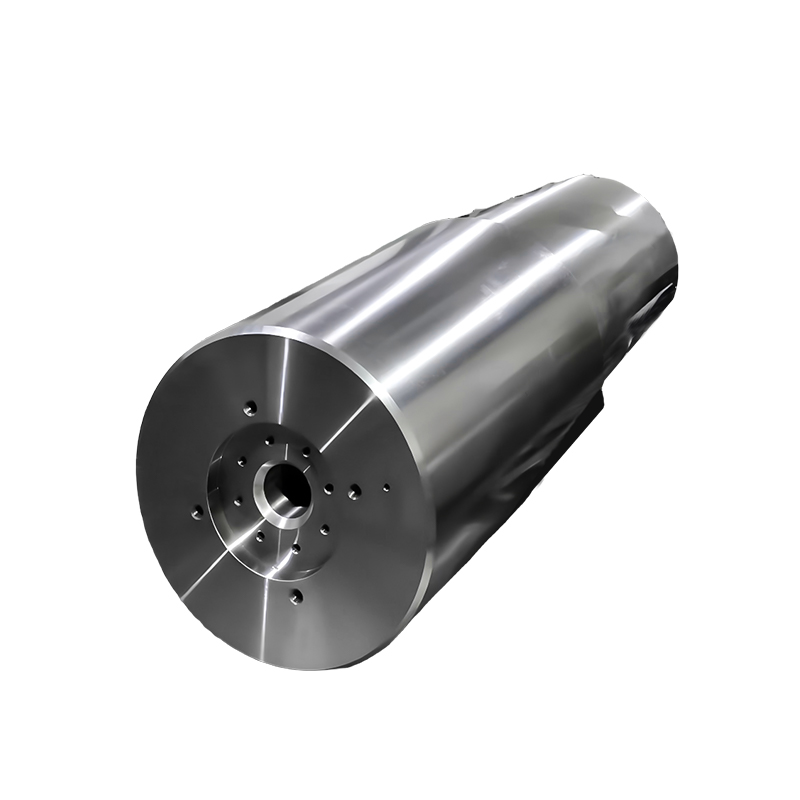
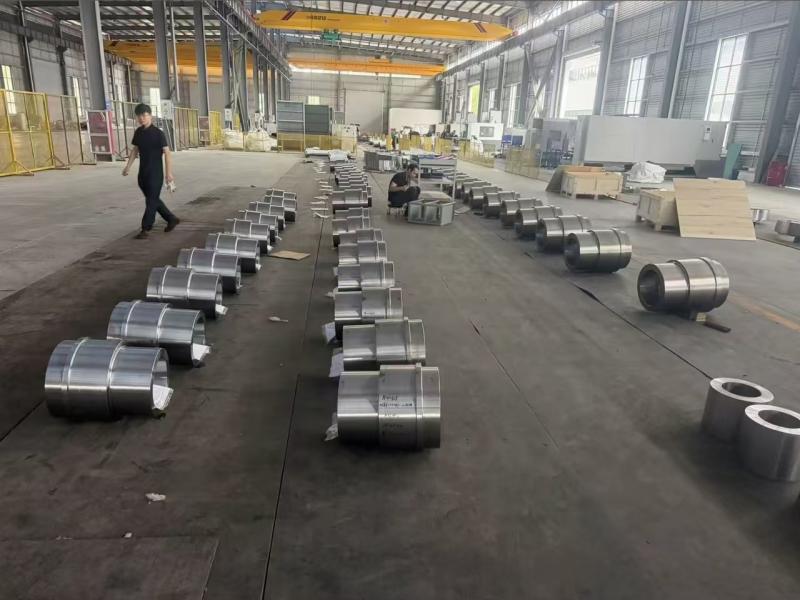
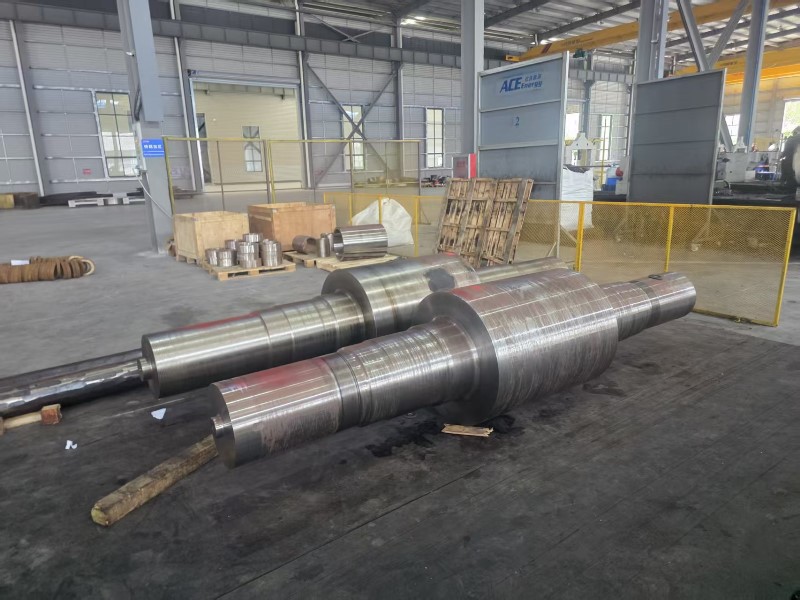
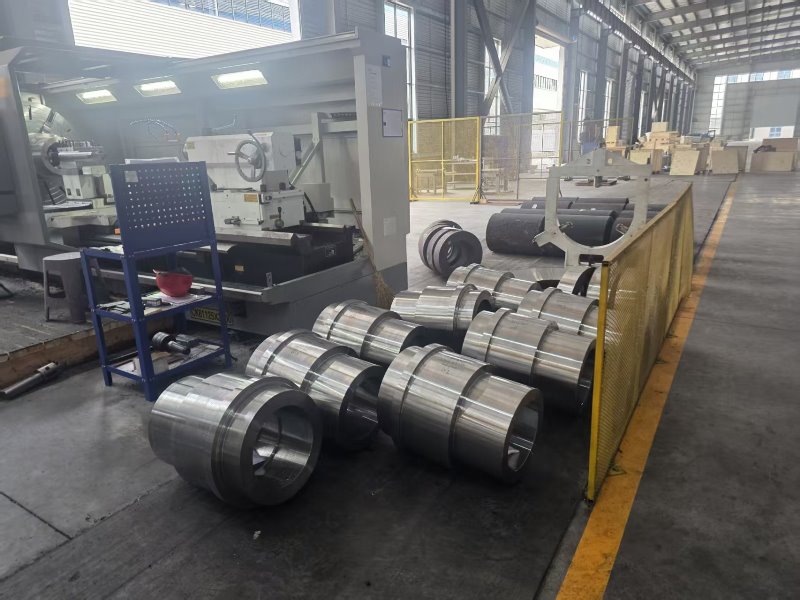
Crusher forgings are high-strength, wear-resistant metal components manufactured through forging processes specifically for use in crushing, excavation, and size-reduction machinery in mining, quarrying, metallurgy, and aggregate production. They include the structural and impact-bearing parts of jaw crushers, cone crushers, impact crushers, hammer crushers, and gyratory crushers — components such as eccentric shafts, main shafts, toggle plates, pitman arms, crusher jaws, and bearing housings. Because these parts operate under continuous heavy impact loading, extreme compressive forces, and abrasive wear, the forging process — which aligns grain flow with the part geometry and eliminates the internal porosity of castings — is the manufacturing method that delivers the durability and reliability these applications demand.
Content
Key Components Produced as Crusher Forgings
Several critical parts in crusher equipment are routinely produced as forgings to achieve the required combination of strength, toughness, and wear resistance:
Eccentric Shafts and Main Shafts
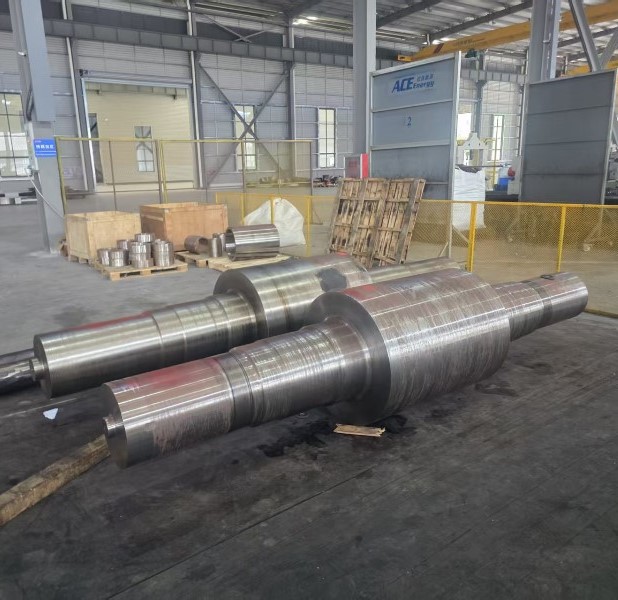
The eccentric shaft is the heart of a jaw or cone crusher — it converts rotational motion into the reciprocating crushing action. This component experiences combined bending, torsional, and shock loads with every crushing cycle, repeated millions of times over the machine's life. A forged alloy steel eccentric shaft provides the fatigue resistance and impact toughness that a cast shaft cannot reliably deliver under these sustained cyclic loads. Main shafts in cone crushers bear the full crushing force transmitted from the mantle through the shaft to the frame — requiring a forging with no internal defects that could initiate fatigue cracks at the high-stress cross-section changes.
Pitman Arms and Toggle Plates
The pitman arm in a jaw crusher transmits the eccentric shaft's motion to the moving jaw. It is a large, complex-geometry forging that must withstand dynamic loads of several hundred tonnes in large primary crushers. Forged pitman arms are significantly stronger than welded fabrications of equivalent size because the forging eliminates weld heat-affected zones and ensures continuous grain flow around stress concentration points such as journal bearing bores and sectional transitions. Toggle plates serve as the sacrificial safety element — designed to yield before the frame — and must be forged to precise mechanical property specifications so they break at the correct load rather than too early or too late.
Bearing Housings and Frame Components
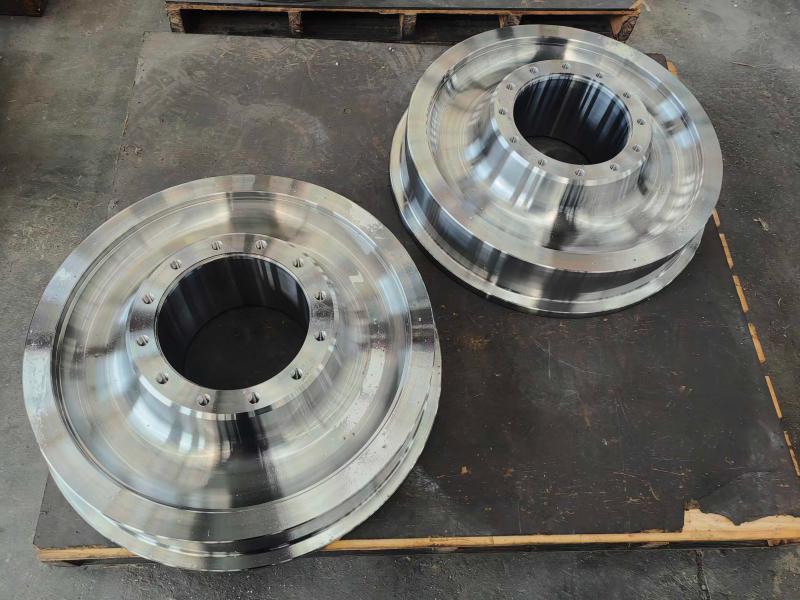
Bearing housings in primary crushers support the eccentric shaft through continuous impact loading. Forged housings provide superior dimensional stability compared to castings — they maintain their bore geometry under sustained load more reliably, which is critical for maintaining correct bearing fit and preventing premature bearing failure from bore distortion.
Hammer Crusher Rotor Discs and Blow Bars
In hammer and impact crushers, the rotor discs that carry the hammer pins and the hammer bodies themselves are produced as forgings where the highest impact resistance is required. The forging process produces a refined grain structure that absorbs impact energy without brittle fracture — critical in applications where individual hammer strikes may deliver energy of several thousand joules.
Why Forgings Outperform Castings in Crusher Applications
The choice between forging and casting for crusher components is driven by the specific loading conditions these parts must survive. Crushers impose loading profiles that expose the fundamental weaknesses of castings:
| Property | Forging | Casting |
|---|---|---|
| Internal structure | Refined, aligned grain flow | Random dendritic solidification |
| Porosity | Minimal (closed by forging pressure) | Shrinkage voids possible |
| Tensile strength | 15–30% higher than casting | Lower |
| Impact toughness | Superior | Lower (porosity creates crack initiation sites) |
| Fatigue life | Significantly longer | Limited by internal defects |
| Dimensional consistency | High (controlled die dimensions) | Variable (solidification shrinkage) |
Materials Used in Crusher Forgings
Crusher forgings are produced from wear-resistant alloy steels specifically selected to provide the correct balance of hardness, toughness, and thermal stability for each application:
- Medium-carbon alloy steels (e.g., 42CrMo4, 4140): the workhorse material for crusher shafts, pitman arms, and toggle plates — after quench and temper heat treatment, tensile strengths of 900–1,100 MPa with Charpy impact values above 60 J are achievable, providing the combination of strength and toughness needed for dynamic loading
- High-carbon chromium steels: for applications where surface hardness and wear resistance are the primary requirements, high-carbon chromium steels heat-treated to 55–62 HRC provide the abrasion resistance needed at the contact surfaces of bearing journals and cam surfaces
- Nickel-chromium-molybdenum alloy steels: for the largest and most highly loaded components in primary crushers — very large eccentric shafts and main shafts where section thickness limits the depth of heat treatment penetration — Ni-Cr-Mo grades provide hardenability across thick sections, ensuring consistent mechanical properties through the full cross-section of the forging
- Wear-resistant alloy steels with elevated Mn-Si content: for hammer bodies and impact crusher blow bars where both initial hardness and work-hardening capacity under impact are required
Manufacturing Process: From Billet to Finished Forging
The production of crusher forgings follows a controlled sequence that optimizes the internal grain structure and mechanical properties:
- Steel selection and ingot preparation: alloy steel grades are selected per the component specification; for critical large forgings, vacuum arc remelted (VAR) or electroslag remelted (ESR) ingots minimize non-metallic inclusions and segregation that would initiate fatigue cracks
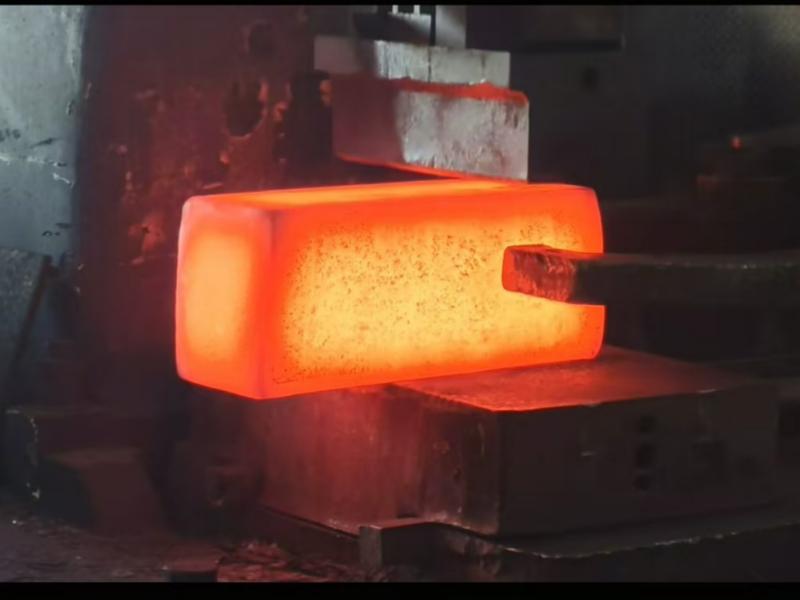
- Billet heating: the steel billet is heated to the forging temperature range (typically 1,100–1,250°C for alloy steel) in a controlled-atmosphere furnace to prevent excessive scale formation and ensure uniform plasticity throughout the section
- Hot forging: the billet is shaped under a hydraulic press or hammer with controlled reductions at each stage — each reduction refines the grain size and aligns the grain flow with the part geometry, closing any residual porosity from the original ingot
- Controlled cooling and normalizing: the forging is cooled under controlled conditions to relieve forging stresses and establish a uniform microstructure before final heat treatment
- Quench and temper heat treatment: the forging is austenitized, quenched (in oil, water, or polymer quenchant depending on section size and alloy), then tempered at the temperature required to achieve the specified hardness and toughness balance — this step is critical and is performed under precise time-temperature control
- Non-destructive testing (NDT): ultrasonic testing (UT) verifies freedom from internal defects; magnetic particle inspection (MPI) confirms surface and near-surface integrity; hardness testing across multiple points verifies heat treatment uniformity
- Rough and finish machining: CNC machining to final dimensional tolerances, with surface finish achieved as specified — bearing journals typically require Ra 0.8 µm or better
Performance Advantages in Crusher Service
The specific advantages that crusher forgings deliver in service translate directly into lower total cost of ownership for the equipment operator:
- Extended service intervals: forged shafts and structural components in primary crushers routinely achieve service lives of 5 to 15 years before replacement — compared to 1 to 3 years for equivalent cast components in the same application
- Reduced unplanned downtime: the absence of internal defects in quality forgings means failure is gradual and predictable rather than sudden — crack propagation is slower in refined microstructures, giving maintenance programs time to detect developing fatigue before catastrophic failure
- High-temperature performance stability: forgings maintain their mechanical properties at the elevated temperatures generated in high-throughput crushing and metallurgical processing — the alloy compositions and heat treatment parameters are selected specifically to retain hardness and strength at operating temperatures that soften lower-grade materials
- Consistent dimensional accuracy: forged components hold their shape under sustained load more reliably than castings, maintaining correct bearing clearances and alignment throughout the service life — preserving overall machine efficiency and reducing secondary component wear
Message Us Right Now!
-
Mobile Terminal
-
Quick Links
Products About Us Equipment & Capacity Quality News Contact Us -
Product Category
Power‑Generation Forgings OEM Machined Forgings CUSTOMIZED MADE FORGING PARTS Ship and Port Machinery Forgings Mining and Metallurgy Forgings Food and Feed Machinery Forgings Welding Fabrication Petrochemical Industry Forgings -
Contact Us
Mob.: +86-173 7218 0878 Tel.: +86-515-8389 0396 E-mail: ivy.zhai@aceprocess.cn Add.: No.21 Jinfeng Road, Economic Development Park, Dafeng District, Yancheng City, Jiangsu, China
Copyright © 2025 Yancheng ACE Machinery Co., Ltd. All Rights Reserved.
China open die forgings manufacturer
custom precision forgings supplier
