

 English
 中文简体
中文简体

Industry News


Industry News
What are Wind Turbine Gearbox Forgings?
2026-07-03
Wind Turbine Gearbox Forgings are precision-formed steel components that make up the internal power transmission structure of a wind turbine gearbox, produced through hot or closed-die forging processes that align the grain structure of the steel for maximum fatigue resistance and load-bearing capability. The primary forged components in a wind turbine gearbox are the ring gear, planet gears, planet carrier, sun gear, input and output shafts, and pinion gears. These parts are forged rather than cast because the gearbox operates under continuous alternating loads from variable wind inputs, and the dense, defect-free metal structure produced by forging provides the fatigue life needed to meet the typical 20-year design life of a modern wind turbine (Source: Zhangqiu Heavy Forging, Forged Planetary Gear Carrier). Forging is not interchangeable with casting for gearbox-grade components because the mechanical property differences between the two processes directly determine how long the gearbox survives under real operating loads.
Content
- 1 The Role Of The Gearbox In A Wind Turbine
- 2 The Primary Forged Components In A Wind Turbine Gearbox
- 3 Why Forging Is The Required Process For Gearbox Components
- 4 Steel Grades Used In Wind Turbine Gearbox Forgings
- 5 Heat Treatment Sequences For Gearbox Forgings
- 6 Quality And Testing Standards For Wind Turbine Gearbox Forgings
The Role Of The Gearbox In A Wind Turbine
To understand why the forging quality of gearbox components matters so much, it is necessary to understand what the gearbox is doing inside the turbine and the severity of the mechanical environment it operates in.
A wind turbine rotor turns slowly in response to wind, typically between 10 and 22 revolutions per minute for a large multi-megawatt turbine. The generator that converts mechanical energy to electricity needs to spin at much higher speeds, typically 1,000 to 1,500 revolutions per minute or more. The gearbox bridges this speed difference. Fuhong Steel describes the function directly: the wind power gearbox is the core component of the wind turbine, with its main function being to convert the kinetic energy generated by the wind wheel under the action of wind into mechanical energy and finally transfer it to the generator (Source: Fuhong Steel, Special Steel for Wind Power Equipment Forgings). A patent filing describing the gearbox assembly confirmed that the rotor shaft provides a low-speed, high-torque input to the gearbox, which is then configured to convert that input to a high-speed, lower-torque output that drives the generator (Source: USPTO Patent 11085421, Planet Carrier of a Wind Turbine Gearbox with Improved Lubricant Path).
The mechanical demands of this conversion are extreme. The gearbox must handle continuously variable torque loads as wind speed fluctuates, sudden shock loads during gusts, continuous cyclic fatigue over 20 or more years, and do all of this reliably in a nacelle located high above ground where servicing is expensive and replacement of major components can cost hundreds of thousands of dollars per event. These demands are why every major structural component inside the gearbox is specified as a forging rather than a casting.
The Primary Forged Components In A Wind Turbine Gearbox
A wind turbine gearbox is not a single forged part. It is an assembly of several distinct forged components, each performing a specific function in the planetary and helical gear stages that make up the full speed-increasing drivetrain.
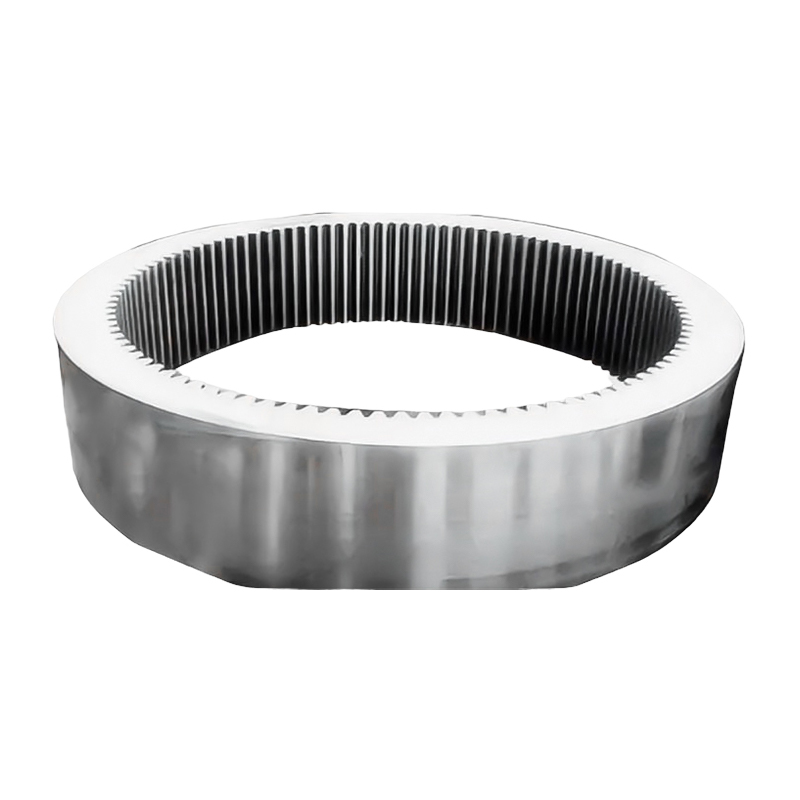
Ring Gear (Annulus Gear)
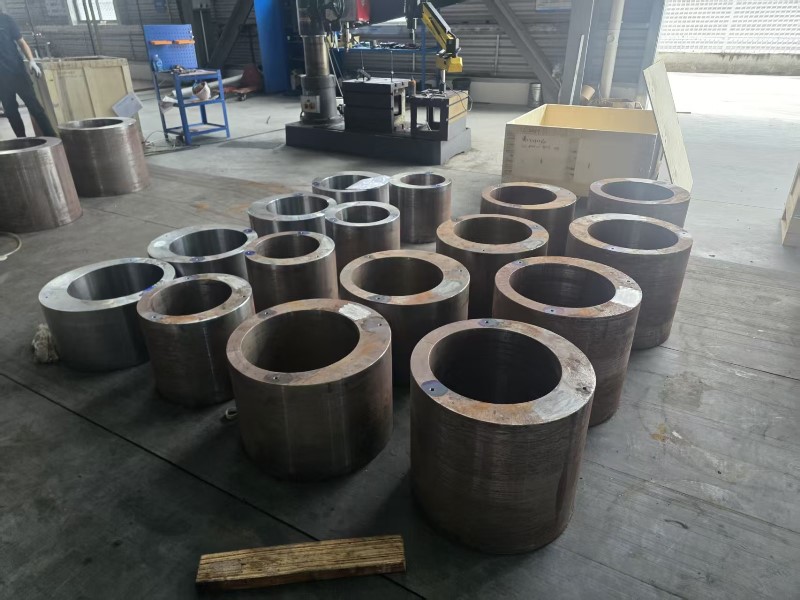
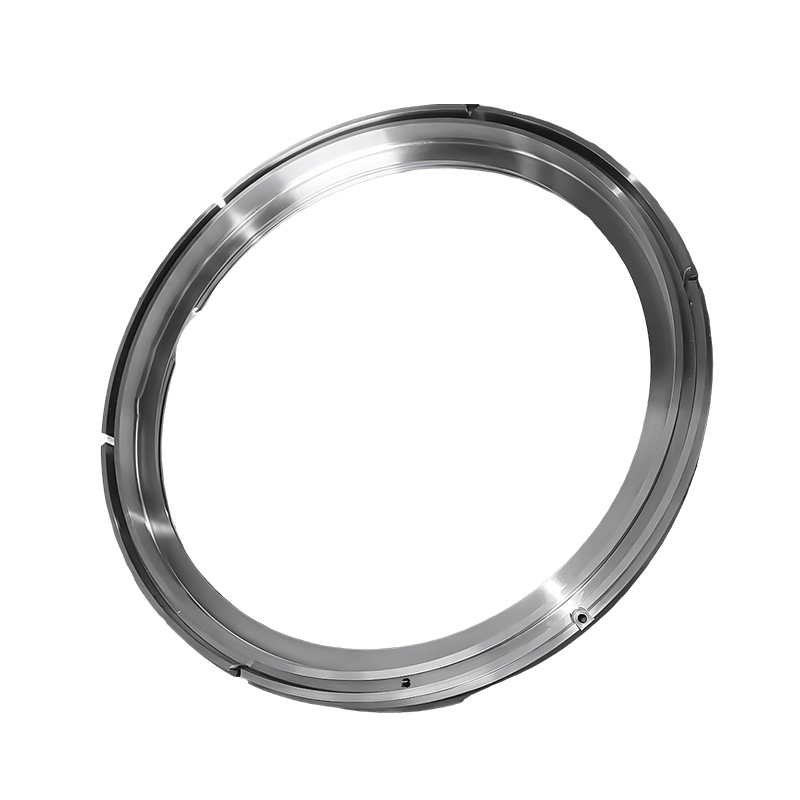
The ring gear is the large outer gear with internal teeth that forms the outer boundary of the planetary gear stage. Planet gears mesh against its inner surface as they orbit the sun gear, and the ring gear either remains stationary or rotates depending on the gearbox design. Because the ring gear transmits the full torque load of the planetary stage and is in constant tooth contact with three or more planet gears simultaneously, its material properties and dimensional accuracy are critical to the entire gearbox's performance. A USPTO patent describing the ring gear manufacturing process notes that the ring gear is generally formed via forging and must subsequently be heat-treated to obtain the required hardness, and that dimensional accuracy through the forging and heat treatment process is critical since heat treatment can cause dimensional distortion that requires machining correction (Source: USPTO Patent 10495210, Integral Ring Gear and Torque Arm for a Wind Turbine Gearbox).
Planet Gears
Planet gears are the intermediate gears that orbit between the ring gear and the sun gear, transmitting torque between the two while also rotating on their own axes. In a large wind turbine planetary stage, typically three or four planet gears share the total load, distributing it across multiple tooth contacts simultaneously. This arrangement achieves high torque density in a compact package, but it also means each planet gear carries a significant fraction of the total load in continuous fatigue cycling. Zhangqiu Heavy Forging confirms that after quenching and tempering heat treatment, forged planetary gear carriers can withstand long-term alternating stress with a service life that is 2 to 3 times longer than components produced by ordinary processes, a ratio that applies equally to the planet gears themselves (Source: Zhangqiu Heavy Forging, Forged Planetary Gear Carrier).
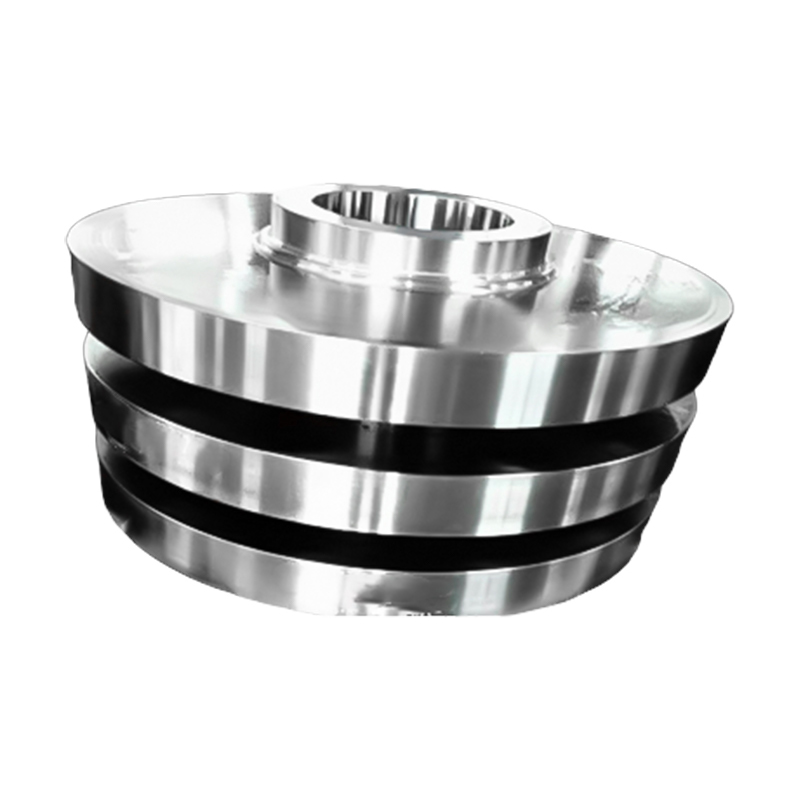
Planet Carrier
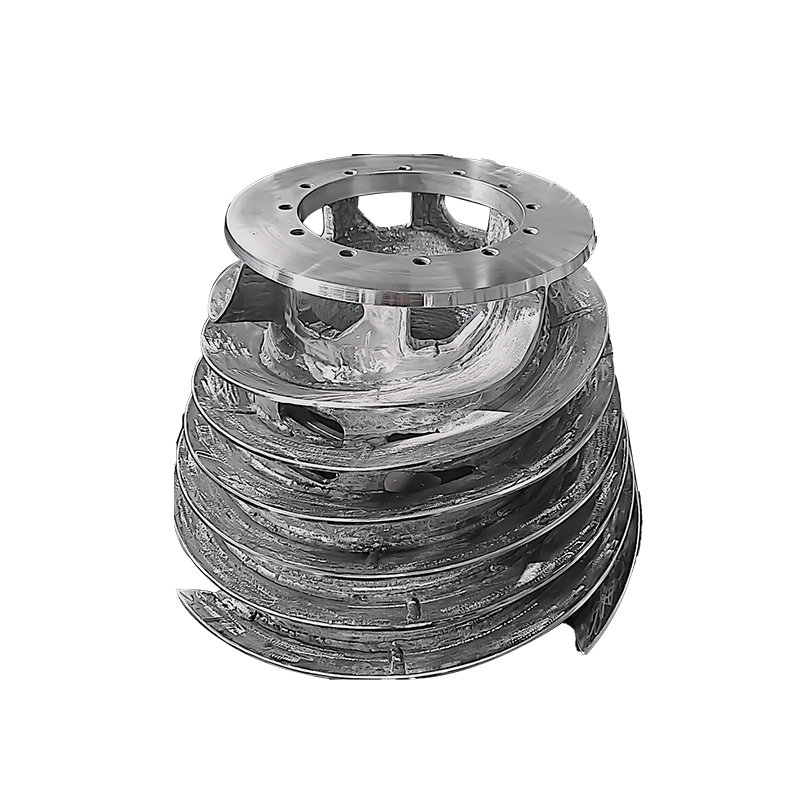
The planet carrier is the structural component that holds the planet gear shafts in their correct orbital positions relative to each other and to the ring and sun gears. It must maintain precise positional accuracy under load to keep all the planet gears in proper mesh simultaneously, which requires both high stiffness and excellent fatigue resistance. Zhangqiu Heavy Forging describes the key requirements for a forged planet carrier: the near-net-shaping process combined with precise processing ensures strict control of size accuracy and positional tolerance, ensuring precise cooperation with planetary gears, sun gears, and output shafts, reducing transmission loss and noise (Source: Zhangqiu Heavy Forging, Forged Planetary Gear Carrier). Materials used for planet carriers include 42CrMo, 20CrMnTi, and 35CrMo high-strength alloy steels, with heat treatment sequences of quenching and tempering plus carburizing to achieve the right balance of surface hardness and core toughness (Source: Zhangqiu Heavy Forging).
Sun Gear And Pinion Gears
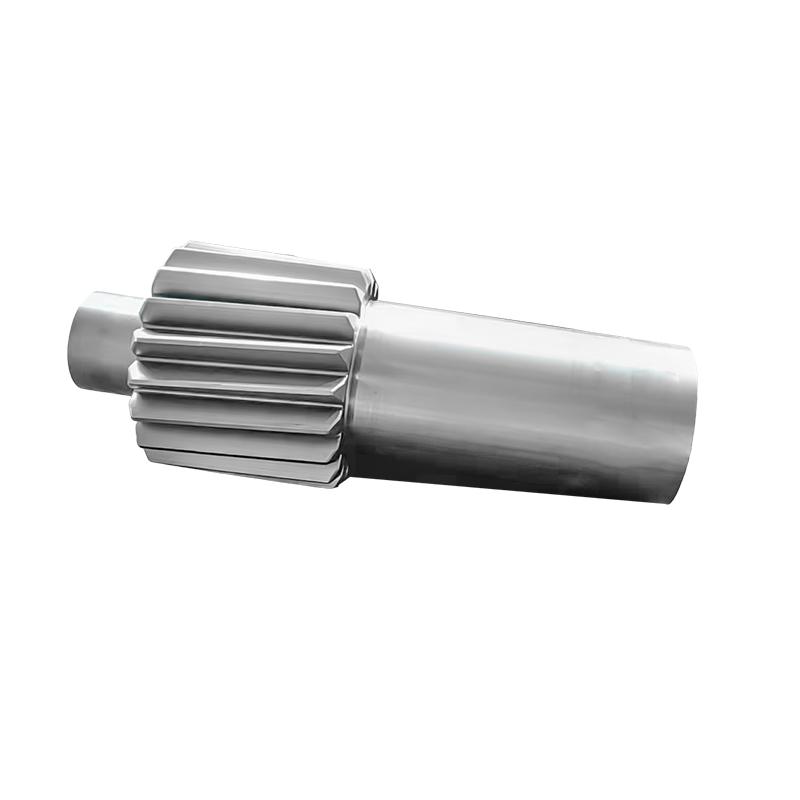
The sun gear sits at the center of the planetary stage and meshes with all planet gears simultaneously, while pinion gears appear in the helical stages of a multi-stage gearbox where additional speed increases are needed. Both types must be forged from alloy steel grades with sufficient hardenability to achieve case-hardened tooth flanks through carburizing or nitriding after rough machining, providing the surface hardness necessary to resist pitting and tooth flank fatigue over decades of cyclic loading.
Input And Output Shafts
The input shaft connects the main rotor shaft to the first planetary stage of the gearbox, and the high-speed output shaft connects the final gear stage to the generator coupling. Both shafts experience different load profiles: the input shaft carries high torque at low speed with high bending moments from the rotor, while the output shaft carries lower torque at high speed with torsional fatigue from generator load transients. Tiptop Heavy Forging notes that the high-speed shaft in a wind turbine system is located after the gearbox, rotating much faster but transmitting lower torque to the generator, and that both shaft types require large dimensions and strong forged materials (Source: Tiptop Heavy Forging, Shaft of a Wind Turbine: Structure, Materials and Forging).
Why Forging Is The Required Process For Gearbox Components
The decision to forge rather than cast gearbox-grade components is not a preference; it is a requirement driven by the fatigue life demands of wind turbine operation.
Grain Flow And Mechanical Superiority
Forging shapes metal under high compressive force, which closes internal voids, refines the grain structure, and aligns the grain flow along the geometry of the part. This produces a component with significantly higher yield strength, tensile strength, and fatigue resistance than the same geometry produced by casting from the same alloy. Tiptop Heavy Forging explains that forging changes the inside structure of the metal in ways that help produce large, reliable components for heavy-duty service, and that wind turbine main shafts are normally made of forged steel rather than cast specifically because of this structural difference (Source: Tiptop Heavy Forging, Shaft of a Wind Turbine).
Fatigue Life In Cyclic Loading
Wind turbine gearbox components experience fatigue loading from every revolution of the rotor, and a 20-year design life at operational speed corresponds to hundreds of millions of stress cycles across the gear teeth and shaft cross-sections. Cast components contain shrinkage porosity, gas inclusions, and random grain orientation that create stress concentrations at which fatigue cracks can initiate and propagate. Forged components with closed porosity and aligned grain structure provide a significantly higher fatigue limit, allowing them to sustain the same stress amplitude for far more cycles before crack initiation. Zhangqiu Heavy Forging's documentation of forged planetary gear carriers achieving 2 to 3 times longer service life than ordinary processes directly quantifies this fatigue advantage in application-specific terms (Source: Zhangqiu Heavy Forging, Forged Planetary Gear Carrier).
Dimensional Stability Under Load
Gear mesh accuracy depends on the dimensional stability of every forged component under both static and dynamic loading. If a planet carrier deflects under load in a way that changes the relative positions of the planet gear shafts, the load sharing between planet gears becomes unequal, and overloaded planet gears fail prematurely. Forged components with predictable, uniform material properties are easier to model and design for stiffness requirements than castings with variable properties across the section.
Steel Grades Used In Wind Turbine Gearbox Forgings
Material selection for gearbox forgings balances hardenability, toughness, machinability, and availability across global supply chains.
| Steel Grade | Standard | Primary Application | Key Properties |
| 18CrNiMo7-6 | EN 10084 | Gearbox gear teeth (carburized) | Excellent case hardening response, high fatigue resistance at gear tooth flank |
| 34CrNiMo6 | EN 10083 | Shafts, planet carriers, high-torque structural parts | High strength and toughness, extreme torque and fatigue resistance |
| 42CrMo4 (AISI 4140) | EN 10083 / ASTM A29 | Planet carriers, structural housings | Good machinability, high strength-to-cost ratio, widely available |
| 8620 (AISI) | ASTM A29 | Gears in North American market specifications | Carburizing grade, good core toughness, preferred by some OEMs |
| 20CrMnTi | GB/T 5216 | Gear components in Chinese-market turbines | Carburizing grade, good hardenability and wear resistance |
Fuhong Steel confirms that 18CrNiMo7-6 and 8620 are the steel types mainly used by European and American customers for wind power gearboxes, reflecting the different material standard preferences that have developed in each major market (Source: Fuhong Steel, Special Steel for Wind Power Equipment Forgings). The choice between these grades is driven by the gear's function, the required case depth after carburizing, the core hardness required for the specific stress state, and the OEM's certification requirements.
Heat Treatment Sequences For Gearbox Forgings
A forging in the as-forged condition does not have the mechanical properties required for gearbox service. Heat treatment after forging and rough machining is essential to achieve the combination of surface hardness and core toughness that gear teeth and shaft cross-sections require.
- Normalizing: applied after forging to relieve residual stresses, homogenize the structure, and prepare the material for subsequent machining and heat treatment without the distortion that can occur in non-normalized forgings
- Quenching and tempering: used for structural components such as planet carriers and shafts to develop high core strength and toughness; the quench rate and temper temperature are selected to target the specific yield strength and impact energy required by the design standard
- Carburizing and case hardening: used for gear teeth on planet gears, sun gears, ring gears, and pinions; carbon is diffused into the surface layer to a specified case depth, followed by quench hardening to achieve surface hardness typically in the 58 to 62 HRC range while the core remains tough
- Nitriding: used where distortion from carburizing is unacceptable or where the alloy composition is suited to nitrogen diffusion hardening; achieves a hard case at lower temperatures and with less dimensional change than carburizing
- Induction hardening: used for selected shaft surfaces such as journal bearing seats where localized surface hardening is needed without the cost of full carburizing
Zhangqiu Heavy Forging describes the material and heat treatment selection for planet carriers: preferred die forging and free forging processes are used, with materials including 42CrMo, 20CrMnTi, and 35CrMo high-strength alloy steels combined with quenching and tempering plus carburizing and quenching to achieve the balance between strength and toughness required for this component (Source: Zhangqiu Heavy Forging, Forged Planetary Gear Carrier).
Quality And Testing Standards For Wind Turbine Gearbox Forgings
Wind turbine gearbox forgings are produced to traceable material and dimensional standards with documented test records that accompany the components through the supply chain and remain available for the life of the turbine.
- Chemical composition verification by spectrographic analysis of each heat to confirm the material grade within the specification limits of the applicable standard
- Mechanical property testing on coupon specimens from the forging or from a test piece forged under the same conditions, including tensile strength, yield strength, elongation, reduction of area, and Charpy impact energy at the specified test temperature
- Ultrasonic testing of the full forging volume to detect internal flaws, inclusions, or segregation that are not visible on the surface but would reduce fatigue strength in service
- Magnetic particle inspection or dye penetrant inspection of surfaces to detect surface cracks introduced during forging or heat treatment
- Dimensional inspection to drawing tolerances using coordinate measuring machines for complex geometries and precision gauging for critical bore diameters and keyways
- Hardness verification by Brinell or Rockwell testing at specified positions to confirm that heat treatment has achieved the required properties through the section
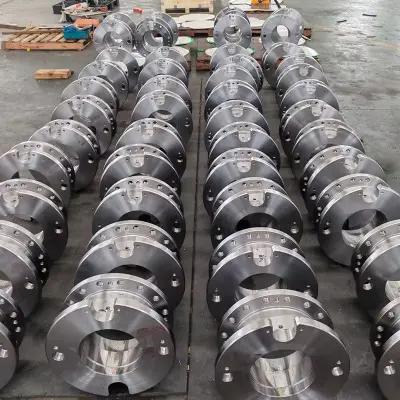
The ACE Process Wind Turbine Gearbox Forgings are produced to this full quality standard, with material certifications, mechanical test reports, non-destructive examination records, and dimensional inspection documentation provided with each forging to support the traceability and certification requirements of wind turbine OEMs and their certification bodies.
Message Us Right Now!
-
Mobile Terminal
-
Quick Links
Products About Us Equipment & Capacity Quality News Contact Us -
Product Category
Power‑Generation Forgings OEM Machined Forgings CUSTOMIZED MADE FORGING PARTS Ship and Port Machinery Forgings Mining and Metallurgy Forgings Food and Feed Machinery Forgings Welding Fabrication Petrochemical Industry Forgings -
Contact Us
Mob.: +86-173 7218 0878 Tel.: +86-515-8389 0396 E-mail: ivy.zhai@aceprocess.cn Add.: No.21 Jinfeng Road, Economic Development Park, Dafeng District, Yancheng City, Jiangsu, China
Copyright © 2025 Yancheng ACE Machinery Co., Ltd. All Rights Reserved.
China open die forgings manufacturer
custom precision forgings supplier
