

 English
 中文简体
中文简体

Industry News


Industry News
What is the purpose of Wind Turbine Gearbox Forgings?
2026-07-10
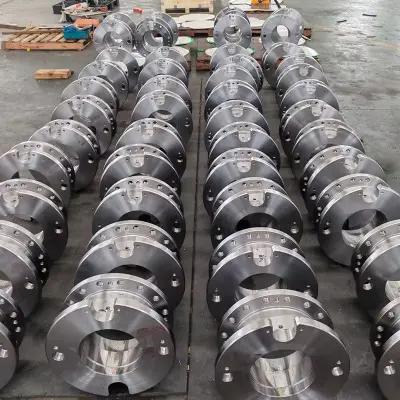
Wind Turbine Gearbox Forgings serve one fundamental purpose: to provide the structural integrity, fatigue resistance, and dimensional precision required by the critical load-bearing components inside a wind turbine gearbox that converts slow rotor rotation into the high-speed shaft rotation needed to generate electricity. Because wind turbine gearboxes operate under extreme and constantly variable torque loads, shock forces, and environmental stresses over design lifespans of 20 years or more, the components inside them must be manufactured to mechanical property standards that only the forging process can consistently achieve at the required scale.
Forgings inside wind turbine gearboxes are not interchangeable with cast or machined equivalents. The thermomechanical working of metal during forging produces a refined grain structure, eliminated internal porosity, and aligned fiber flow that together deliver fatigue strength, impact toughness, and crack propagation resistance values that cast components of the same alloy and geometry cannot match. For a wind turbine gearbox expected to complete hundreds of millions of load cycles over its operational life in remote or offshore locations where maintenance access is costly and difficult, this difference in material quality is the difference between acceptable and unacceptable field reliability.
Content
- 1 How a Wind Turbine Gearbox Works and Why It Creates Extreme Component Demands
- 2 Specific Gearbox Components That Are Forged and Why
- 3 Why Forging Outperforms Casting for Gearbox Components
- 4 Materials Used in Wind Turbine Gearbox Forgings
- 5 Manufacturing Process: How Wind Turbine Gearbox Forgings Are Made
- 6 International Standards Governing Wind Turbine Gearbox Forgings
- 7 The Role of Gearbox Forging Quality in Wind Turbine Lifecycle Economics
- 8 Quality Assurance Practices That Distinguish Premium Forging Suppliers
- 9 Trends Driving Demand for Higher-Performance Gearbox Forgings
- 10 Summary: Why Wind Turbine Gearbox Forgings Are Indispensable
How a Wind Turbine Gearbox Works and Why It Creates Extreme Component Demands
To understand why the forged components inside a wind turbine gearbox must meet such demanding specifications, it is necessary to understand the mechanical function the gearbox performs and the forces it must manage continuously throughout its service life.
The Speed Conversion Function
A modern large wind turbine rotor rotates at approximately 5 to 15 revolutions per minute (RPM) under typical operating wind conditions (source: International Renewable Energy Agency, IRENA Wind Power Technology Brief, 2016). Standard electrical generators require shaft input speeds of 1,000 to 1,800 RPM to produce grid-frequency electricity efficiently. The gearbox bridges this gap through a series of planetary and helical gear stages, typically achieving an overall gear ratio of 50:1 to 100:1 in multi-megawatt turbine configurations. Every component in this gear train must transmit this transformed torque continuously while withstanding the full spectrum of wind-induced load variation from calm conditions to storm gusts.
The Variable and Shock Load Environment
Unlike industrial gearboxes in factories or power plants that operate under relatively steady loads, wind turbine gearboxes experience continuously variable torque input that tracks wind speed fluctuations in real time. Turbulent wind conditions impose rapid load reversals, torsional shock pulses from rotor braking events, and bending moments from rotor weight asymmetry that collectively create one of the most demanding fatigue loading environments encountered in any mechanical system. The Fraunhofer Institute for Wind Energy Systems (IWES) documented in their gearbox reliability studies that wind turbine gearboxes accumulate fatigue damage at rates that would be considered severe in virtually any other rotating machinery context, with some high-load gear tooth contact areas experiencing stress cycles at the boundary of the material's endurance limit on a routine basis (source: Fraunhofer IWES, Gearbox Reliability Collaborative Report, 2015).
The Consequence of Component Failure
Gearbox failure is consistently the most costly unplanned maintenance event in wind turbine operation. A full gearbox replacement on a multi-megawatt onshore turbine typically costs USD 200,000 to 400,000 including crane mobilization, parts, and labor, with offshore replacements costing two to five times more depending on vessel availability and weather windows (source: National Renewable Energy Laboratory, NREL Gearbox Reliability Collaborative Final Report, 2021). These costs make the material quality of internal gearbox forgings a direct financial variable in the economics of wind energy generation, not merely a technical specification detail.
Specific Gearbox Components That Are Forged and Why
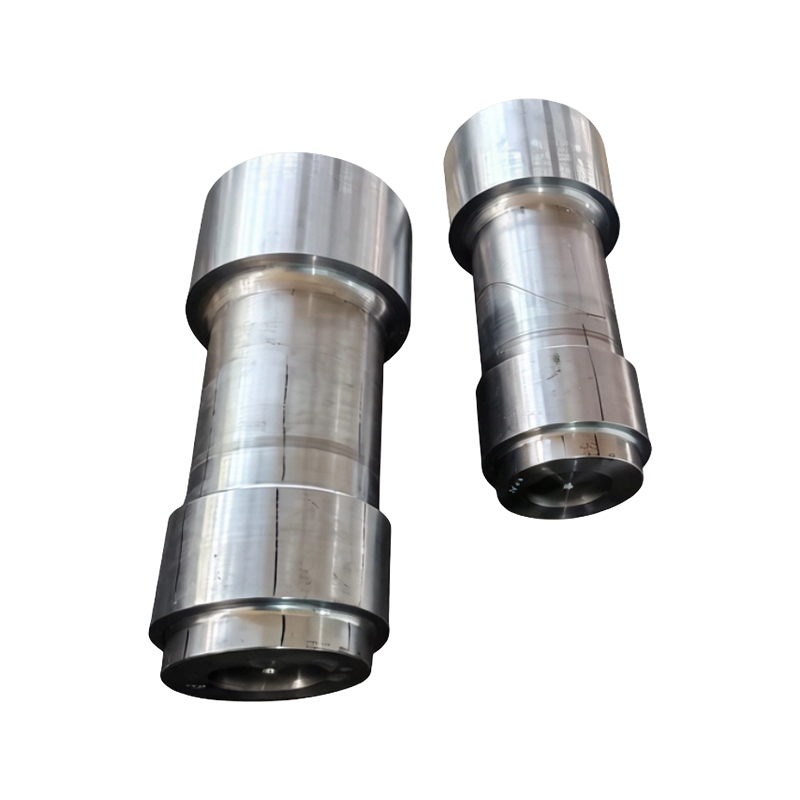
Wind turbine gearbox forgings encompass a defined set of internal components whose geometry, load path, and fatigue requirements make forging the manufacturing process of choice over casting, welding, or machining from bar stock.
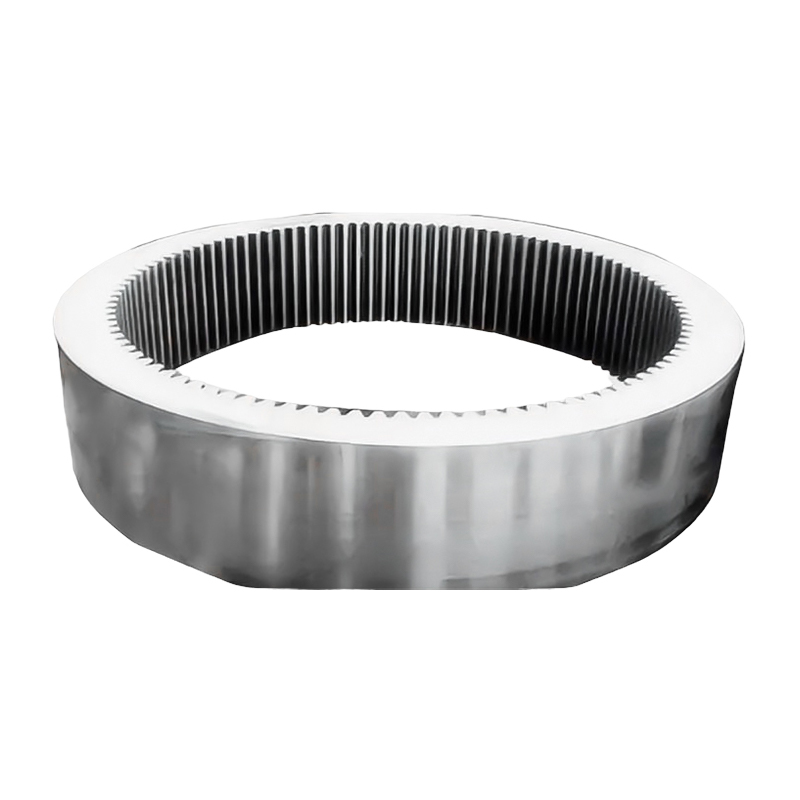
Ring Gears
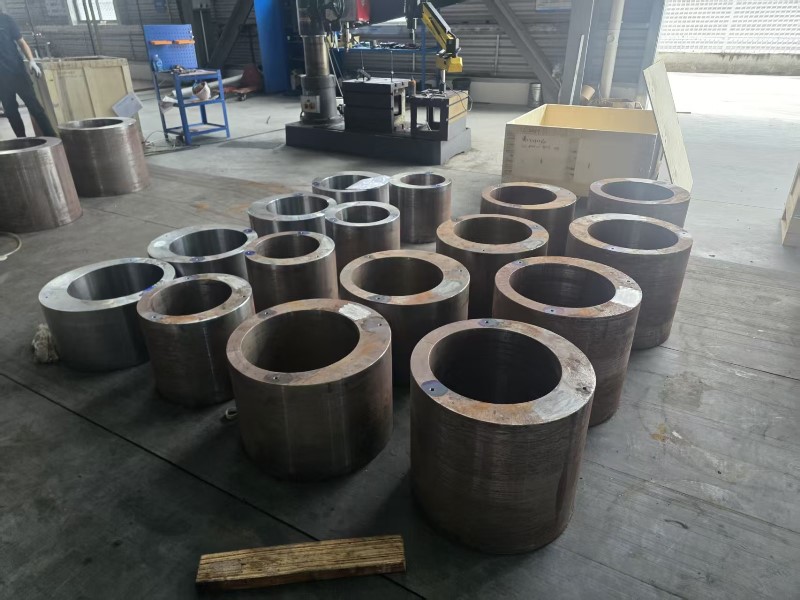
The ring gear is the outer element of the planetary gear stage and one of the largest forgings in the gearbox assembly. It transmits the full input torque from the rotor shaft across its internal tooth profile and must maintain tooth geometry accuracy over decades of cyclic loading. Ring gears for multi-megawatt turbines are typically forged from 18CrNiMo7-6 or 17CrNiMo6 case-hardening steel, achieving surface hardness values of 58 to 62 HRC after carburizing and quenching while retaining a tough, ductile core that resists tooth root fracture under shock loads. The continuous grain flow around the ring circumference in a correctly forged ring gear provides crack propagation resistance that a cast equivalent cannot replicate.
Planet Carriers
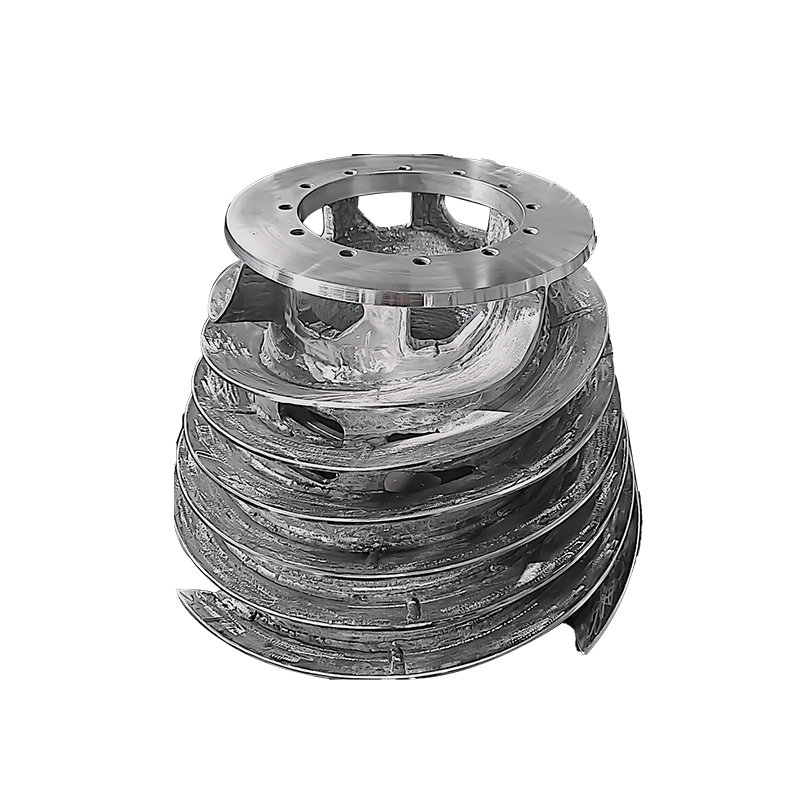
The planet carrier is a structurally complex forging that holds and positions the planet gears within the planetary stage while transmitting torque between the ring gear and the sun gear through the planet gear shafts. It experiences complex three-dimensional stress states including torsion, bending, and radial loads simultaneously. Planet carriers for large turbines weigh from several hundred kilograms to over two tonnes, making them among the most technically challenging forgings in the gearbox. Their forging requires large-capacity hydraulic presses and precise multi-step die sequences to achieve the required combination of wall thickness uniformity, dimensional tolerance, and grain refinement throughout the complex geometry.
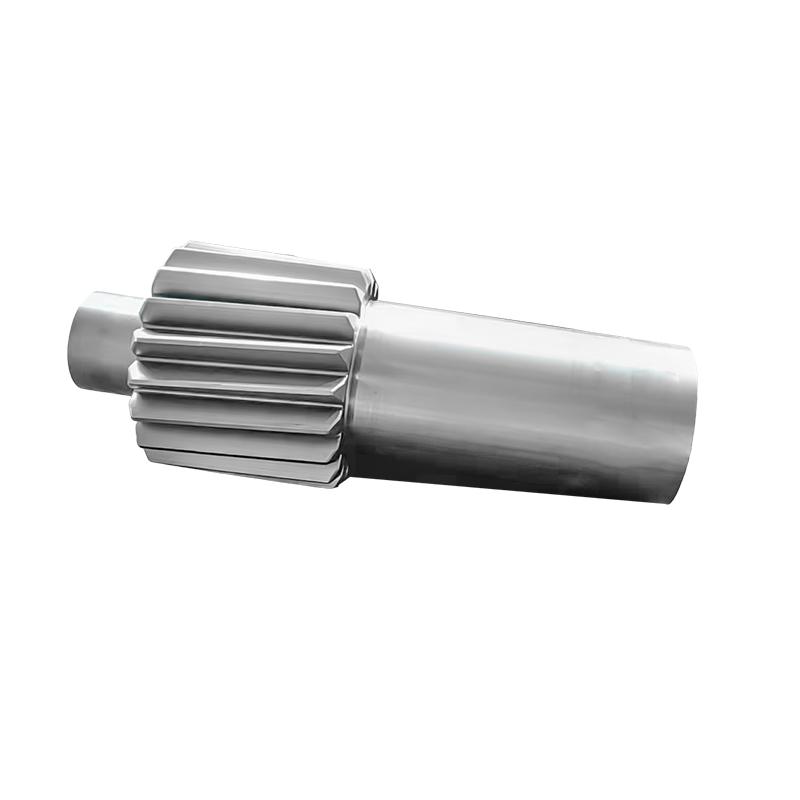
Sun Gear Shafts
The sun gear shaft sits at the center of the planetary stage and operates at the highest rotational speed within that stage, making it subject to high-cycle fatigue from torsional and bending stress simultaneously. Sun gear shafts are forged to achieve a fine-grain microstructure through the full cross-section, verified by macro-etch testing and ultrasonic inspection, with no internal segregation, shrinkage, or porosity that could serve as fatigue crack initiation sites under high-cycle loading conditions.
Output Shafts and Intermediate Shafts
The intermediate and output shafts of the helical gear stages connecting the planetary assembly to the generator carry progressively higher rotational speeds and lower torques as the gear ratio builds through the drivetrain. These shafts must maintain tight tolerances on journal diameter, runout, and surface finish at bearing seating areas, requirements that are best achieved by forging a near-net-shape blank that minimizes material removal and preserves the forged surface integrity at critical locations.
Gear Blanks for Helical Stage Gears
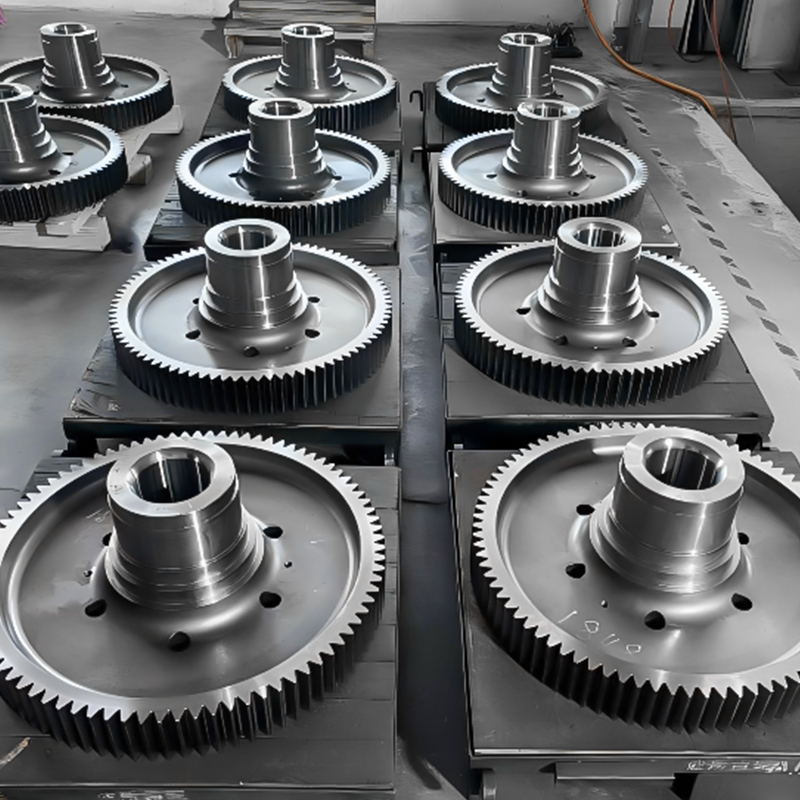
The helical gears of the intermediate and high-speed stages are machined from forged gear blanks that provide the correct alloy chemistry, mechanical property distribution, and grain structure for subsequent hobbing, grinding, and heat treatment operations. Forged blanks ensure that the finished tooth profile benefits from the sub-surface compressive residual stresses and grain alignment of the forged material, both of which contribute to the tooth bending fatigue strength that determines gear service life under high-cycle loading.
Why Forging Outperforms Casting for Gearbox Components
The choice of forging over casting for wind turbine gearbox components is not merely conventional practice. It is supported by quantified mechanical property differences that translate directly into service life performance in the field.
Fatigue Strength Comparison
Fatigue strength, the stress amplitude below which a material can sustain unlimited cyclic loading, is the most critical mechanical property for components subjected to hundreds of millions of load cycles. Forged steel components consistently demonstrate fatigue strength values 20 to 40 percent higher than cast steel components of nominally identical composition and heat treatment condition, due to the elimination of porosity, inclusion stringers, and dendritic segregation that act as fatigue crack initiation sites in castings (source: Forging Industry Association, Forging vs Casting Technical Comparison, 2019).
Impact Toughness
Charpy impact toughness, which measures a material's resistance to crack propagation under sudden loading, is directly relevant to wind turbine gearbox components that experience shock loads from emergency braking events and rotor imbalance transients. Forged steel components routinely achieve Charpy V-notch impact values of 80 to 120 Joules at -20 degrees Celsius, values that are particularly important for cold-climate installations where low ambient temperatures reduce the inherent toughness of the gearbox lubricant and increase the severity of shock loading on cold-start operations. Cast equivalents often achieve only 40 to 60 Joules under the same conditions.
Dimensional Consistency and Tolerancing
Precision forging processes produce blanks with significantly tighter dimensional variation than sand or investment casting, reducing the material removal required in subsequent machining operations and ensuring that the finished gear tooth profile and bearing seat geometry are cut from material with consistent and predictable properties throughout. This consistency is critical for maintaining the gear contact pattern accuracy and bearing alignment that are preconditions for achieving the designed gear and bearing fatigue life.
Quantified Property Comparison
| Mechanical Property | Forged Steel (18CrNiMo7-6) | Cast Steel (Equivalent Grade) | Forging Advantage |
| Tensile Strength (MPa) | 1100 to 1300 | 900 to 1100 | 15 to 20% higher |
| Yield Strength (MPa) | 900 to 1100 | 700 to 900 | 20 to 25% higher |
| Fatigue Limit (MPa) | 500 to 600 | 350 to 450 | 25 to 40% higher |
| Charpy Impact at -20 C (J) | 80 to 120 | 40 to 60 | 50 to 100% higher |
| Reduction in Area (%) | 55 to 70 | 30 to 45 | Significantly higher ductility |
Source: Forging Industry Association Technical Data Series, 2019; ISO 6336 Gear Calculation Standards Annex, 2019.
Materials Used in Wind Turbine Gearbox Forgings
The alloy selection for wind turbine gearbox forgings is governed by the specific combination of surface hardness, core toughness, hardenability depth, and dimensional stability after heat treatment required for each component type. Several well-established alloy families dominate current gearbox forging practice.
Case-Hardening Steels for Gear Components
Case-hardening steels that achieve high surface hardness through carburizing followed by quenching, while retaining a tough ductile core, are the standard material family for ring gears, sun gears, planet gears, and gear blanks in wind turbine gearboxes. The most widely specified grades include:
- 18CrNiMo7-6 (EN 10084): The dominant alloy for high-performance wind turbine gear forgings globally. Its chromium-nickel-molybdenum alloying provides deep hardenability in large cross-sections, and its nickel content ensures excellent core toughness at low temperatures. Carburized case hardness of 58 to 62 HRC with core hardness of 30 to 45 HRC is achievable in sections up to 200mm diameter.
- 17CrNiMo6 (EN 10084): Closely related to 18CrNiMo7-6 with slightly lower carbon content, preferred in some European gearbox specifications for components where dimensional distortion during case hardening must be minimized.
- 20MnCr5 (EN 10084): Used for smaller gear forgings in the intermediate and high-speed stages where the section size is smaller and the deep hardenability of the higher-alloy grades is not required. Lower cost than CrNiMo grades while meeting the specification requirements for these applications.
Through-Hardening Steels for Structural Components
Planet carriers, housing flanges, and shaft forgings that require uniform mechanical properties through the full cross-section rather than a carburized case are typically forged from through-hardening alloy steels:
- 42CrMo4 (EN 10083): A chromium-molybdenum steel widely used for planet carrier and shaft forgings, providing tensile strength of 900 to 1100 MPa after quench and temper treatment in relevant section sizes.
- 34CrNiMo6 (EN 10083): Higher-alloy through-hardening steel used for large-section planet carriers and output shaft forgings in multi-megawatt turbines where section size exceeds the hardenability capability of 42CrMo4.
- 30CrNiMo8 (EN 10083): The highest hardenability through-hardening grade in common gearbox forging use, specified for the largest planet carrier forgings and output shaft forgings in offshore turbines where maximum toughness at low temperature is required alongside high strength.
Manufacturing Process: How Wind Turbine Gearbox Forgings Are Made
The production of a wind turbine gearbox forging is a multi-stage process that begins with alloy selection and ends with final non-destructive testing, with each intermediate step critically affecting the final mechanical properties and dimensional quality of the component.
Steel Melting and Ingot or Continuous Casting
The starting material for large gearbox forgings is typically a vacuum degassed (VD) or vacuum arc remelted (VAR) steel ingot, or in some cases a continuously cast bloom of appropriate cross-section. Vacuum degassing removes dissolved hydrogen and reduces oxygen content, both of which reduce inclusion content and improve the fatigue and toughness properties of the finished forging. For the most demanding applications such as large planet carriers and ring gears, electroslag remelting (ESR) may be specified to achieve the highest possible cleanliness and compositional homogeneity.
Heating and Open or Closed Die Forging
The ingot or billet is heated to the forging temperature range, typically 1150 to 1250 degrees Celsius for the alloy steels used in gearbox forgings, in a controlled-atmosphere furnace. The heated material is then worked under hydraulic presses with capacities ranging from 2,000 to 12,000 tonnes depending on component size. The forging sequence must achieve sufficient total reduction ratio to break down the as-cast dendritic structure and refine the grain size throughout the cross-section. A minimum forging reduction ratio of 4:1 is generally specified for gearbox forgings to ensure complete recrystallization and grain refinement (source: ASTM A668, Standard Specification for Steel Forgings, Carbon and Alloy, for General Industrial Use).
Heat Treatment
Post-forging heat treatment is a critical step that develops the final mechanical properties of the forging. The heat treatment sequence depends on the alloy and application:
- Normalizing or annealing: Performed immediately after forging to relieve forging stresses and produce a uniform microstructure suitable for machining.
- Rough machining: The forging is machined to near-net shape, leaving stock for finish machining after hardening.
- Quench and temper (for through-hardening grades): Austenitizing at 840 to 880 degrees Celsius followed by oil or polymer quench, then tempering at 550 to 650 degrees Celsius to achieve the required strength and toughness combination.
- Carburizing and case hardening (for gear steels): Gas or vacuum carburizing at 900 to 950 degrees Celsius builds a carbon-enriched case of 0.8 to 1.5mm depth, followed by quenching to harden both case and core to specification.
- Low-temperature stress relief: Final tempering at 150 to 180 degrees Celsius relieves quench stresses in the carburized case without significantly reducing surface hardness.
Non-Destructive Testing and Quality Verification
Wind turbine gearbox forgings are subject to comprehensive non-destructive testing (NDT) before acceptance. Standard NDT requirements include:
- Ultrasonic testing (UT) to the acceptance criteria of EN 10228-3 or ASTM A388, verifying freedom from internal defects above the specified acceptance level throughout the forging volume.
- Magnetic particle inspection (MPI) of all accessible machined surfaces per EN 10228-1 to detect surface and near-surface discontinuities at critical locations including gear tooth roots, bore surfaces, and transition radii.
- Hardness testing at specified locations to verify heat treatment response and case depth after carburizing.
- Mechanical property testing of witness test pieces forged and heat treated with each production batch to verify tensile strength, yield strength, elongation, reduction in area, and Charpy impact values meet specification at the required test temperature.
- Dimensional inspection to the agreed drawing tolerances using coordinate measuring machines (CMM) for complex geometries such as planet carriers.
International Standards Governing Wind Turbine Gearbox Forgings
Wind turbine gearbox forgings are manufactured and tested in compliance with a structured set of international standards that govern material chemistry, mechanical properties, heat treatment, dimensional tolerancing, and non-destructive testing acceptance criteria. Key standards include:
| Standard | Issuing Body | Scope Relevant to Gearbox Forgings |
| EN 10084 | European Committee for Standardization (CEN) | Case-hardening steels: chemical composition and mechanical properties |
| EN 10083 | CEN | Through-hardening alloy steels: chemical composition and mechanical properties |
| EN 10228-3 | CEN | Ultrasonic testing of alloy steel forgings |
| EN 10228-1 | CEN | Magnetic particle inspection of steel forgings |
| ISO 6336 | International Organization for Standardization | Calculation of load capacity of spur and helical gears |
| AGMA 2101 | American Gear Manufacturers Association | Fundamental rating factors for involute spur and helical gears |
| ASTM A668 | ASTM International | Carbon and alloy steel forgings for general industrial use |
| ASTM A388 | ASTM International | Ultrasonic examination of heavy steel forgings |
| IEC 61400-4 | International Electrotechnical Commission | Wind turbines: design requirements for wind turbine gearboxes |
IEC 61400-4 is the overarching standard specifically addressing wind turbine gearbox design and material requirements, and it directly references the material, heat treatment, and testing standards listed above. Compliance with IEC 61400-4 is a prerequisite for turbine certification by recognized bodies including DNV, Bureau Veritas, and TUV, which in turn is required for project financing in most wind energy markets globally (source: IEC 61400-4:2012, Wind Turbines - Part 4: Design Requirements for Wind Turbine Gearboxes).
The Role of Gearbox Forging Quality in Wind Turbine Lifecycle Economics
Wind turbine project economics are evaluated over a design life of 20 to 25 years for onshore projects and 25 to 30 years for offshore projects. The mechanical integrity of gearbox forgings has a direct and quantifiable impact on the total cost of energy generation over this period through its effect on gearbox service life, unplanned maintenance frequency, and component replacement costs.
Gearbox Failure Rates and Their Cost Implications
Analysis of wind turbine failure rate data from multiple European markets shows that gearbox failures account for only approximately 3 to 5 percent of total failure events by count, but are responsible for 25 to 35 percent of total downtime and an even higher proportion of maintenance costs due to the high cost and complexity of each gearbox repair event (source: SINTEF Energy Research, Reliability Data for Wind Turbines: Status 2005-2015, 2016). Improving gearbox component reliability by even a few percentage points through enhanced forging quality and specification compliance produces a disproportionately large improvement in fleet-level economics.
Offshore Maintenance Cost Differential
For offshore wind turbines, where vessel mobilization for a gearbox repair can cost USD 150,000 to 300,000 per operation independent of parts and labor costs (source: NREL Offshore Wind Turbine O&M Cost Model, 2019), the economic premium justified for superior forging quality is substantially higher than for onshore applications. Offshore operators increasingly specify enhanced forging standards, including vacuum remelted feedstock and 100 percent volumetric ultrasonic testing, specifically to reduce the probability of early gearbox component failure.
Component Life Extension Value
As the first generation of utility-scale wind farms approaches and passes its original design life, the market for gearbox component replacement forgings that extend operational life beyond the initial 20-year design period is growing significantly. Replacement ring gears, planet carriers, and shaft forgings manufactured to current enhanced specifications can extend gearbox service life by an additional 10 to 15 years at a cost that is typically 15 to 25 percent of full turbine repowering, making high-quality replacement forgings a highly cost-effective alternative to repowering for turbines in favorable locations (source: WindEurope, Making the Most of Europe's Wind Energy Resource, 2020).
Quality Assurance Practices That Distinguish Premium Forging Suppliers
For wind turbine OEMs, gearbox manufacturers, and wind farm operators sourcing replacement components, the quality assurance practices of a forging supplier are as important as the nominal material specification in determining the actual field performance of the delivered components. The following practices distinguish suppliers capable of consistently meeting the demanding requirements of wind turbine gearbox applications:
- Full material traceability from melt heat to finished forging: Every wind turbine gearbox forging should be traceable through production records to the specific steel melt heat, ingot number, forging press sequence, and heat treatment batch. This traceability is essential for field investigation when failures occur and for recall management if a batch defect is identified.
- Third-party witnessed testing: Major wind energy customers increasingly require that mechanical property testing and NDT of safety-critical forgings be witnessed by an independent third-party inspection agency such as DNV, Bureau Veritas, or TUV. Suppliers with established third-party witness programs demonstrate a level of quality system maturity and transparency that is a strong indicator of consistent production quality.
- Statistical process control (SPC) on critical forging parameters: Suppliers applying SPC to forging temperature, reduction ratio, heat treatment soak time and temperature, and NDT results can demonstrate process capability indices (Cpk) that quantify their ability to consistently meet specification limits, rather than relying on end-of-process testing alone to sort conforming from non-conforming product.
- Investment in large-capacity forging equipment: Planet carrier and ring gear forgings for multi-megawatt turbines require hydraulic press capacity of 5,000 tonnes or more to achieve the required reduction ratio in large cross-sections. Suppliers with appropriate press capacity and forging tooling for these large components can deliver them to specification, while suppliers attempting to produce them on inadequate equipment cannot achieve the required grain refinement through the full cross-section regardless of material quality.
- Proven delivery history to wind energy OEM specifications: Wind turbine gearbox OEMs maintain demanding approved supplier qualification processes that include first article inspection, production part approval, and ongoing surveillance audits. Qualification on a wind energy OEM's approved supplier list is the most reliable indicator of a forging supplier's capability in this application.
The Wind Turbine Gearbox Forgings available through aceprocess.com are produced under a comprehensive quality management framework encompassing full heat-to-forging material traceability, third-party witnessed mechanical testing and NDT, and compliance with IEC 61400-4 and the EN 10084/EN 10083 material standards that govern the alloy grades used in wind turbine gearbox applications, supporting the quality assurance requirements of wind energy OEMs and independent gearbox repair and replacement programs globally.
Trends Driving Demand for Higher-Performance Gearbox Forgings
Several major trends in the wind energy industry are simultaneously increasing the technical demands on wind turbine gearbox forgings and expanding the total volume of forgings required globally.
Increasing Turbine Size and Rating
The average rated capacity of newly installed onshore wind turbines has grown from approximately 1.5 MW in 2005 to over 4.5 MW in 2023, with offshore turbines now commonly rated at 12 to 15 MW and prototype units exceeding 20 MW in development (source: IRENA, Renewable Power Generation Costs in 2022, 2023). This size increase scales the torque loads on gearbox components approximately in proportion to rated power, requiring forging cross-sections, alloy grades, and heat treatment depths that challenge the capability boundaries of conventional forging practice. Ring gear forgings for 10 MW class turbines may exceed 3 meters in outer diameter and 5 tonnes in weight, requiring the largest available forging presses and highly specialized handling and heat treatment equipment.
Offshore Wind Expansion
Global offshore wind installed capacity is projected to grow from approximately 64 GW in 2022 to over 380 GW by 2032 (source: Global Wind Energy Council, GWEC Global Offshore Wind Report, 2023). Offshore turbines impose the most demanding requirements on gearbox forgings due to the combination of maximum component size, high humidity and salt-laden atmosphere accelerating corrosion at any surface defect, and the extreme cost of maintenance access that makes any early component failure exceptionally expensive. This trend is driving increased specification of premium forging practices including ESR steel, 100 percent volumetric UT, and enhanced low-temperature impact testing as standard rather than optional requirements.
Life Extension of Aging Fleets
As the large population of wind turbines installed between 2000 and 2015 reaches and surpasses its original 20-year design life, the market for replacement gearbox forgings is expanding rapidly. Replacement components must be manufactured to at least the original specification and ideally to current enhanced standards, creating ongoing demand for forging suppliers capable of producing legacy component geometries in current premium alloy and process specifications.
Summary: Why Wind Turbine Gearbox Forgings Are Indispensable
The purpose of wind turbine gearbox forgings is to provide the mechanical foundation upon which reliable, long-life wind energy generation is built. Every kilowatt-hour generated by a wind turbine passes through the torque path that these forgings define and sustain. Their superior fatigue strength, impact toughness, dimensional precision, and freedom from internal defects directly determine whether a wind turbine gearbox achieves its designed 20-year service life with manageable maintenance costs, or fails prematurely and imposes the enormous unplanned costs that make individual turbines economically marginal and erode the overall economics of wind energy projects.
As turbines grow larger, move further offshore, and operate in progressively more demanding environments, the technical requirements on gearbox forgings continue to increase. The combination of correct alloy selection, optimized forging process, precise heat treatment, and rigorous quality assurance that together define a premium wind turbine gearbox forging is not a luxury specification but the minimum standard required to support the reliability expectations of modern wind energy projects.
For detailed specifications, material certifications, and technical consultation on procurement of Wind Turbine Gearbox Forgings for new equipment or fleet maintenance and life extension programs, the engineering and quality resources available through aceprocess.com provide the technical depth and production capability required to meet the most demanding wind energy gearbox forging specifications.
Message Us Right Now!
-
Mobile Terminal
-
Quick Links
Products About Us Equipment & Capacity Quality News Contact Us -
Product Category
Power‑Generation Forgings OEM Machined Forgings CUSTOMIZED MADE FORGING PARTS Ship and Port Machinery Forgings Mining and Metallurgy Forgings Food and Feed Machinery Forgings Welding Fabrication Petrochemical Industry Forgings -
Contact Us
Mob.: +86-173 7218 0878 Tel.: +86-515-8389 0396 E-mail: ivy.zhai@aceprocess.cn Add.: No.21 Jinfeng Road, Economic Development Park, Dafeng District, Yancheng City, Jiangsu, China
Copyright © 2025 Yancheng ACE Machinery Co., Ltd. All Rights Reserved.
China open die forgings manufacturer
custom precision forgings supplier
