

 English
 中文简体
中文简体

Industry News


Industry News
Why are Hydro Turbine Forgings so important?
2026-05-22
Hydro turbine forgings are critical because they form the structural and mechanical backbone of hydroelectric power generation equipment — components that must endure some of the most severe combined loading conditions in any industrial machinery. A hydro turbine runner, shaft, or guide vane carrier operates continuously under hydraulic pressures that can exceed 200 bar, rotational speeds up to 1,000 RPM, and cyclic fatigue loads that accumulate over decades of uninterrupted service. No other manufacturing method produces the grain structure, mechanical strength, and dimensional integrity required to reliably survive these conditions over a 30–50 year service life.
When a forged component fails in a hydro turbine, the consequences extend far beyond the immediate part: unplanned shutdowns can cost operators hundreds of thousands of dollars per day in lost generation capacity, and catastrophic failures can result in flooding, structural damage to the powerhouse, and serious safety incidents. The importance of forgings is therefore not merely technical — it is economic, operational, and safety-critical in equal measure.
Content
- 1 What Makes Forging Superior to Casting or Fabrication for Turbine Components
- 2 Key Components Where Forgings Are Applied in Hydro Turbines
- 3 The Hydraulic Environment: Why the Loads Are So Demanding
- 4 Material Selection: Why the Right Alloy Is as Important as the Process
- 5 The Forging Process for Large Hydro Turbine Components
- 6 Inspection and Quality Assurance: Ensuring Forging Integrity Before Installation
- 7 Impact on Hydro Turbine Service Life and Maintenance Intervals
- 8 Role of Forgings in Turbine Upgrading and Life Extension
- 9 Economic and Energy Security Importance of Reliable Hydro Turbine Forgings
- 10 Summary: The Compounding Value of Quality Forgings
What Makes Forging Superior to Casting or Fabrication for Turbine Components
To understand why forgings are so important, it is essential to understand what the forging process does to metal that casting and fabrication cannot replicate.
Grain Flow and Mechanical Integrity
When steel or stainless steel is forged — compressed under high pressure between dies while at elevated temperature — the metal's internal grain structure is refined and aligned along the contours of the part. This controlled grain flow produces a component where the strongest direction of the material coincides with the primary stress direction in service. Cast components, by contrast, have randomly oriented grain structures with dendrites, shrinkage voids, and gas porosity that create internal weak points. Forged turbine components typically exhibit tensile strengths 20–30% higher than equivalent cast parts, with fatigue life improvements that can exceed 100% in high-cycle applications.
Elimination of Internal Defects
The high compressive forces applied during forging close any internal voids, porosity, or micro-cracks present in the original ingot or billet. This produces a fully dense material with no internal discontinuities that could act as crack initiation sites under fatigue loading. In contrast, even high-quality castings are susceptible to internal porosity, hot tears, and inclusions that are difficult to detect and can propagate rapidly under the cyclic hydraulic loads present in turbine operation.
Dimensional Consistency and Predictability
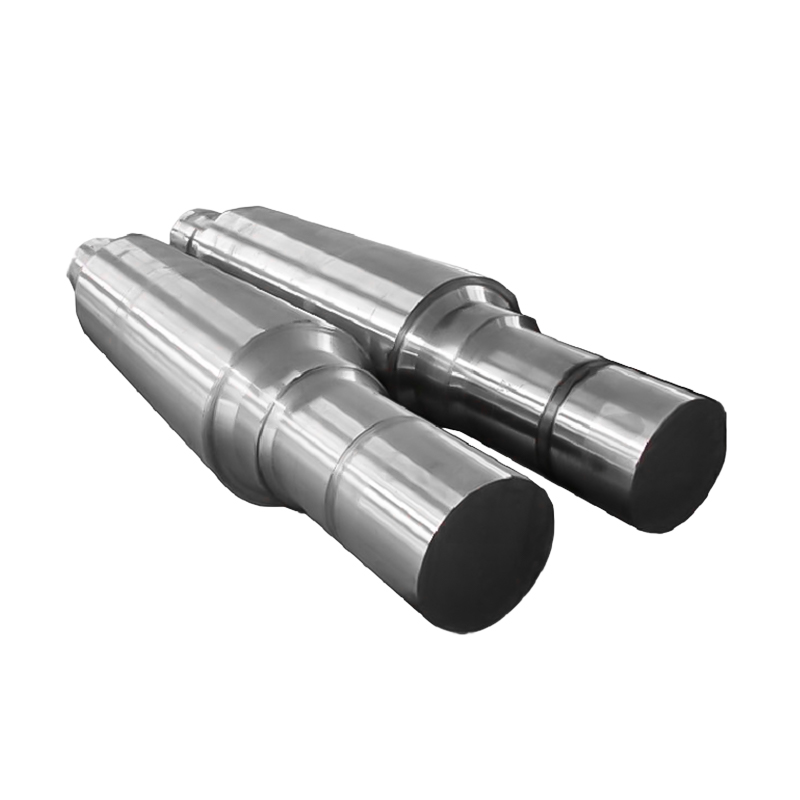
Forgings produced from controlled processes deliver highly consistent mechanical properties from part to part and across the section of a single large component. This predictability is essential for turbine designers who must calculate safety factors, stress margins, and maintenance intervals based on material property assumptions. A turbine shaft forging for a large Francis turbine, for example, may weigh 20 to 80 tonnes and must demonstrate uniform mechanical properties throughout its entire cross-section — a requirement that only the forging process, combined with appropriate heat treatment, can reliably meet.
Key Components Where Forgings Are Applied in Hydro Turbines
Forgings are not used uniformly across all turbine parts — they are specified for the components where mechanical demands are highest and where failure consequences are most severe. The following are the principal applications:
| Component | Turbine Type | Primary Load Type | Typical Material |
|---|---|---|---|
| Main shaft | Francis, Kaplan, Pelton | Torsion, bending, fatigue | Carbon steel, alloy steel |
| Runner hub / crown | Francis, Kaplan | Hydraulic pressure, centrifugal force | Stainless steel (CA6NM) |
| Pelton runner buckets | Pelton | High-velocity jet impact, erosion | Martensitic stainless steel |
| Guide vane trunnions | Francis, Kaplan | Torsion, bending, wear | Alloy steel, duplex stainless |
| Kaplan blade pivot shafts | Kaplan | Combined bending, torsion, fatigue | High-strength alloy steel |
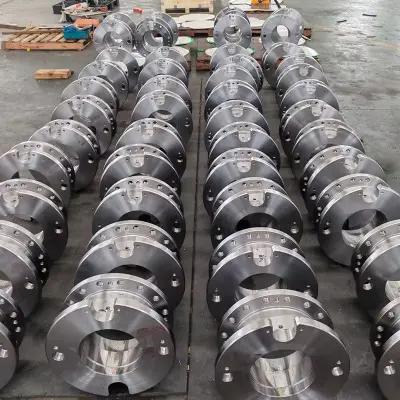
| Head cover and bottom ring flanges | Francis | Hydraulic pressure, bolted joint loads | Carbon steel, low-alloy steel |
| Nozzle bodies and needle valves | Pelton | High-pressure water, erosion, cavitation | Stainless steel |
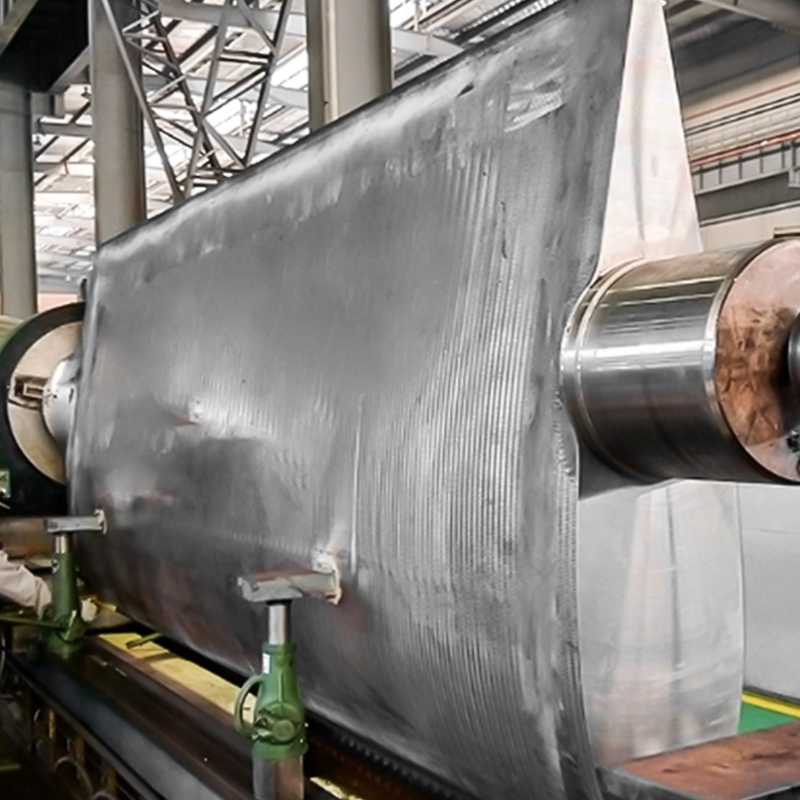
The Hydraulic Environment: Why the Loads Are So Demanding
Understanding why forgings are essential requires understanding the severity of the operating environment inside a hydro turbine. The combination of forces acting on turbine components is unique in its breadth and intensity.
Static and Dynamic Hydraulic Pressure
A large high-head Francis turbine operating at a head of 600 meters subjects runner components to static water pressures exceeding 60 bar. Superimposed on this static pressure are dynamic pressure fluctuations caused by vortex shedding, rotor-stator interaction, and guide vane passing frequencies. These fluctuations can have amplitudes of 5–20% of the mean pressure and occur at frequencies of 5–50 Hz — frequencies that coincide with the natural frequencies of many structural components, creating resonance risks if materials and geometry are not correctly specified.
Torque and Bending Loads on the Main Shaft
The main shaft of a large hydro turbine transmits the full output torque of the machine to the generator. For a 500 MW Francis turbine running at 100 RPM, the transmitted torque on the main shaft can reach approximately 47 MN·m — roughly equivalent to the torque produced by 47,000 car engines simultaneously. This extreme torsional load must be transmitted through a single forged steel shaft that is also subject to bending moments from the weight of the runner and hydraulic radial forces. Only a high-quality forging with flaw-free interior structure and controlled grain flow can reliably carry these combined loads over decades of operation.
Cavitation Erosion and Abrasive Wear
Cavitation — the formation and violent collapse of vapor bubbles on metal surfaces — is one of the most destructive forces in hydraulic machinery. When vapor bubbles collapse, they generate localized pressure pulses exceeding 1 GPa, which erode even hardened steel surfaces at rates that can remove millimeters of material per year in severe cases. Runner blades, guide vane surfaces, and needle valve seats are particularly susceptible. Forged martensitic stainless steels (such as CA6NM with approximately 13% chromium and 4% nickel) offer significantly higher cavitation resistance than carbon steel castings, with erosion rates in standardized cavitation tests typically 3 to 5 times lower than those of conventional carbon steel.
Cyclic Fatigue Over Decades of Operation
A hydro turbine designed for a 40-year service life with one start-stop cycle per day accumulates approximately 15,000 start-stop cycles over its lifetime. Each cycle subjects key components to transient loads — torque surges, pressure water hammer, thermal gradients — that are superimposed on the already high steady-state stresses. Fatigue crack growth from even microscopic internal defects can render a large forging unserviceable long before its design life is reached. The superior fatigue strength of forged components — arising from their refined grain structure and absence of internal discontinuities — is therefore not merely a performance advantage but a fundamental safety requirement.
Material Selection: Why the Right Alloy Is as Important as the Process
Forging process quality alone is not sufficient — the choice of alloy for each component must be matched to the specific loading and environmental conditions it will face. The table below summarizes the most commonly specified materials for hydro turbine forgings:
| Material | Yield Strength (MPa) | Key Properties | Typical Application |
|---|---|---|---|
| Carbon steel (SA-105 / 20MnMo) | 250 – 350 | Cost-effective, good weldability | Shafts, flanges, structural rings |
| Low-alloy steel (42CrMo4 / AISI 4140) | 550 – 750 | High strength, good fatigue resistance | Main shafts, pivot shafts, large studs |
| Martensitic stainless (CA6NM / 13Cr4Ni) | 550 – 760 | Excellent cavitation and corrosion resistance | Runner hubs, Pelton buckets, guide vanes |
| Duplex stainless (2205 / S31803) | 450 – 650 | High strength + pitting corrosion resistance | Guide vane stems, nozzle components |
| Super martensitic stainless (16Cr5Ni) | 650 – 850 | Highest cavitation resistance, weldable | High-head Francis and Pelton runners |
The selection of CA6NM (13% Cr, 4% Ni martensitic stainless steel) as the standard material for hydraulically loaded runner components represents decades of industry learning. Its combination of 550–760 MPa yield strength, good weldability, and outstanding cavitation erosion resistance makes it uniquely suited to the hydraulic environment of a turbine runner — a performance profile that no carbon steel casting can match.
The Forging Process for Large Hydro Turbine Components
Producing high-quality forgings for hydro turbine applications requires far more than simply pressing hot steel into shape. The process involves multiple carefully controlled stages, each of which contributes to the final component's mechanical integrity.
Ingot Production and Homogenization
Large turbine shaft forgings begin as ingots that can weigh 100 tonnes or more. The quality of the ingot — including its cleanliness (low sulfur, phosphorus, and non-metallic inclusions), degree of macro-segregation, and gas content — directly determines the quality ceiling of the finished forging. Premium-grade hydro turbine forgings are produced from vacuum degassed or electroslag remelted (ESR) ingots, which have substantially lower hydrogen content and inclusion ratings than standard electric arc furnace steel. Hydrogen content must typically be below 1.5 ppm to prevent hydrogen-induced cracking during cooling after forging.
Hot Forging and Reduction Ratio
The ingot is heated to the appropriate forging temperature — typically 1,100°C to 1,250°C for alloy steels — and progressively worked under large hydraulic or mechanical presses. A critical parameter is the forging reduction ratio: the ratio of the original cross-sectional area of the ingot to the final cross-sectional area of the forging. A minimum reduction ratio of 3:1 to 5:1 is generally required for turbine shaft forgings to ensure complete closure of internal voids and sufficient grain refinement. For the most demanding applications, ratios of 6:1 or higher are specified.
Heat Treatment After Forging
After forging, heat treatment is essential to achieve the required combination of strength, toughness, and ductility. The typical heat treatment sequence for alloy steel turbine shaft forgings includes:
- Normalizing or annealing — to relieve forging stresses and homogenize the microstructure.
- Quenching — rapid cooling from austenitizing temperature to produce a martensitic or bainitic microstructure with high strength.
- Tempering — reheating to an intermediate temperature (typically 580°C to 680°C) to recover toughness and ductility while retaining the majority of the strength gained by quenching.
- Stress relief — a final low-temperature treatment to eliminate residual stresses before machining, preventing distortion and cracking during subsequent processing.
For CA6NM stainless steel runners, the tempering temperature is critically controlled: tempering below 580°C risks producing a tempered martensite embrittlement condition, while tempering above 650°C excessively softens the microstructure. This narrow processing window demands precise temperature control throughout large section thicknesses — a significant manufacturing challenge for forgings weighing tens of tonnes.
Inspection and Quality Assurance: Ensuring Forging Integrity Before Installation
Given the consequences of in-service failure, forged turbine components are subject to some of the most rigorous non-destructive testing (NDT) regimes in any industrial sector. The inspection plan for a major turbine shaft forging typically includes:
- Ultrasonic testing (UT): Full volumetric inspection using both straight-beam and angle-beam transducers to detect internal flaws. Acceptance criteria for large turbine shaft forgings typically require that no indication exceeding 2–3 mm equivalent flat-bottom hole (FBH) diameter is present anywhere in the volume, and no cluster of smaller indications within any defined reference area.
- Magnetic particle inspection (MPI): Applied to all machined surfaces after rough machining to detect surface and near-surface linear indications. Critical areas such as shaft keyways, fillet radii, and flange faces receive 100% MPI coverage.
- Mechanical property testing: Tensile, yield strength, elongation, reduction of area, Charpy impact energy, and hardness are measured on test coupons taken from sacrificial extensions of the forging — not from separately forged test bars — to ensure the results are representative of the actual component material.
- Chemical composition verification: Spectrochemical analysis confirms that the heat composition meets specification, including trace element limits for elements such as tin, antimony, and arsenic that embrittle steel at grain boundaries.
- Dimensional inspection: Full dimensional verification against engineering drawings, including straightness of shafts (typically required within 0.2 mm per meter of length) and surface finish measurements at journal and seal areas.
These inspections are typically witnessed by third-party inspection bodies and documented in material test reports (MTRs) that accompany the component throughout its service life and any subsequent maintenance interventions.
Impact on Hydro Turbine Service Life and Maintenance Intervals
The quality of forged components has a direct and measurable impact on how long a turbine runs between overhauls and on the total lifecycle cost of the installation.
Extended Overhaul Intervals
A hydro turbine equipped with premium-quality forgings in critical components can operate for 15,000 to 25,000 hours between major overhauls, compared to 8,000 to 12,000 hours for turbines with components of marginal quality. For a machine generating revenue continuously, the difference in available generation hours between a 10,000-hour and a 20,000-hour overhaul interval — at a typical wholesale electricity price — can represent tens of millions of dollars over a 40-year service life.
Reduced Cavitation Damage and Repair Frequency
Runner cavitation damage repair — typically performed by welding and grinding to restore eroded blade profiles — is one of the most time-consuming and costly maintenance operations in hydro power. A runner fabricated from properly forged and heat-treated CA6NM stainless steel may require cavitation repair every 8–12 years, while a lower-quality runner might require repair every 3–5 years. Over a 40-year service life, this difference can represent 3 to 5 additional major repair campaigns, each costing several hundred thousand dollars and taking the unit out of service for weeks.
Shaft Fatigue Life and Predictive Maintenance
Turbine main shafts are subject to periodic fatigue inspection using magnetic particle and ultrasonic testing. A forged shaft with a clean, well-characterized microstructure and documented mechanical properties allows engineers to apply fracture mechanics calculations to define safe inspection intervals and crack growth limits. If a small surface crack is detected, the remaining fatigue life can be calculated with confidence — allowing the operator to plan a scheduled repair rather than face an emergency shutdown. With a casting of uncertain internal integrity, the same calculation carries much larger uncertainty, forcing more conservative (and more frequent) inspection intervals.
Role of Forgings in Turbine Upgrading and Life Extension
Many hydro power stations operating today were commissioned in the 1950s, 1960s, and 1970s with turbines designed to the engineering standards of that era. As these machines approach or exceed their original design lives, owners face the choice of full replacement or life extension through targeted component upgrading. Forgings play a central role in both strategies.
Runner Replacement and Efficiency Improvement
Modern hydraulic design tools, including computational fluid dynamics (CFD) optimization, can produce runner blade geometries that are significantly more efficient than those designed 40–50 years ago. Replacing an original cast iron or carbon steel runner with a new forged stainless steel runner manufactured to modern profiles can improve turbine efficiency by 2 to 5 percentage points — a commercially significant improvement when spread over decades of operation. The new runner must also be forged to accommodate increased hydraulic loads if the upgrade involves increased flow or head, making forging selection a critical part of the upgrade specification.
Shaft Replacement After Fatigue Crack Detection
When periodic inspection reveals fatigue cracks propagating from key ways, fillet radii, or other stress concentration points on an aging turbine shaft, replacement is typically more economical than repair. The replacement shaft is an opportunity not only to restore the original design capability but to incorporate geometry improvements — larger fillet radii, modified keyway profiles, improved surface finish standards — that extend the fatigue life of the new shaft beyond that of the original. This requires a forging capable of being machined to tighter dimensional tolerances and better surface finish than older manufacturing practices could achieve.
Guide Vane and Trunnion Upgrades
Guide vane pivot trunnions are high-wear components that experience combined bending, torsion, and abrasive wear from particles in the water flow. Older turbines may have trunnions made from carbon steel or lower-grade alloys that require replacement every 10–15 years. Upgrading to forged duplex stainless steel trunnions can extend replacement intervals to 25 years or more, reducing both material costs and the downtime associated with guide vane overhaul.
Economic and Energy Security Importance of Reliable Hydro Turbine Forgings
The importance of hydro turbine forgings extends beyond the mechanical and engineering realm into broader economic and energy policy considerations.
Hydroelectric power provides approximately 16% of global electricity generation and represents the largest single source of renewable electricity worldwide. Large hydro stations — many with installed capacities of 1,000 MW or more — serve as critical grid stabilizers, providing dispatchable capacity that balances the variability of wind and solar generation. The reliable operation of these stations depends directly on the integrity of their forged components.
An unplanned outage at a major hydro station caused by forged component failure can require 6 to 18 months for replacement part procurement, manufacturing, installation, and recommissioning — a period during which the energy that station would have generated must be sourced from alternative, typically more expensive and carbon-intensive sources. The cost of a single major forging failure at a large station, including replacement parts, lost generation revenue, and grid stabilization costs, can easily reach USD 50 to 200 million.
Investment in high-quality forgings — with rigorous material specification, process control, and inspection — is therefore not a premium to be minimized but a fundamental component of responsible asset management for hydro power infrastructure.
Summary: The Compounding Value of Quality Forgings
The importance of hydro turbine forgings is compounding: every quality advantage — superior grain structure, higher strength, better fatigue life, lower cavitation erosion rate, more predictable inspection results — contributes to longer intervals between outages, lower maintenance costs, and higher lifetime generation output. These advantages compound over a 40–50 year service life into differences in total lifecycle cost that dwarf the original premium paid for high-quality forgings over lower-grade alternatives.
The key reasons hydro turbine forgings are critically important can be summarized as follows:
- Mechanical superiority: Forgings provide 20–30% higher tensile strength and double the fatigue life of equivalent castings, directly enabling the extreme load conditions in high-head and high-power turbines.
- Cavitation and corrosion resistance: Forged martensitic stainless alloys resist cavitation erosion 3–5 times better than carbon steel, dramatically reducing runner repair frequency.
- Long service intervals: Quality forgings enable overhaul intervals of 15,000–25,000 hours versus 8,000–12,000 hours for marginal quality components.
- Inspectability and predictability: The clean, well-characterized microstructure of a high-quality forging enables fracture mechanics-based life prediction, allowing planned maintenance rather than emergency responses.
- Energy security: Reliable forged components keep critical hydroelectric capacity available, supporting grid stability and reducing dependence on fossil fuel backup generation.
Message Us Right Now!
-
Mobile Terminal
-
Quick Links
Products About Us Equipment & Capacity Quality News Contact Us -
Product Category
Power‑Generation Forgings OEM Machined Forgings CUSTOMIZED MADE FORGING PARTS Ship and Port Machinery Forgings Mining and Metallurgy Forgings Food and Feed Machinery Forgings Welding Fabrication Petrochemical Industry Forgings -
Contact Us
Mob.: +86-173 7218 0878 Tel.: +86-515-8389 0396 E-mail: ivy.zhai@aceprocess.cn Add.: No.21 Jinfeng Road, Economic Development Park, Dafeng District, Yancheng City, Jiangsu, China
Copyright © 2025 Yancheng ACE Machinery Co., Ltd. All Rights Reserved.
China open die forgings manufacturer
custom precision forgings supplier
